Sailboat buying guide
Sailboat Sea Trial Checklist for Buyers
Practical guidance on sailboat sea trial checklist for buyers, including costs, inspections and decisions for sailboat buyers. Compare the specific vessel, its documented condition and its suitability for your intended use.
Plan the trial
Agree on conditions, participants, insurance and what equipment will be tested before leaving the dock.

Test the engine
Observe cold starting if possible, operating temperature, vibration, charging, smoke and performance under load.
Evaluate steering
Check helm response, unusual play, autopilot function and emergency steering arrangements where practical.
Set and reef sails
Hoist sails, test furlers and reefing systems, and observe how the boat balances in representative conditions.
Record findings
Take notes and discuss concerns with your surveyor or specialists; a sea trial complements but does not replace a survey.
DETAILED GUIDE · 4 MIN READ
Sailboat Sea Trial Checklist: decisions, examples and a working checklist
A sailboat sea trial should have an agreed purpose, suitable conditions, competent operation and a record of what was tested. It complements a survey and haulout rather than replacing them. Separate how the boat suits your crew from technical findings that a surveyor or mechanic needs to interpret, and document limitations when conditions prevent a planned check.
Agree the plan before leaving the dock
Identify who operates the vessel, who conducts technical checks and who records observations. Share the systems you want demonstrated and any seller-reported symptoms in advance. Ask the professionals which tests are appropriate and what preparations they require. Do not improvise demanding maneuvers simply to prove that a boat is capable.
Coordinate the trial with the survey and yard schedule. If a cold start is part of the machinery assessment, arrange it with the owner and mechanic beforehand. Confirm the time available and any weather-related alternatives. A short demonstration and a structured purchase trial are different appointments; label the scope honestly in your notes.
Record conditions alongside observations
Write down the weather, approximate sea conditions, crew and relevant loading information. Record which sails were used and which equipment was operating. A performance observation without this context is difficult to compare with a brochure or another trial. Avoid treating one day's speed or motion as a definitive description of the boat in all conditions.
Use location and timing in fault notes: when a vibration occurred, which control was being used or whether a symptom appeared after warming up. Let the relevant specialist interpret the observation. A buyer's role is to capture useful evidence and ask clear questions, not to identify an internal mechanical fault from a brief sensation at the helm.
Evaluate the crew’s working routine
Observe visibility, control access and how the crew moves through the cockpit and interior. Ask for appropriate demonstrations of normal sail handling and other agreed functions. Note whether a routine requires effort, reach or coordination that does not fit your crew. This is a suitability finding even if the equipment is functioning as designed.
Keep practical questions separate from the technical report. A berth that is awkward for you, a hard-to-reach locker and a confirmed steering defect require different responses. Record what could be changed, what needs further assessment and what may be a fundamental mismatch. A clear comparison is more useful than a general impression that the boat felt good.
Review the uncompleted tests
At the end, compare the actual trial with the original plan. List tests not performed and the reason: unsuitable wind, limited time, unavailable equipment or an unresolved fault. Ask what additional work is needed and who should perform it. Do not mark a system satisfactory merely because no problem appeared while it was idle.
Read the resulting professional findings together with the ashore assessment and records. Request specific estimates where repairs are identified and clarify transaction implications with the appropriate adviser. A successful outing is useful evidence, but it should not erase a survey exclusion or a missing service history. The final decision should account for all of those sources.
Your working checklist
Use these prompts in your viewing notes or boat notebook. Record unanswered questions as well as confirmed observations.
- Agree participants, roles and the trial scope.
- Coordinate cold-start and specialist requirements in advance.
- Record conditions, loading and equipment used.
- Describe symptoms precisely without guessing their cause.
- Separate crew suitability from technical condition.
- List uncompleted tests and arrange necessary follow-up.
Frequently asked questions
Can a calm-day sea trial establish offshore capability?
It can answer some operating and suitability questions, but it cannot recreate every condition. Record the limitations and combine the trial with design information, condition assessments and an appropriate preparation plan. Do not seek hazardous weather merely to expand a purchase demonstration.
Does a sea trial replace hauling the boat out?
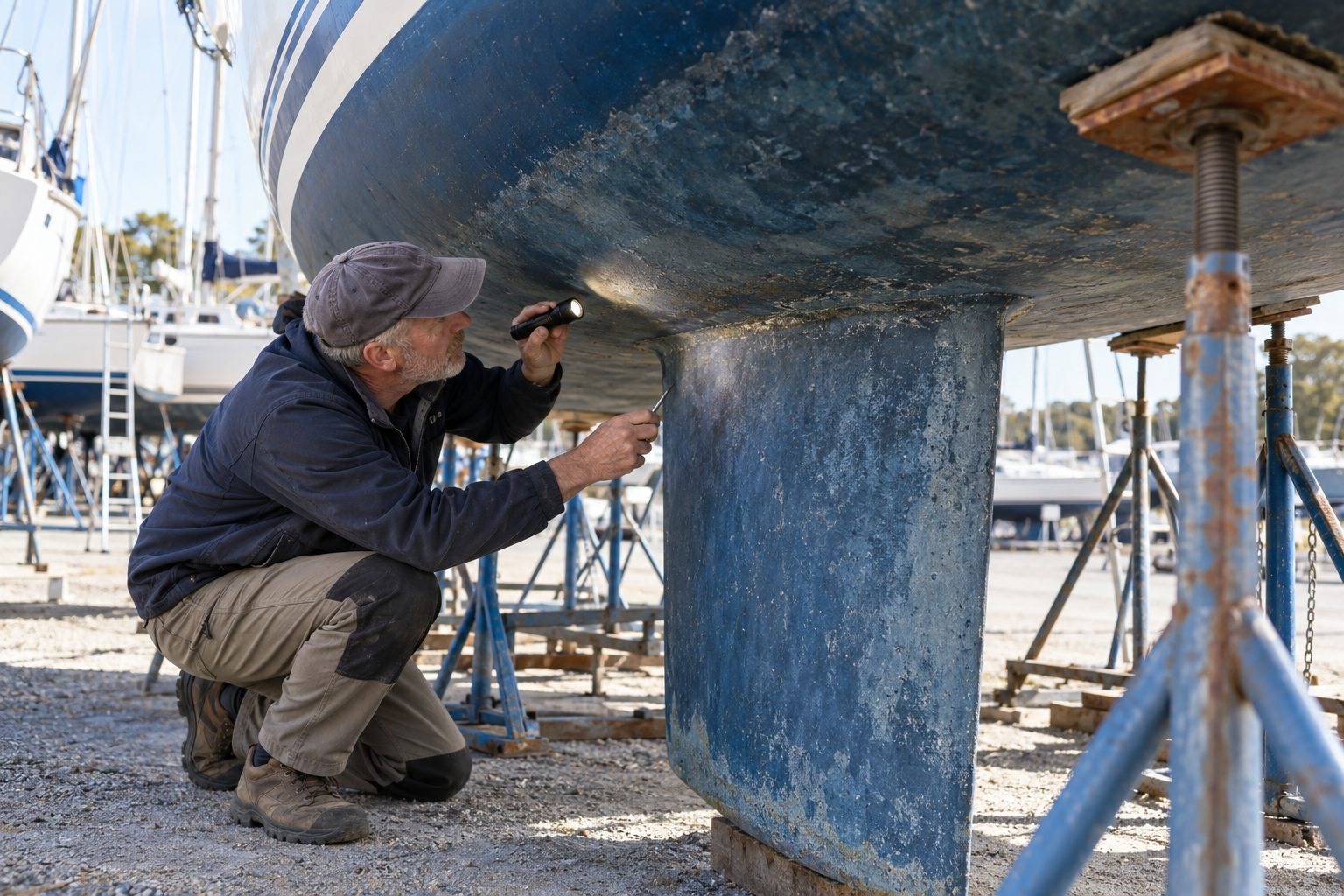
No. The two provide different access and evidence. Discuss both with the surveyor and identify what remains unknown if either cannot be completed. A smooth run afloat does not establish the condition of every underwater surface or concealed attachment.
Further reading and source context
These references support terminology and general research methods. Use the exact boat’s documents for specifications and operating instructions; manufacturer examples do not apply to every model.