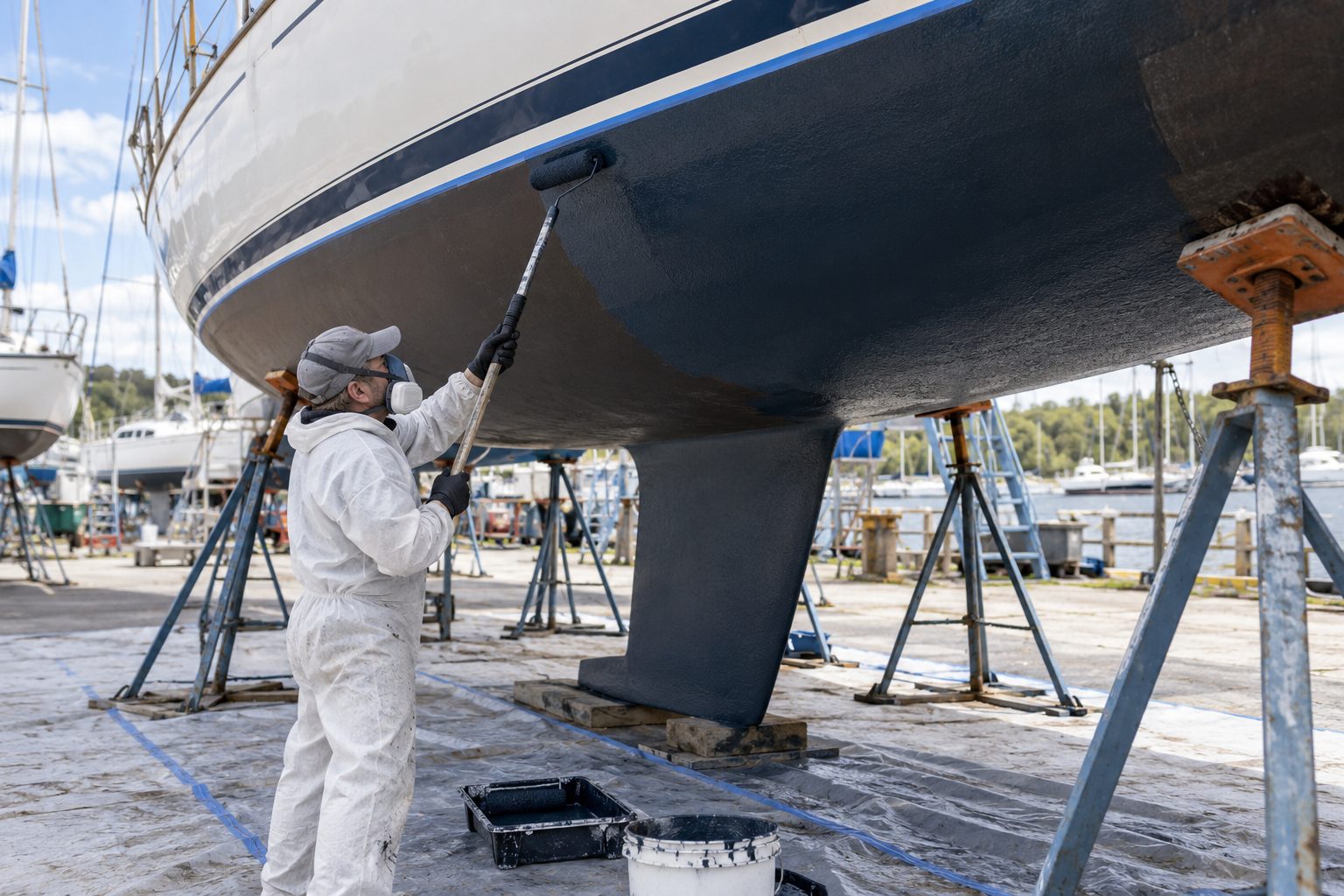
Sailboat equipment and cruising
Sailboat Haul-Out Preparation Checklist
A practical guide to sailboat haul-out preparation checklist, with maintenance, safety and cruising considerations. Adapt these considerations to your vessel, crew and local conditions.
Book a suitable yard
Confirm that the yard can safely handle the boat's weight, keel shape, beam and rig.

Know lifting points
Use manufacturer lifting guidance where available and communicate protrusions or unusual structure to the yard.
Prepare the boat
Secure loose gear, close or manage relevant systems and arrange access to the boat during lifting.
Inspect while ashore
Use the haul-out to inspect hull, keel, rudder, propeller, anodes and through-hulls.
Plan relaunch
Confirm work completion, check underwater fittings and monitor bilges and systems after relaunch.
DETAILED GUIDE · 4 MIN READ
Sailboat Haul-Out Checklist: decisions, examples and a working checklist
A well-planned sailboat haulout starts before the boat reaches the lift. Give the yard the vessel's dimensions, weight information, underwater configuration and builder's lifting guidance. Agree on inspection access, work scope, storage and relaunch checks in advance. The aim is to make the time ashore useful without leaving the crew to improvise around heavy lifting equipment.
Send the yard a useful boat information sheet
Include length, beam, draft, keel configuration and the best available displacement information, stating its source. Tell the yard about significant equipment or changes that may affect its planning. Send photographs or drawings that identify the rudder, shaft or saildrive, transducers and any other underwater appendages. Ask the yard which details it still needs.
Find the builder's lifting and support instructions if available. Sling marks on the hull are useful information to discuss, but do not assume old stickers are accurate after modifications or repainting. The yard must determine how to carry out the lift with its equipment. Resolve questions before arrival rather than negotiating them while the boat is suspended.
Arrange the survey and work sequence
Book the surveyor, mechanic or other specialist around the yard's actual schedule. Ask whether the planned service is a short lift for inspection or a longer stay ashore. Confirm when cleaning will happen, what can be inspected before coatings are disturbed and which observations require the surface to be accessible. Do not assume everyone has coordinated with everyone else.
Prepare a priority list: purchase-survey access, known underwater concerns, scheduled maintenance and optional improvements. Identify jobs that depend on inspection findings. This prevents an attractive cosmetic project from consuming the available time while a purchase decision remains unresolved. Name the person who can authorize additional work and the best way to reach them.
Control the scope and the costs
Request an itemized estimate covering the lift, launch, washing, storage, blocking or cradle arrangements and any minimum charges. Ask about access hours, contractor policies, waste handling and what happens if weather or parts delays extend the stay. These are yard-specific terms to confirm, not standard inclusions you should presume from a headline haulout price.
For example, a buyer may need only an inspection, while a new owner may want coatings and drive work at the same visit. The second plan has different scheduling and approval needs. Put optional items on separate lines so you can proceed with essential investigation even if the larger maintenance package exceeds the budget.
Plan the handover back to the water
Follow the yard's instructions about boarding, exclusion zones and movement around the lift and supports. Do not adjust supports or work underneath a suspended boat. Ask in advance who will be aboard, who communicates with the lift operator and where everyone else should wait. A shared plan reduces confusion at the busiest moments.
Before relaunch, review completed work and unresolved findings with the responsible people. Arrange the appropriate checks for any disturbed underwater fittings, propulsion components or other systems once afloat. Keep invoices, photographs and the yard's completion notes together. A successful lift does not by itself confirm that every maintenance job was finished or every system is ready for use.
Your working checklist
Use these prompts in your viewing notes or boat notebook. Record unanswered questions as well as confirmed observations.
- Supply dimensions, underwater layout and available builder lifting guidance.
- Confirm lift capacity and suitability directly with the yard.
- Coordinate specialist attendance and inspection access.
- Separate mandatory work from optional improvements in the estimate.
- Agree who authorizes surprises and extended storage.
- Schedule the required post-launch checks and document completion.
Frequently asked questions
Can I choose sling positions from another boat of the same length?
No. Similar length does not establish the same structure, balance or underwater appendages. Provide boat-specific information and let the yard resolve the lifting plan. If documentation is missing, discuss that gap before making the appointment.
Is one haulout enough for every purchase inspection?
It depends on access and findings. Ask the surveyor what the booked lift will cover and what might require additional time or specialist work. Make the purchase timetable realistic enough to resolve significant questions instead of assuming a fixed-length appointment guarantees a complete answer.
Further reading and source context
These references support terminology and general research methods. Use the exact boat’s documents for specifications and operating instructions; manufacturer examples do not apply to every model.