Practical guidance on how to photograph a sailboat for sale, including costs, safety, inspections and ownership decisions. Consider the specific boat, crew, conditions and applicable requirements before making decisions.
Exterior hero photographs
Take a clear, well-lit profile showing the entire boat, plus bow, stern and deck views.
Well-presented sailboat moored in sunlight
Interior coverage
Photograph the saloon, galley, heads, cabins, storage and any distinctive layout features.
Illustration for How to Photograph a Sailboat for Sale: Interior coverage
Equipment and machinery
Show the engine, helm, electronics, sails and major equipment without obscuring identifying details unnecessarily.
Illustration for How to Photograph a Sailboat for Sale: Equipment and machinery
Honest condition details
Include clear photographs of known defects; misleading edits or selective framing can undermine trust.
Organizing the listing
Use recent images with descriptive captions and a complete, accurate inventory.
Frequently asked questions
What should I verify before making a decision?
Check manufacturer instructions, documented maintenance, vessel condition and local requirements. Obtain independent advice where needed.
When is a professional inspection useful?
Qualified surveyors and specialists can evaluate concerns that are difficult to assess through photographs or a brief walkthrough.
How to Photograph a Sailboat for Sale: decisions, examples and a working checklist
Photograph the actual sailboat in a clear sequence: exterior, cockpit and deck, accommodation, machinery, equipment and known defects. Buyers should be able to understand the layout and present condition without guessing which space or component a picture shows.
Prepare the boat without disguising its condition
Remove loose rubbish, wash accessible surfaces and put everyday clutter away. Keep the equipment included in the sale visible where it helps explain the boat. Avoid temporarily moving defects out of frame or using cosmetic editing to hide wear. A tidy presentation should make inspection easier, not change the buyer’s understanding of condition.
Choose a time with usable light and avoid rushing around a moving or unsafe work area. Do not climb the mast or enter a hazardous space merely to complete a photo list. Where access is restricted, explain the limitation and arrange appropriate inspection rather than substituting a misleading photograph.
Choose a lead image that identifies the whole boat
Use a clear current exterior view that shows the hull and rig as completely as practical. Keep the horizon level and avoid placing a dock post or neighboring boat across the important features. A close-up of a helm may be attractive but does not tell a buyer what the boat looks like.
Check the thumbnail crop as well as the full image. The subject should remain recognizable on a phone. If the boat is on the hard, show that honestly. If an older underway photograph is useful, label when it was taken and do not let it imply a condition or configuration that has since changed.
Build a walkthrough that answers layout questions
Follow a physical route: cockpit, companionway, saloon, galley, cabins and heads. Take one establishing photograph of each area before detail shots. Include enough overlap that a buyer can understand which spaces connect.
Use a normal perspective where possible. An extreme wide-angle lens can make a narrow berth or passage look much larger than it is. Keep vertical lines reasonably straight and compare your photograph with what you actually see. Show practical features such as locker access, berth shape and standing space, not just decorative details.
Document the systems buyers will ask about
Photograph the accessible engine installation, instruments, electrical panels and major equipment. Include both a wider installation view and readable labels when useful. A model label by itself cannot show how an item is installed or whether service access is reasonable.
Turn off or isolate equipment only under an appropriate procedure; do not remove protective covers or expose energized components for a photograph. Images of machinery are evidence of appearance, not proof of operating condition. Explain whether equipment was demonstrated, recently serviced or simply present when the picture was taken.
Show known issues with location and scale
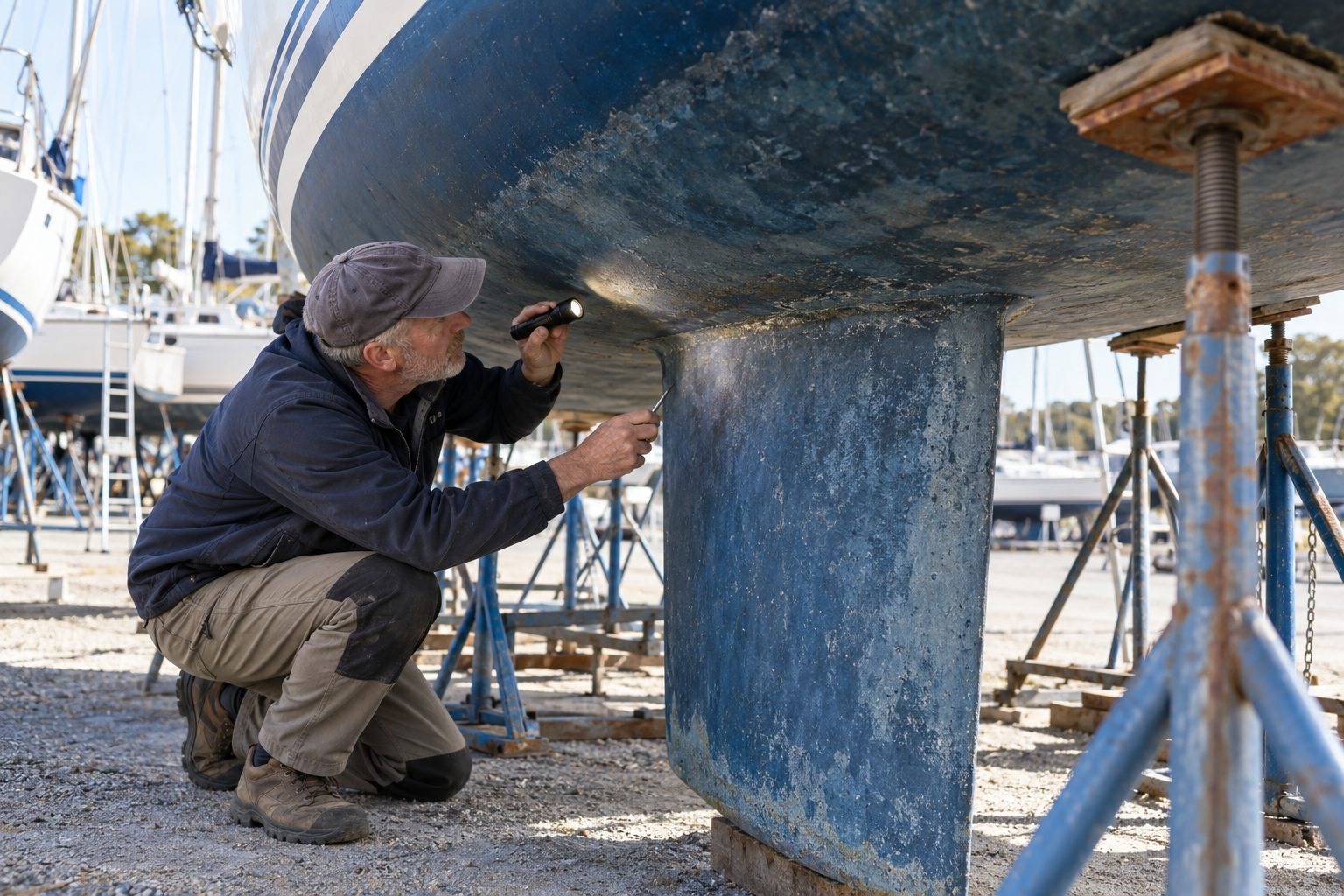
For a visible defect, take a wider photograph showing its location and a close view showing the detail. Describe what you know without making an unsupported diagnosis. “Staining below the port window” is more useful than “just cosmetic” if the cause has not been established.
Keep original image files and a dated list of captions. When a repair is completed, add current photographs and distinguish them from before-work images. Remove personal documents, account numbers, keys and unrelated private information from the scene before shooting. Share sensitive vessel documents through an appropriate private process rather than displaying them in a public listing.
Review the gallery as a buyer would
Open the listing on a phone and on a larger screen. Remove near-duplicate images and check that the sequence does not jump between cabins without explanation. Confirm that photographs belong to this vessel and that included accessories match the description.
A useful final review asks four questions: Can I identify the boat? Can I understand the layout? Can I see the important equipment? Can I tell what still needs inspection? There is no magic number of photographs. A complete, honest set is more helpful than a large gallery of repeated views.
Your working checklist
Use these prompts in your viewing notes or boat notebook. Record unanswered questions as well as confirmed observations.
Current exterior lead photograph.
Cockpit, deck, rig and sail-handling views where safely accessible.
One overview of every accommodation area.
Engine and major systems with wider context and useful labels.
Known issues shown with location and captions.
Mobile crop, duplicates, privacy and inclusion list checked.
Frequently asked questions
Can I use a manufacturer’s brochure photo?
It may help explain a model only if appropriately authorized and clearly identified, but it should not stand in for the actual boat’s condition. Lead with current pictures of the vessel being sold.
Should I edit boat listing photos?
Basic rotation and exposure correction can improve readability. Do not remove damage, change equipment or create a false impression of condition or space.
Further reading and source context
These references support terminology and general research methods. Use the exact boat’s documents for specifications and operating instructions; manufacturer examples do not apply to every model.