Sailboat buyer's guide
Sailboat Survey Checklist: What Buyers Should Inspect
Use a practical sailboat inspection checklist before committing to a used boat purchase. This guide explains practical considerations to help you compare boats and prepare for an informed purchase.
What matters most
Review ownership documents, hull identification, maintenance history and the seller’s equipment inventory. Inspect deck fittings, chainplates, core moisture indications and evidence of past leaks. When comparing boats, document the evidence you have rather than relying on photographs or advertising language. A buyer should distinguish a manufacturer's original specification from equipment installed later by owners. Request clear records and seek independent professional assessment for structural, mechanical or safety-critical issues. The right choice depends on the boat's present condition, your sailing plans, your crew and the resources available for ongoing care.

What to inspect before buying
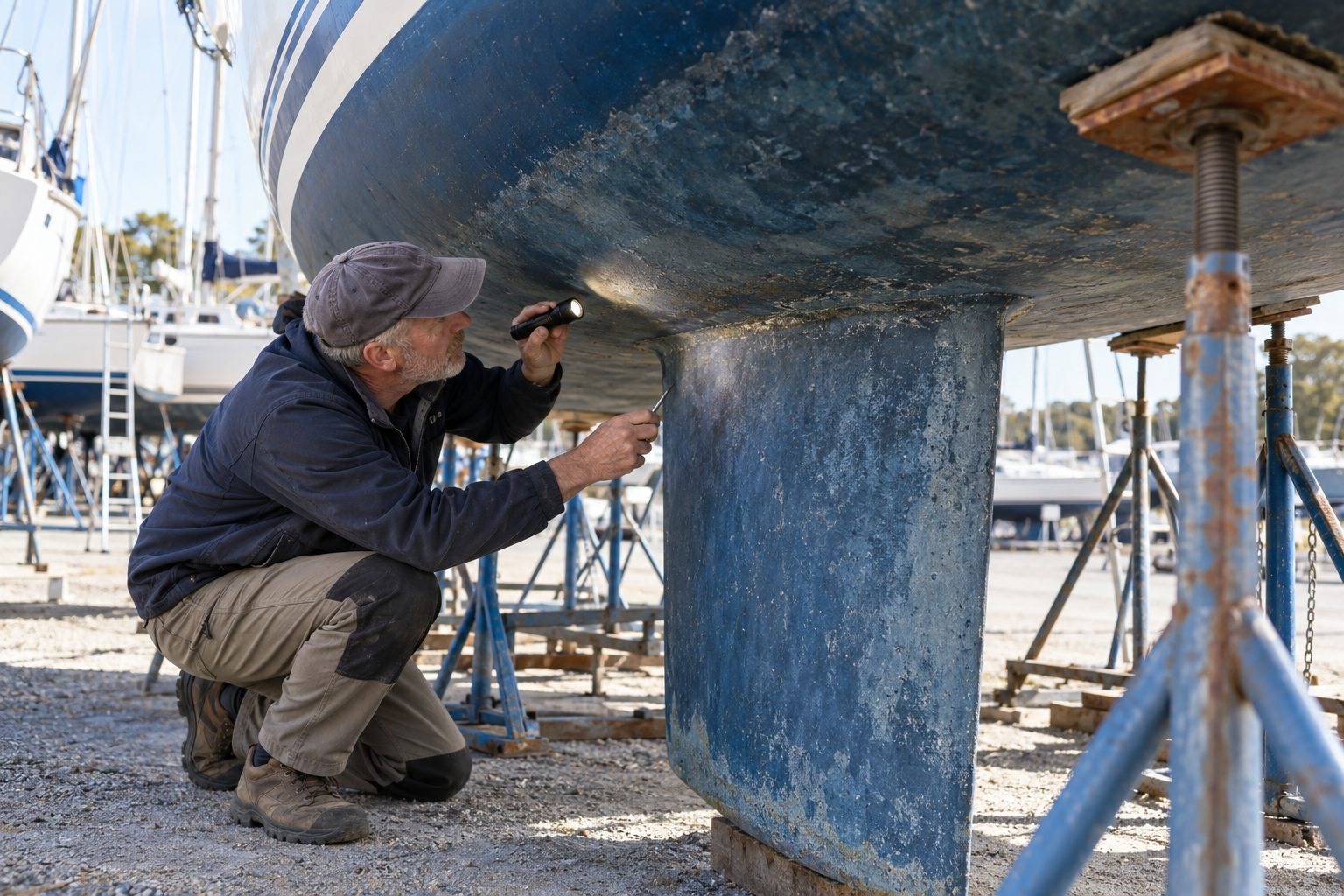
Check hull-to-keel joint, structural floors, bulkhead tabbing and signs of previous grounding. Examine rudder bearings, steering cables, quadrant, emergency tiller and autopilot operation. When comparing boats, document the evidence you have rather than relying on photographs or advertising language. A buyer should distinguish a manufacturer's original specification from equipment installed later by owners. Request clear records and seek independent professional assessment for structural, mechanical or safety-critical issues. The right choice depends on the boat's present condition, your sailing plans, your crew and the resources available for ongoing care.
Budget and ownership considerations
Assess engine cold start, exhaust, cooling, mounts, fuel system and running performance. Check electrical protection, charging sources, battery installation and wiring quality. When comparing boats, document the evidence you have rather than relying on photographs or advertising language. A buyer should distinguish a manufacturer's original specification from equipment installed later by owners. Request clear records and seek independent professional assessment for structural, mechanical or safety-critical issues. The right choice depends on the boat's present condition, your sailing plans, your crew and the resources available for ongoing care.
Questions to ask the seller
Test bilge pumps, seacocks, sanitation, freshwater and safety equipment. Hire an independent qualified surveyor and arrange a haul-out and sea trial where appropriate. When comparing boats, document the evidence you have rather than relying on photographs or advertising language. A buyer should distinguish a manufacturer's original specification from equipment installed later by owners. Request clear records and seek independent professional assessment for structural, mechanical or safety-critical issues. The right choice depends on the boat's present condition, your sailing plans, your crew and the resources available for ongoing care.
How to make a confident decision
Review ownership documents, hull identification, maintenance history and the seller’s equipment inventory. Inspect deck fittings, chainplates, core moisture indications and evidence of past leaks. When comparing boats, document the evidence you have rather than relying on photographs or advertising language. A buyer should distinguish a manufacturer's original specification from equipment installed later by owners. Request clear records and seek independent professional assessment for structural, mechanical or safety-critical issues. The right choice depends on the boat's present condition, your sailing plans, your crew and the resources available for ongoing care.
DETAILED GUIDE · 4 MIN READ
Sailboat Survey Checklist: decisions, examples and a working checklist
A sailboat survey checklist is a way to organize evidence, access and follow-up. It should not turn a buyer's walkthrough into a declaration that the boat is sound. Agree the survey scope with an independent professional, prepare the records and identify which machinery or rigging assessments require additional expertise before booking the day.
Prepare a document and access package
Send the surveyor the listing, exact model and year, available identification details and a written equipment inventory. Include repair invoices, reported groundings, refits and known faults. Separate original builder information from later modifications. A short timeline of the boat's history can help the surveyor decide which questions need particular attention.
Ask the owner to arrange appropriate access to lockers, bilges and machinery spaces. Do not remove structural components or dismantle unfamiliar equipment yourself. Record any areas that cannot be opened and discuss them before the visit. A survey scope should describe what can be assessed with the access actually available, not an idealized empty boat.
Organize observations by system
Use separate headings for structure, rig and sails, propulsion, steering, electrical equipment, plumbing and accommodation. Under each, write the question, available evidence and unresolved issue. For example, a receipt for engine service answers a different question from a report on the cooling installation. Keep the records tied to the component they describe.
Include the surveyor's planned haulout and operating checks rather than treating the afloat and ashore visits as interchangeable. BoatUS describes how a survey can involve specialist assessments as well as the general vessel inspection. Ask who is covering each area so that engine or rig questions do not fall between two people's assumed responsibilities.
Attend with a useful recording method
Agree with the surveyor how questions will be handled while they work. Take notes on findings without interrupting critical tasks. Record location, photograph reference and the person responsible for follow-up. A note saying investigate moisture near the port chainplate is more useful than a general conclusion that the boat is wet.
Do not turn a verbal comment into a final diagnosis before the report is complete. Ask whether the observation is a confirmed defect, a maintenance recommendation or a reason for further investigation. Keep your own preferences, such as wanting different electronics, separate from the surveyor's condition findings. That distinction matters when preparing repair estimates.
Close the checklist with decisions
Read the full report, including exclusions and areas not tested. Create an action list with the required next step, responsible person and evidence needed to close it. A blank checkbox should mean unresolved, not satisfactory. If the findings call for a specialist, obtain that assessment before treating the corresponding item as settled.
Request boat-specific estimates for confirmed work and keep investigation costs separate from repairs that remain uncertain. Review any purchase deadlines with the appropriate professional handling the transaction. The checklist has done its job when you understand the boat's known condition, important unknowns and the work needed for your intended use, rather than merely accumulating a long list of ticks.
Your working checklist
Use these prompts in your viewing notes or boat notebook. Record unanswered questions as well as confirmed observations.
- Provide identification, inventory, service and repair records.
- Agree access, haulout and operating scope before the appointment.
- Assign machinery and rig questions to the appropriate specialists.
- Record location-specific observations and report references.
- Separate defects, maintenance, preferences and unknowns.
- Track each follow-up to evidence of completion.
Frequently asked questions
Can I use a checklist instead of a marine survey?
A checklist helps prepare and compare observations, but it does not provide the expertise or scope of an independent assessment. Use it to organize questions for the surveyor and specialists, particularly where structure, machinery or hidden installation details affect the purchase.
Does a survey guarantee that nothing will fail?
No. Understand the agreed scope and limitations, including inaccessible or untested areas. The report describes findings from the assessment; use it to make informed decisions and plan maintenance without treating it as a warranty of every concealed component or future performance.
Further reading and source context
These references support terminology and general research methods. Use the exact boat’s documents for specifications and operating instructions; manufacturer examples do not apply to every model.