Sailboat buying and ownership
Copper-Based Epoxy Coatings vs Conventional Antifouling
Practical guidance on copper-based epoxy coatings vs conventional antifouling, including costs, safety, inspections and ownership decisions. Consider the specific boat, crew, conditions and applicable requirements before making decisions.
How coating systems differ
Long-life copper-filled epoxy systems and conventional antifouling paints differ in application and maintenance.
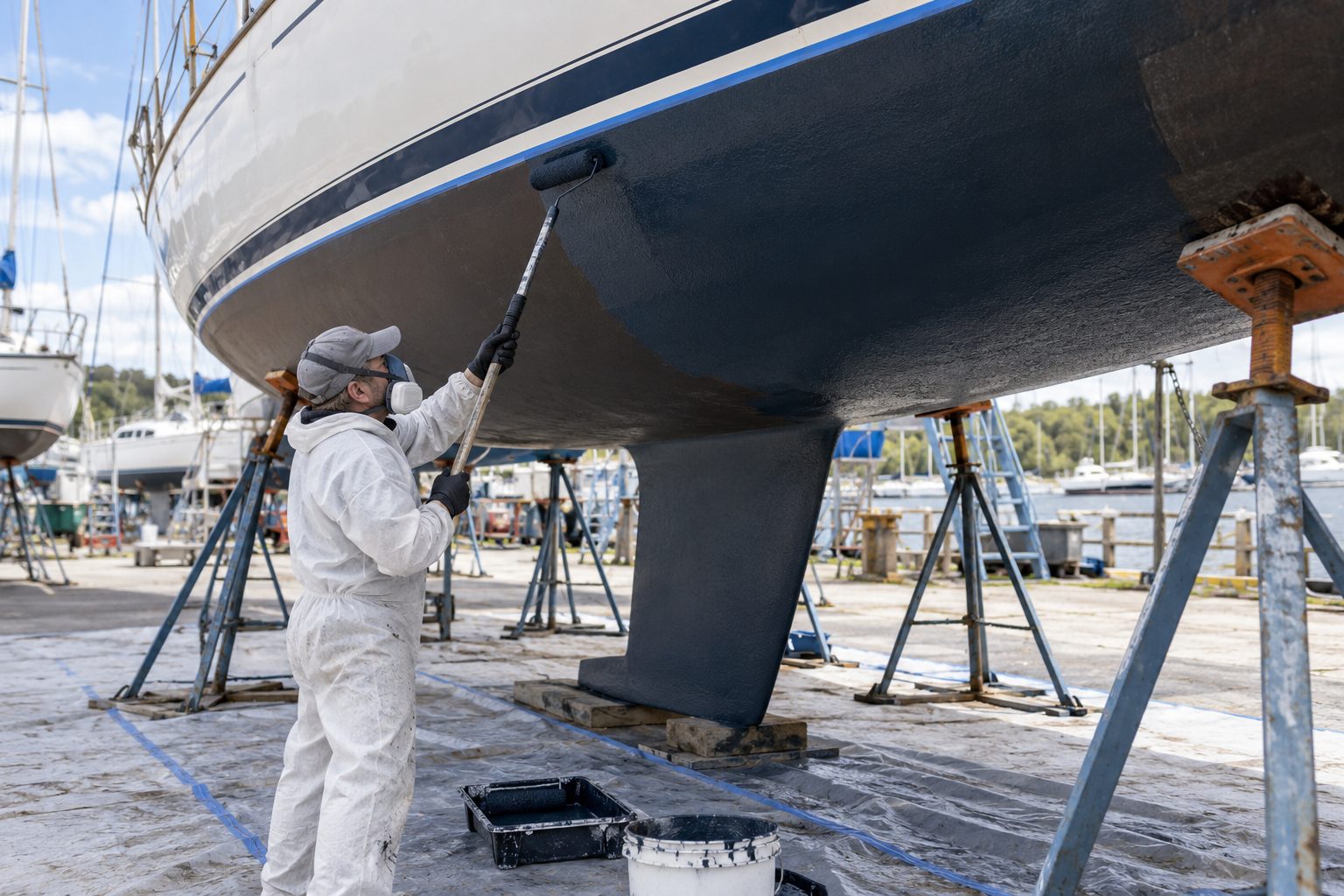
Surface preparation
Substrate condition, temperature, moisture and primer compatibility strongly affect coating performance.
Cleaning requirements
No coating eliminates inspection or cleaning. Fouling pressure varies by location.
Local regulations
Copper discharge and antifouling rules vary by jurisdiction and marina; confirm what is permitted.
Lifetime cost
Compare professional application, haul-outs, cleaning and repair costs over a realistic ownership period.
DETAILED GUIDE · 4 MIN READ
Copper-Based Epoxy vs Antifouling: decisions, examples and a working checklist
Compare Coppercoat and conventional antifouling as complete coating and maintenance systems. Coppercoat is itself an antifouling product, so the useful question is how the proposed systems differ in preparation, application, ongoing care and total cost. Do not interpret a long-life claim as a promise that the hull will need no cleaning or inspection.
Start with the existing hull and coating
Identify hull material, current coating and any known barrier coats or repairs. Ask the proposed applicator to explain the preparation required for each alternative. A conversion from an unknown coating can be a substantially different project from renewing an identified compatible system. Keep that starting condition consistent when comparing quotes.
Resolve structural or moisture-related concerns before choosing a finish. A coating decision should not substitute for a hull assessment. Ask whether the quoted work assumes a sound prepared surface and how additional findings would be handled. Photograph the hull before preparation so later questions can be traced to the original condition.
Compare application requirements directly
Coppercoat's manufacturer describes a particular epoxy-based application process and emphasizes correct preparation. Its instructions should be followed as a complete system rather than treated as interchangeable with conventional bottom-paint directions. Obtain the current guidance for the product and region supplied, and ask the applicator about relevant experience.
For the conventional alternative, request the exact product and compatible preparation plan too. Compare conditions, labor, access and relaunch timing from the relevant instructions. A fair comparison does not give one system an ideal professionally prepared application while pricing the other as a quick coat over an uncertain surface.
Include cleaning and upkeep in both plans
The Coppercoat manufacturer discusses ongoing washing or brushing and possible later surface maintenance. That makes maintenance an explicit part of the comparison, even when repainting frequency differs. Ask what work is appropriate for the proposed installation and what your local yard or cleaning provider can support.
Record the cleaning guidance for the conventional coating as well. Do not transfer tools or techniques between systems without confirming suitability. Ask how fouling, surface damage or a future hull repair would be handled under each option. A system's ability to fit your real maintenance routine matters alongside its advertised service life.
Calculate scenarios rather than guaranteed payback
Build a multi-year worksheet containing initial preparation, application, lifting and expected maintenance for both options. In a purely illustrative comparison, one system may have a higher initial cost but fewer planned recoating visits. Use actual local quotations to fill the worksheet; do not turn a manufacturer's general payback claim into a guaranteed saving for your boat.
Run more than one scenario for duration of ownership and maintenance needs. If you might sell soon, ask how much of the initial work you personally benefit from without assuming a matching resale premium. Choose from documented costs, installation confidence and the care you can provide, then retain the application records for future inspections or buyers. Request separate estimates for surface remediation and coating application. That distinction makes it easier to understand which costs would occur under either coating choice.
Your working checklist
Use these prompts in your viewing notes or boat notebook. Record unanswered questions as well as confirmed observations.
- Compare complete systems rather than only paint prices.
- Use the same starting hull condition in both estimates.
- Obtain current product-specific preparation and application guidance.
- Include ongoing cleaning and repair procedures.
- Calculate several ownership-duration scenarios.
- Keep application and maintenance records with the boat.
Frequently asked questions
Is Coppercoat maintenance-free?
Do not plan on that basis. The manufacturer describes ongoing surface care and possible later maintenance. Read the current guidance and include the work in your ownership plan rather than treating reduced repainting as freedom from cleaning or inspection.
Will Coppercoat definitely save money?
That depends on preparation, application cost, maintenance, local services and how long you keep the boat. Compare dated quotations and realistic scenarios. A general longevity or payback claim cannot establish the financial result of your particular installation.
Further reading and source context
These references support terminology and general research methods. Use the exact boat’s documents for specifications and operating instructions; manufacturer examples do not apply to every model.