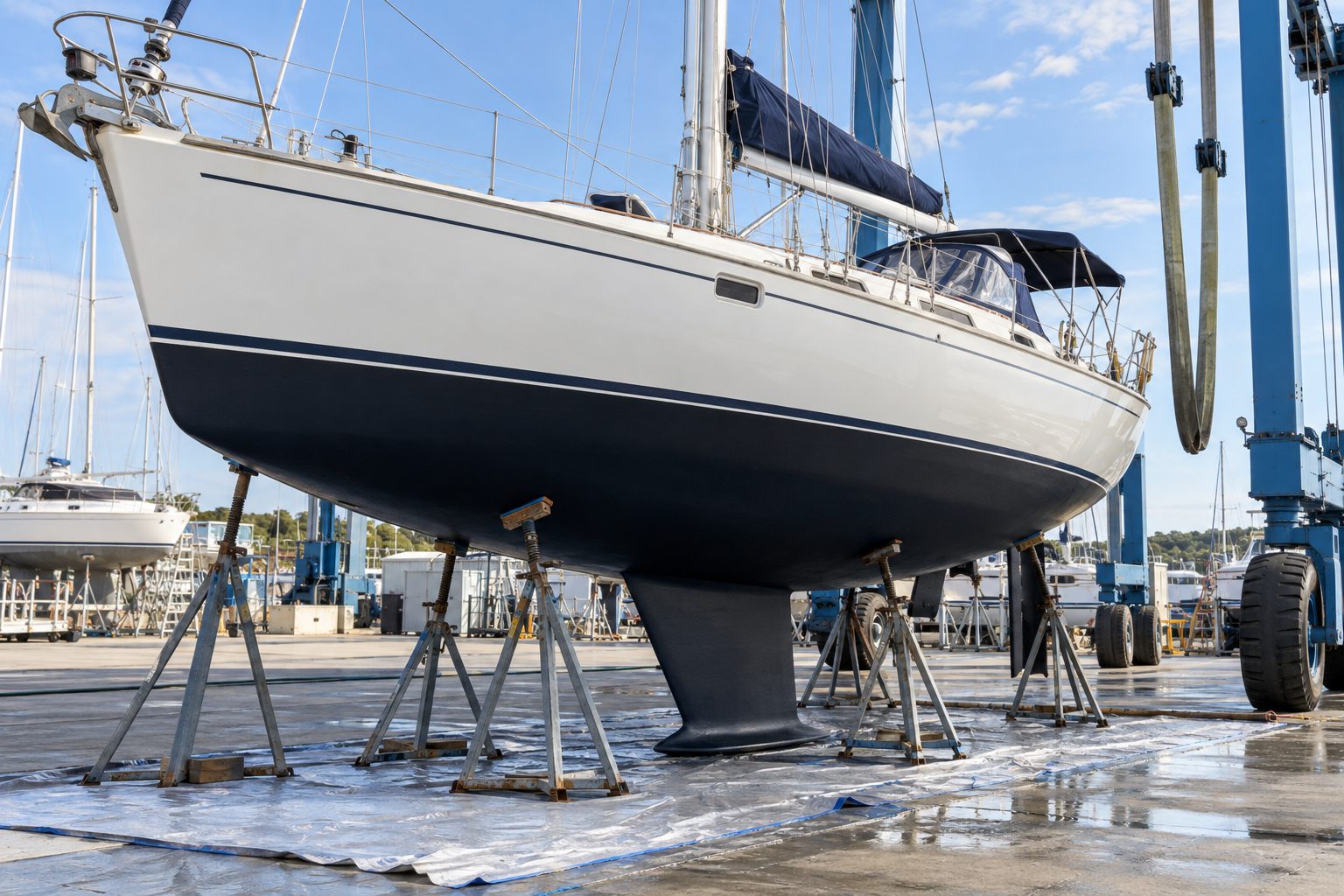
Sailing skills and ownership
Sailboat Bottom Paint: Types and Maintenance
A practical sailing guide to sailboat bottom paint types and maintenance, with checklists, safety considerations and tips for owners. Adapt these recommendations to your boat, crew, local regulations and conditions.
Why antifouling matters
Marine growth increases drag and can affect cooling intakes and performance. Coatings are only one part of hull maintenance.

Hard versus ablative coatings
Hard and ablative paints behave differently; suitability depends on use, cleaning practices and local rules.
Choosing for local waters
Check salinity, fouling pressure, haul-out intervals and product compatibility before selecting a coating.
Surface preparation
Follow manufacturer instructions for washing, sanding, priming and overcoating. Incompatible layers can fail.
Environmental precautions
Antifouling residues and wash water can be hazardous. Use approved yards, protective equipment and compliant disposal methods.
DETAILED GUIDE · 4 MIN READ
Sailboat Bottom Paint Guide: decisions, examples and a working checklist
A bottom-paint project starts by identifying the hull, existing coating and intended replacement system. Preparation, compatibility, application conditions and launch timing all affect the result. Build a written work plan from the current product instructions and the yard's requirements before buying paint or disturbing an unknown coating.
Establish the starting surface
Collect previous coating invoices, product names and dates. Ask whether the visible surface covers a barrier system, repairs or several older paint layers. A similar color does not establish product identity. If the coating history is unknown, ask the manufacturer or qualified yard to define the assessment and preparation needed before selecting the next system.
Separate cosmetic coating wear from hull damage that needs investigation. A repaint should not hide an unresolved blister, crack or suspect repair. Photograph the starting condition and keep findings in the project record. Arrange the appropriate assessment before accepting a quote that assumes the hull is ready for routine preparation.
Turn the product instructions into a job sheet
Record the exact product, substrate compatibility, preparation method, number of coats and application requirements from its current documentation. Include any specified primer and the relevant timing between stages. Do not mix directions from different products into a generic recipe. A familiar brand may sell several systems with different requirements.
TotalBoat's selection guidance identifies substrate and previous-paint compatibility among the important questions. Use manufacturer guidance for your chosen system and obtain clarification where the existing finish is uncertain. Ask the yard to show which instructions its quote follows so that the scope can be reviewed before work begins.
Plan quantity, access and conditions
Use the product's coverage information and a suitable hull-area estimate, accounting for the specified coats and the application's requirements. In an illustrative calculation, 20 square meters receiving two coats at an assumed coverage of 8 square meters per liter would require 5 liters before allowances. Those values explain the arithmetic, not a recommendation for your boat or paint.
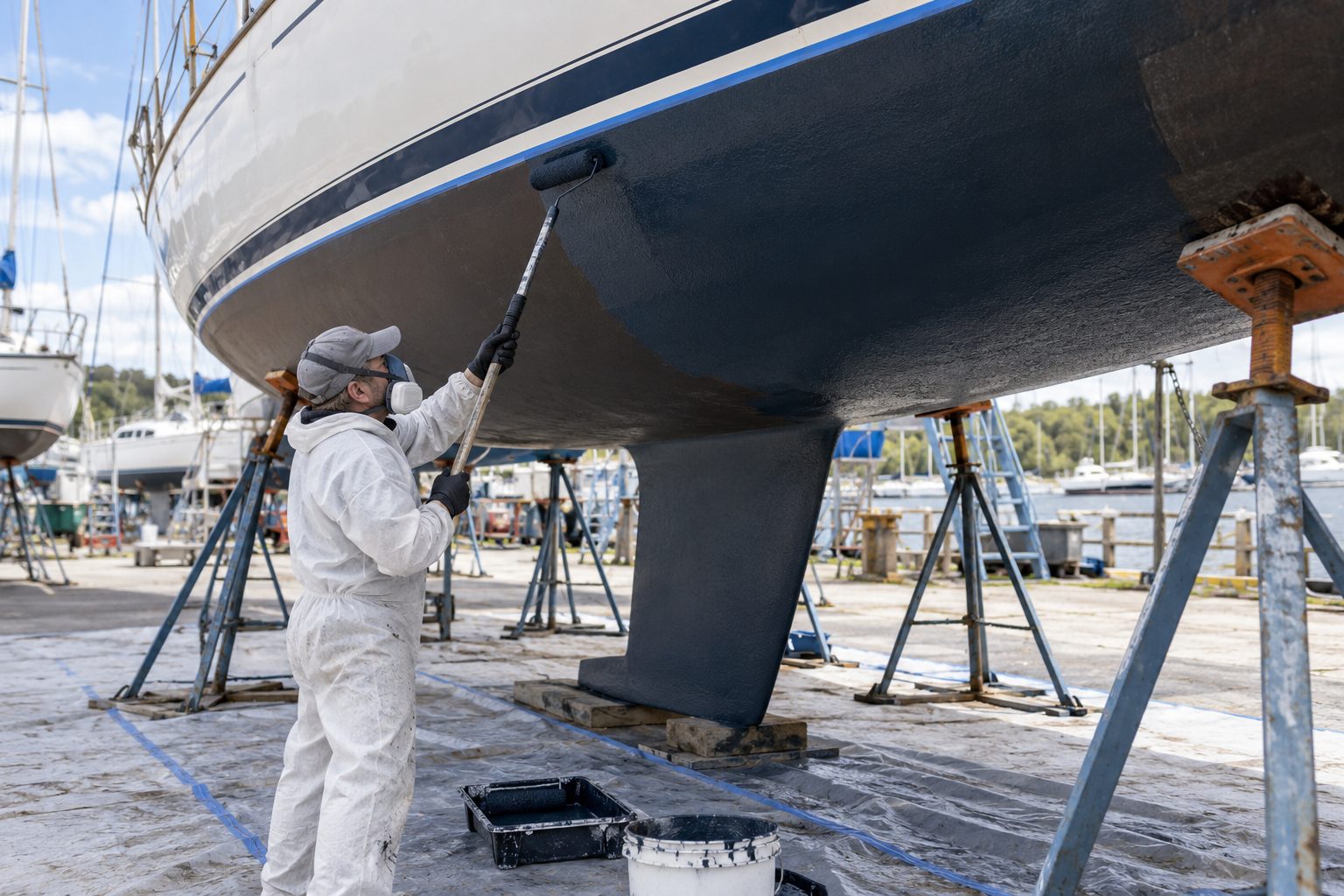
Coordinate lifting, washing, drying, preparation and application with the yard. Confirm its containment, waste-handling and worker-protection requirements and follow the product safety documentation. Do not begin sanding an unidentified coating simply because a roller and paint have arrived. Suitable working conditions and legal disposal arrangements are part of the project.
Document completion and the relaunch plan
Keep a record of preparation, products, batch details where useful, coats and application conditions. Confirm the permitted relaunch timing from the chosen system's instructions. If delays occur, ask whether additional work is required rather than assuming the original schedule remains valid. Make responsibility for these decisions clear with the contractor.
After launch, track fouling and maintenance under the actual operating conditions. Record cleaning and future haulout observations so the next repaint starts with evidence. A neat finish on launch day is only one part of success; the useful record also explains how the system was installed and how it performed through the season. Keep batch numbers, purchase quantities and leftover-product storage instructions with the job record so later touch-up work can be assessed against the same coating system.
Your working checklist
Use these prompts in your viewing notes or boat notebook. Record unanswered questions as well as confirmed observations.
- Identify hull material and existing coating history.
- Resolve hull concerns before covering them.
- Use one compatible manufacturer-specified coating system.
- Calculate quantity from area, coats and actual coverage data.
- Coordinate yard controls, conditions and launch timing.
- Retain application and performance records.
Frequently asked questions
Can I apply new antifouling over any old bottom paint?
Do not assume compatibility. Identify the previous coating and consult the new product's instructions or technical support. An unknown or unsuitable surface may require a different preparation plan, and the correct approach should be established before application.
How many coats does a sailboat need?
Use the exact product's instructions and the agreed application scope. Boat use, preparation and product requirements matter; a universal number taken from another system is not a reliable specification. Confirm how coverage and any additional areas are handled in the quote.
Further reading and source context
These references support terminology and general research methods. Use the exact boat’s documents for specifications and operating instructions; manufacturer examples do not apply to every model.