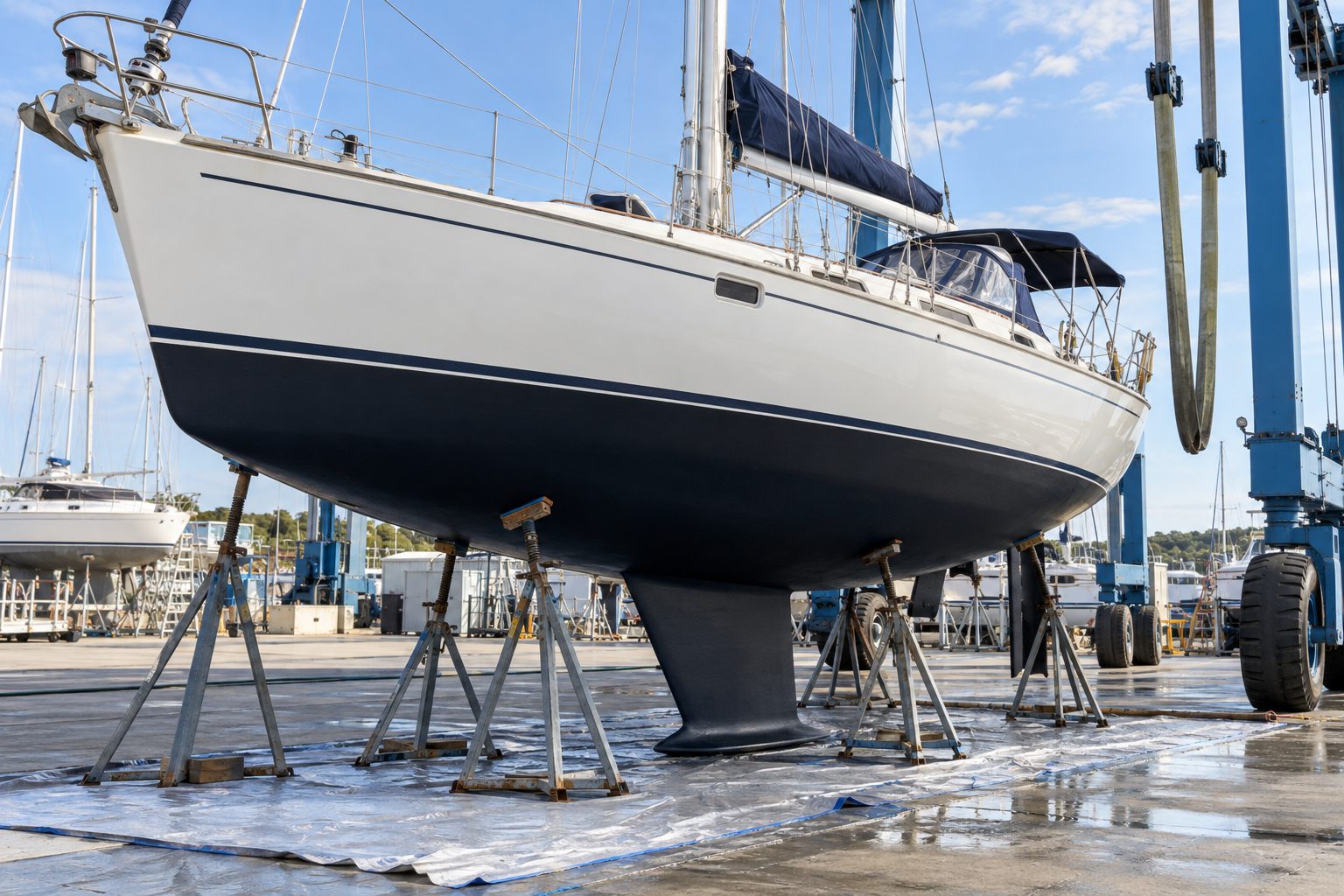
What bottom paint does
“Bottom paint” usually means an antifouling coating applied below the waterline to slow the growth of algae, barnacles and other organisms. Some products release a biocide in a controlled way; others use a low-adhesion surface that makes growth easier to remove. These coatings reduce fouling, but they do not make a hull maintenance-free.
Fouling pressure changes with water temperature, salinity, local species, boat speed and time spent afloat. A boat that sits in warm, nutrient-rich water may need a different product and maintenance schedule from a sailboat used mainly in a cool lake or hauled out between weekends.
1. Ablative and self-polishing coatings
Ablative paint wears or polishes gradually as water moves across the hull, exposing a fresh surface. Many cruising sailors choose a multi-season copolymer ablative because it can limit paint buildup and is designed to keep working as the surface wears. Some formulations can be hauled and relaunched without losing protection, but that is product-specific—check the label.
This type is often a good starting point for a fiberglass cruising sailboat that spends much of the season in the water and sails regularly. It may wear faster in high-flow areas, with frequent aggressive cleaning, or under conditions outside its rating. A boat that remains stationary for long periods also needs a paint specifically suited to that use.
2. Hard modified-epoxy paint
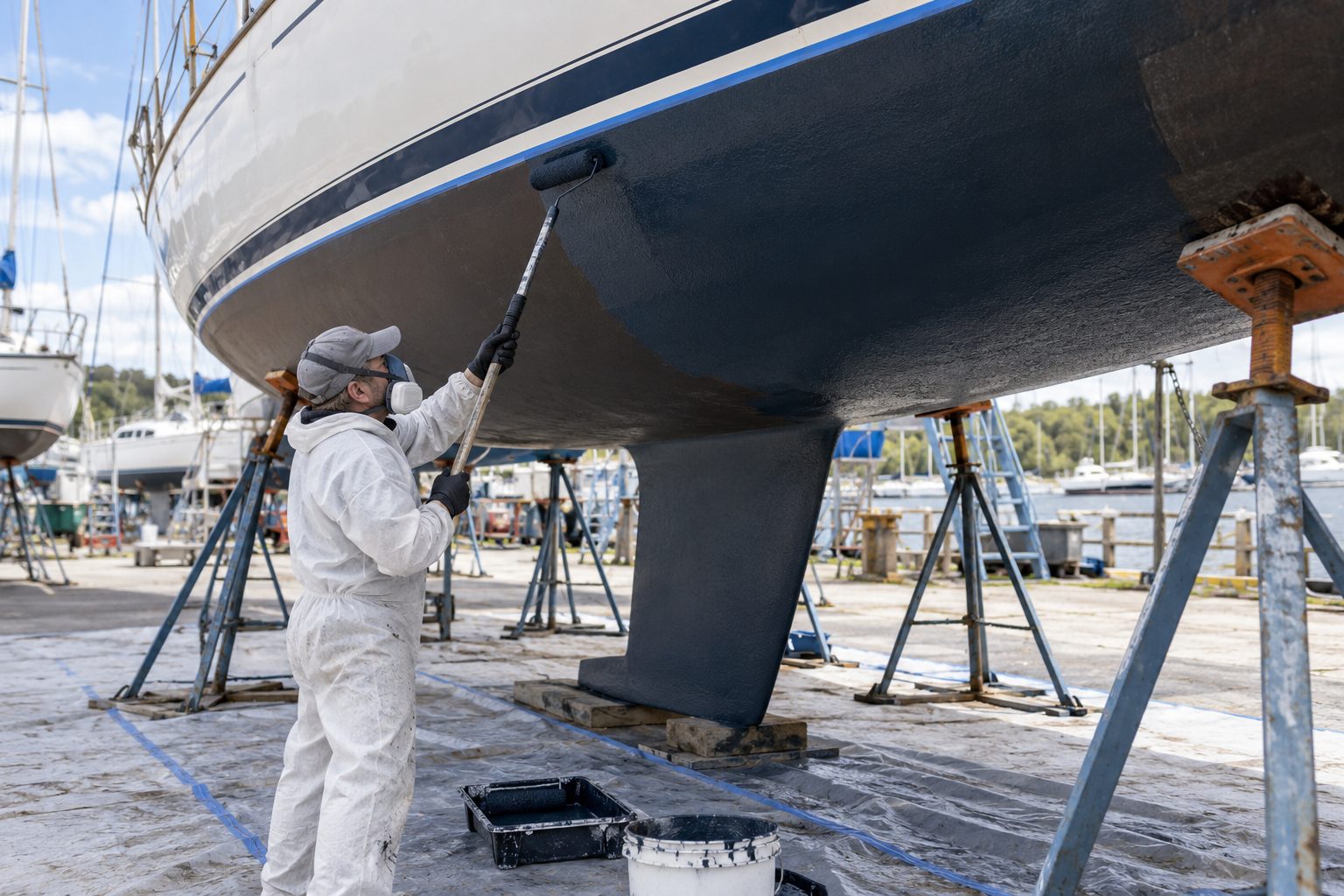
Hard antifouling forms a durable film that does not wear away like an ablative. It can suit boats that are used often, need a firmer surface for regular cleaning, or benefit from a smooth finish. Some hard coatings can be wet-sanded or burnished for performance, but that is only appropriate when the product allows it.
Each new coat can add to the paint film. Over time, accumulated layers may become rough, heavy or lose adhesion, so follow the maker’s maintenance and recoating plan. Hard paint and soft ablative paint are not automatically compatible; do not paint one over the other without the manufacturer’s compatibility instructions and any required primer or barrier coat.
3. Thin-film and racing coatings
Thin-film and vinyl coatings are specialized choices for racing and performance-focused boats where a very smooth bottom matters. They can require precise surface preparation, specific primers and strict compatibility with the existing coating. A smooth finish is not enough reason to switch if the new system would require stripping most of the old paint or does not match the way the boat is kept and sailed.
4. Copper-free and foul-release options
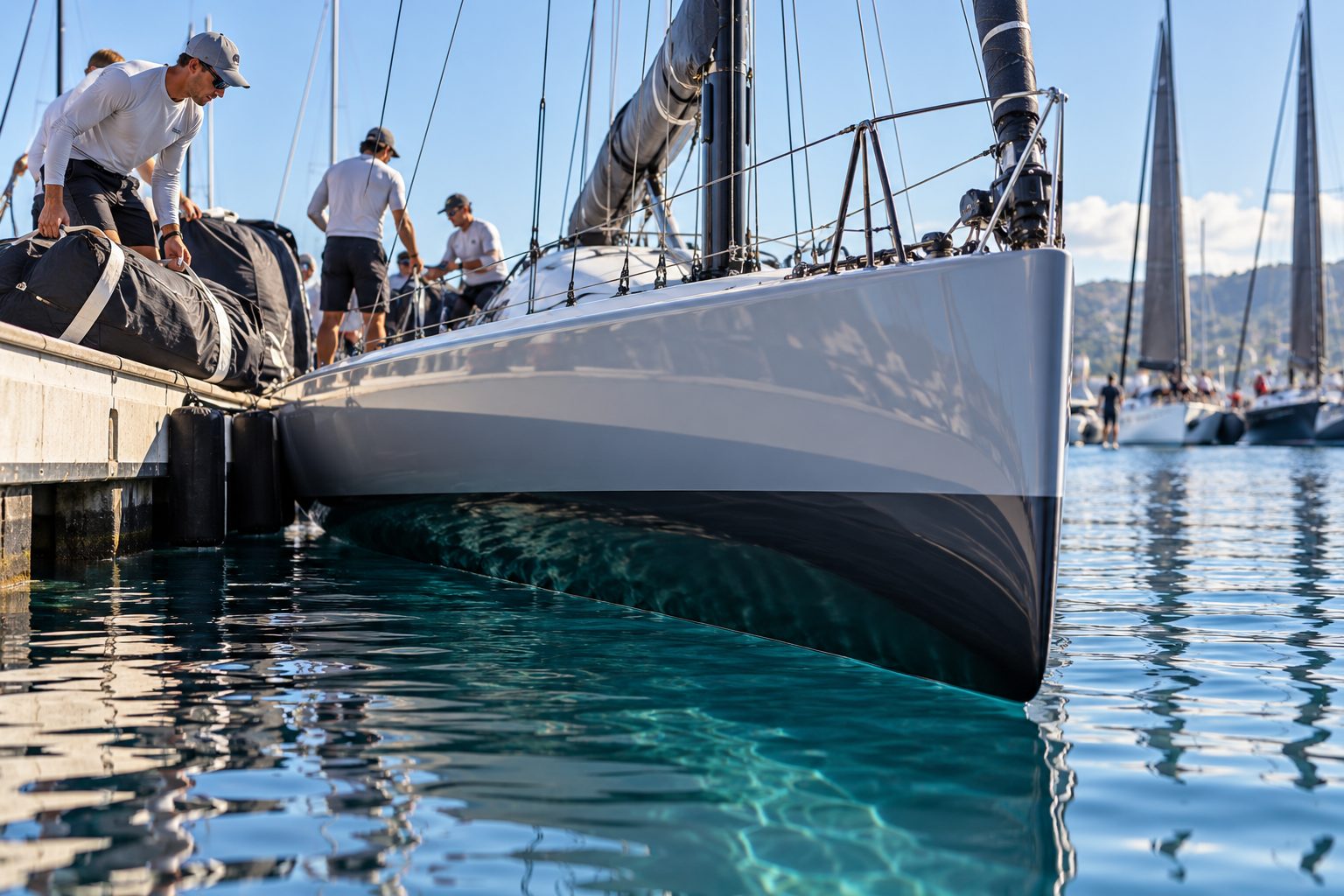
“Copper-free” describes what a product does not contain; it does not tell you the whole antifouling mechanism or guarantee that every alternative is safer for the environment. Some copper-free paints use other biocides. Foul-release coatings use a low-adhesion surface instead, and can require a particular application system, boat activity and cleaning method.
Compare the active ingredients, permitted uses and maintenance directions on the exact product label. Check local restrictions before buying: rules can differ by country, state, waterway or marina, and can change. Use the yard’s rules for sanding dust, scrapings and wash water so coating residue is not released into the water.
5. Match the coating to the hull material
For a fiberglass hull, check whether a new or repaired bottom needs a sealer or epoxy barrier coat before antifouling. A barrier coat helps protect the laminate; it is not a substitute for the antifouling layer, and it must be applied as part of a compatible coating system.
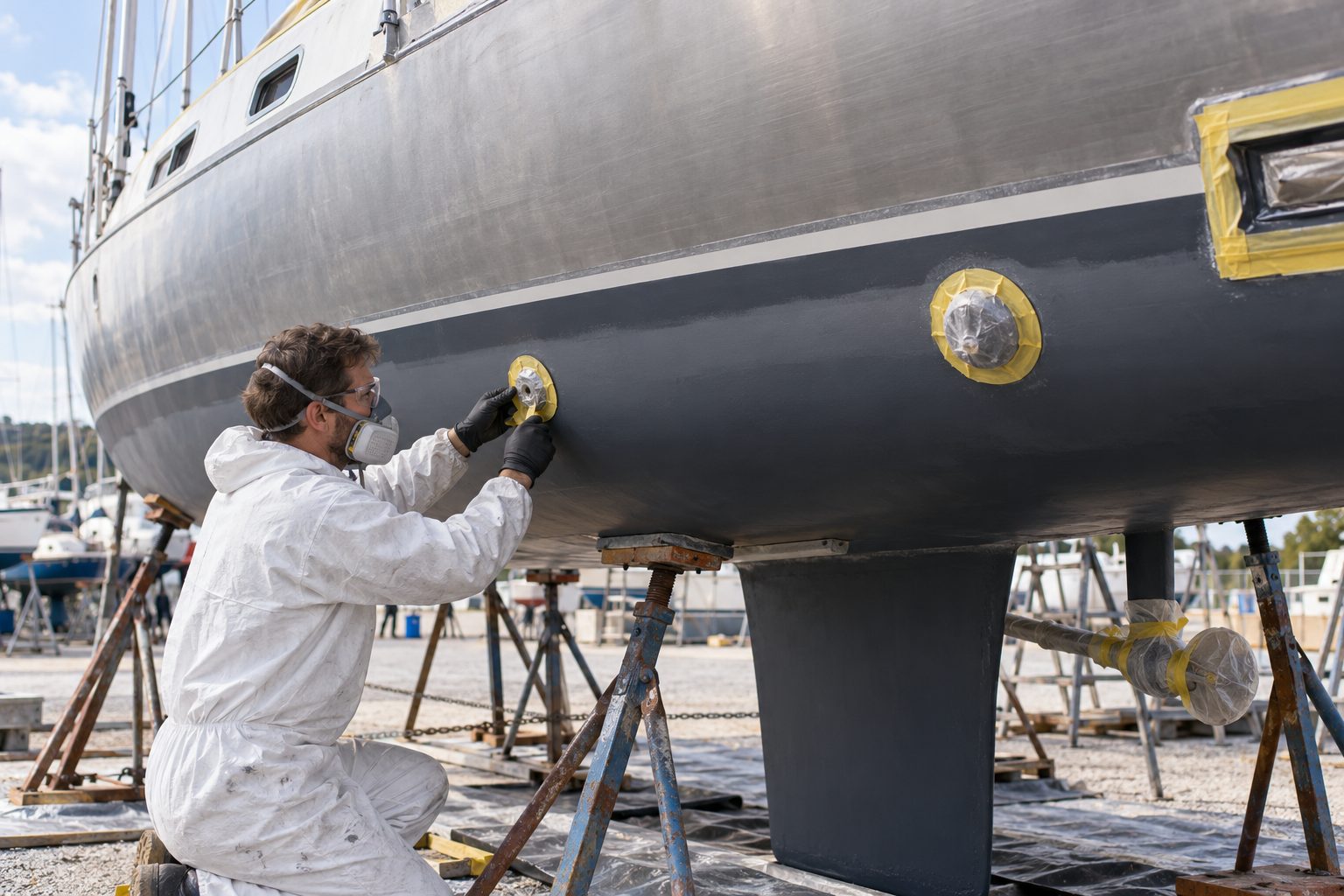
Aluminum needs special care. Do not apply a copper-bearing antifouling paint to bare aluminum. Use only a coating explicitly approved for aluminum, together with the exact primer or barrier system specified by that paint manufacturer. Keep anodes and other protected metal components clear as instructed. Wood, steel, lead keels and different metals also have product-specific preparation and primer requirements.
6. Check the existing paint before switching
Find out what is already on the hull before choosing a new type. Look for receipts, product labels or records from the yard. If the coating is unknown, lifting, badly cracked or very thick, get a compatibility check from the paint maker or a qualified boatyard before sanding or overcoating it. A tie coat, primer or complete removal may be required.
Follow the product data sheet for temperature, humidity, number of coats, recoat timing, time to launch and any maximum time out of the water. Use the stated personal protective equipment and contain sanding dust and paint waste. The can label and current technical data sheet take precedence over general advice.
A quick decision guide
- Fiberglass cruising sailboat, mostly kept afloat: start by comparing multi-season ablative products rated for your water and fouling conditions.
- Frequent cleaning, regular use or a firm smooth surface needed: compare hard coatings, and account for future paint-film buildup.
- Racing or performance use: consider a thin-film or burnishable system only if its preparation, compatibility and maintenance requirements suit the boat.
- Aluminum hull: use only a system explicitly approved for aluminum, including its specified primers; avoid copper-bearing paint on bare aluminum.
- Local copper restrictions or environmental goals: check the actual local rule and compare the product’s active ingredients and mechanism; “copper-free” alone is not a complete environmental rating.
So, what is the best type?
For an ordinary fiberglass cruising sailboat, a multi-season ablative is often the simplest type to evaluate first. Choose the product only after matching its label to your hull, water, boat use, current coating and local restrictions. The best system is one that is legal where you keep the boat, compatible with the existing layers, applied correctly and maintained on schedule.