Used sailboat buying guide
How to Buy a Used Sailboat: A Complete Buyer’s Guide
Buying a used sailboat can open the door to affordable cruising, but it pays to understand the boat, its systems and the full cost of ownership before making an offer. This practical guide walks through the process from choosing a model to closing and preparing for your first voyage.
Decide what kind of sailing you will actually do
A boat intended for weekend sailing on sheltered water is not necessarily the best choice for ocean passages. Begin with your cruising grounds, typical crew, available time, and tolerance for maintenance. Consider draft restrictions, bridge clearance, seasonal weather and marina availability. A modest, well-maintained boat that suits your real itinerary is often a better purchase than a larger boat with deferred repairs.
Set a total ownership budget, not just an asking-price budget
The purchase price is only one part of the cost. Budget for an independent survey, haul-out, sea trial, registration, taxes where applicable, insurance, dockage or mooring, maintenance and immediate repairs. Older boats can need standing rigging, sails, batteries, electronics, hoses, safety gear and engine work. Ask for written estimates before making commitments. Keep a contingency reserve rather than spending every available dollar on the hull.

Choose a practical size and layout
Length affects berthing fees, sail loads, handling, storage and upkeep. Evaluate the number of secure sea berths, ventilation, galley usability, headroom, tankage and access to mechanical systems. More cabins do not automatically mean more comfort offshore. Walk through the boat as if cooking, sleeping and servicing it in rough conditions. Check that the companionway, cockpit and deck layout work for the crew who will actually sail.
Research the model before viewing
Compare published dimensions, displacement, ballast, draft, tankage and engine specifications with the individual boat. Builders sometimes changed layouts and equipment within the same model run. Read owner reports critically and look for model-specific concerns, but do not assume that every example has the same defects. A particular boat's condition, modifications and maintenance history often matter more than its brochure reputation.
Review the listing and ask for records
Request recent photographs of the hull, deck, bilge, engine, electrical installation, sails and standing rigging. Ask for the hull identification number where applicable, ownership documentation, equipment inventory, maintenance receipts, engine hours and known damage history. Clarify whether the dinghy, outboard, electronics and other advertised accessories are included. Written answers help prevent misunderstandings later.
Inspect the hull, keel and rudder
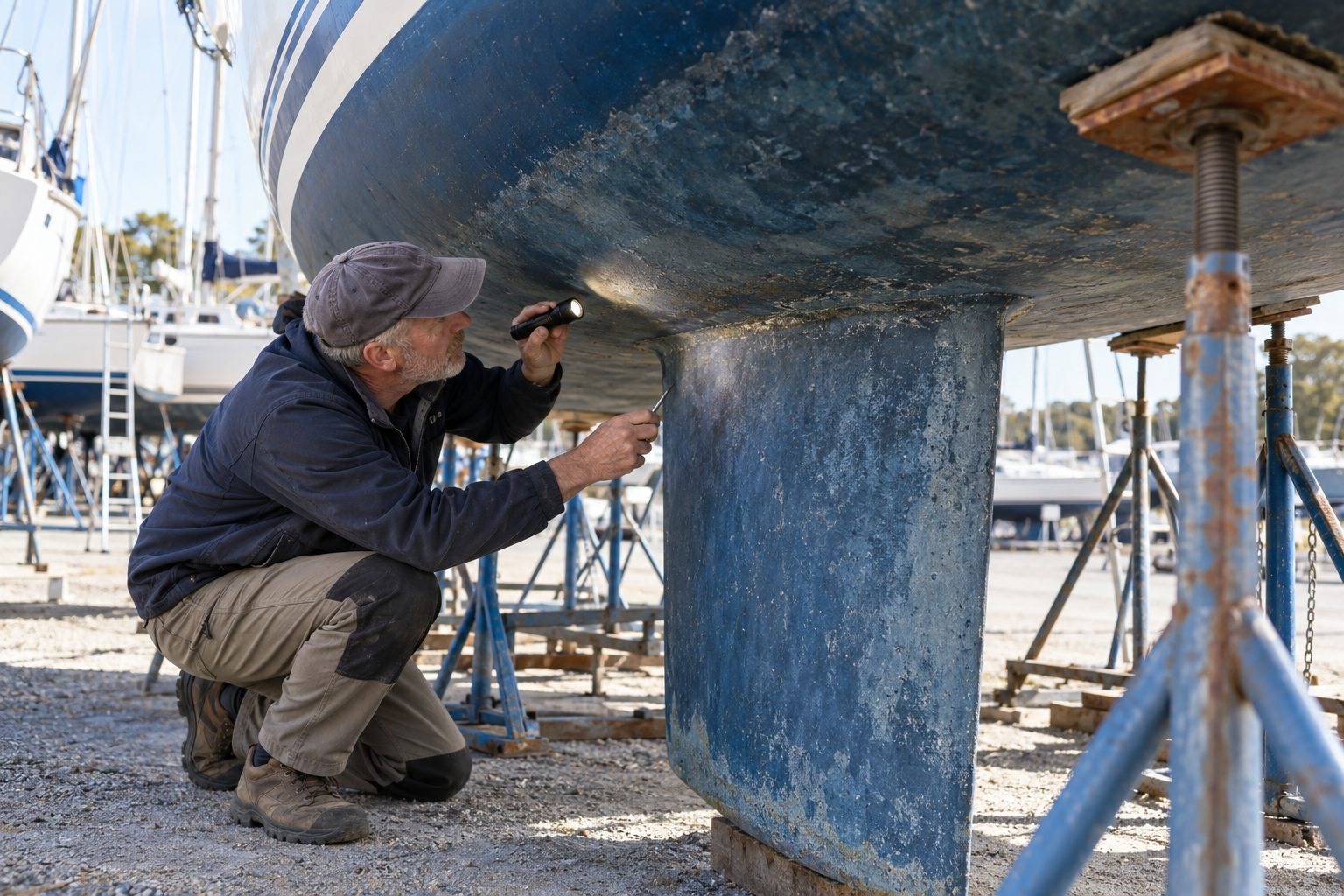
Look for cracks, previous repairs, unusual distortion, leaking through-hulls and signs of grounding. Inspect the keel-to-hull joint and surrounding bilge structure. Rudder play, water ingress and damaged bearings can be expensive to address. Blisters are not all equally serious, but they deserve investigation. An experienced marine surveyor can help distinguish cosmetic issues from structural concerns.
Check the deck, rigging and sails
Soft spots, leaks around fittings, corroded chainplates and deteriorated core can lead to significant repairs. Examine lifelines, stanchions, deck hardware, winches and steering components. Standing rigging age and condition should be documented; visual appearance alone cannot establish remaining service life. Inspect sails for shape, UV damage, stitching and hardware. Replacement sails can materially change the real purchase cost.
Evaluate the engine and onboard systems
A clean engine compartment is encouraging but not proof of reliability. Check cold starting, cooling-water discharge, exhaust condition, leaks, mounts, shaft or saildrive installation and service records. Review fuel tanks and hoses for contamination or deterioration. Electrical systems should be labeled, protected and installed appropriately. Test charging, batteries, pumps, freshwater, sanitation, navigation instruments and any generator or watermaker.
Arrange an independent survey and sea trial
Hire a qualified surveyor who works for you, not the seller. Agree on the scope and limitations of the inspection in advance. A haul-out can reveal underwater issues that are invisible afloat. The sea trial should include engine operation under load, steering, sail handling and basic navigation equipment. A survey is a snapshot, not a warranty, and specialists may be needed for engines, rigging or complex electrical systems.
Understand offers, deposits and closing
Use a written purchase agreement that specifies price, inventory, deposit handling, survey and sea-trial contingencies, deadlines, title requirements and closing arrangements. Procedures vary by jurisdiction, so obtain appropriate local professional advice. Confirm liens, ownership and registration before transferring funds. If a survey reveals problems, you may negotiate repairs or price, proceed as agreed, or exercise a valid contractual contingency.
Plan your first season after purchase
Prioritize safety-critical work: through-hulls, steering, rigging, bilge pumping, fire protection and communications. Build a maintenance log and learn where every shutoff and breaker is located. Practice docking, anchoring, reefing and man-overboard procedures with your actual crew. A gradual shakedown schedule helps uncover problems close to support rather than far offshore.
Frequently asked questions
Is buying an older sailboat a bad idea? Not necessarily: maintenance history, design suitability and survey findings matter more than age alone. Should I buy without a survey? For most buyers, an independent survey is a valuable risk-management step. What is the most expensive surprise? Structural, rigging and engine problems can all be costly; the answer depends on the specific boat. Can I live aboard immediately? Verify safety, insurance, legal liveaboard permissions and essential systems first.
Before you search: write a one-page buying brief
Write down where you will sail during the first two years, who will normally crew, whether you expect to live aboard, and how many nights you will spend away from shore power. Separate essential requirements from preferences. A safe cockpit, reliable steering, adequate ventilation and an engine that can be serviced may matter more than a fashionable interior. Set a maximum draft using the actual channels and anchorages you intend to visit, then consider bridge clearance and local berth availability. If you will sail shorthanded, try operating the winches, reefing lines and anchor system yourself. A realistic brief makes it easier to reject attractive boats that are wrong for your needs.
Build a comparison sheet for every candidate
For each boat, record asking price, year, length, draft, displacement, engine model, reported hours, tank capacities, rig type and location. Add the age of sails, standing rigging, batteries and major electronics where known. Use separate columns for verified facts, seller statements and unanswered questions. Note whether the boat is in the water, on the hard or actively used. A boat sitting unused for years deserves careful attention to seals, fuel, batteries and mechanical systems. Compare the total estimated acquisition cost, not just the listing price. This disciplined approach helps prevent a beautiful photograph or a persuasive sales description from dominating your decision.
Screen the listing before paying to travel
Ask for current, dateable photographs and a video walkthrough showing the bilge, engine, deck fittings, chainplates, keel joint, rudder and major systems. Request copies of service invoices with private details appropriately redacted. Confirm that the boat is available for inspection, where it is berthed and whether the seller can demonstrate equipment. Ask directly about collisions, groundings, storm damage, flooding, insurance claims and persistent leaks. A seller may not know every defect, so treat answers as leads for inspection rather than guarantees. If the boat is far away, consider paying a local professional for a preliminary viewing before arranging flights, accommodation and a full survey.
Inspect the boat systematically at the dock
Start outside and work in a consistent direction. Check hull and topsides for impact marks, unusual repairs and signs of movement. On deck, test for localized softness carefully and inspect sealant around hardware. Below, open accessible lockers and floorboards to look for standing water, corrosion, stained timber, deteriorated hoses and signs of previous leaks. Smell alone is not a reliable diagnosis, but persistent fuel or sewage odors deserve investigation. Operate pumps, lights, instruments, refrigeration and plumbing with permission. Take notes and photographs labeled by location. Never operate unfamiliar electrical, fuel or through-hull systems without the owner or a competent person present.
Understand the limits of a marine survey
A pre-purchase survey is an independent assessment within an agreed scope, not a promise that the boat will never fail. Surveyors cannot necessarily see behind liners, inside sealed tanks, beneath coatings or within engine components. Ask what standards and methods will be used, whether moisture readings are interpreted in context and which areas will be excluded. Find out whether a separate rigging inspection, mechanical inspection or electrical assessment is recommended. Arrange the haul-out and sea trial so that findings can be correlated. Request a report that distinguishes immediate safety concerns, significant defects, maintenance items and cosmetic observations. Then seek written estimates for major repairs before deciding whether to proceed.
Know what to observe during the sea trial
Agree on a practical route and a plan to test sails, steering and propulsion before leaving the berth. If possible, observe the engine starting from cold, then monitor operating temperature, vibration, smoke and charging while motoring at suitable loads. Check forward and reverse engagement and note any unusual noise or leaks. Under sail, observe whether the helm feels balanced, whether the sails hoist and reef smoothly and whether winches and furlers operate correctly. Test the autopilot in conditions appropriate for its use. Confirm that navigation lights and instruments function. A short trial in flat water cannot establish offshore seaworthiness, so treat it as one part of the evidence.
Turn defects into a repair budget
After receiving inspection findings, divide issues into safety-critical repairs, essential reliability work, near-term replacements and optional improvements. Obtain realistic local quotations for the largest items, including labor, parts, haul-out, transport and taxes. A cheap boat needing structural deck repairs, new rigging and major engine work can become more expensive than a better-maintained example. Ask how long parts may take to arrive, especially for older engines or uncommon systems. Consider whether repairs can be performed where the boat is located and whether the yard permits outside contractors. Include time lost from cruising in your decision, not just the invoice total.
Avoid common transaction mistakes
Do not send a substantial deposit based only on photographs or an unverified identity. Use a written agreement and a suitable escrow or closing process where appropriate. Verify the vessel's ownership chain, registration or documentation, and any recorded liens through the relevant authorities. Make sure the inventory lists what transfers with the boat, including sails, tender, outboard, electronics, spare parts and safety equipment. Specify how survey and sea-trial contingencies work and who pays for haul-out or damage during testing. If a broker is involved, understand whom the broker represents. Requirements differ across jurisdictions, so seek local legal or closing advice when necessary.
Plan insurance and berthing before closing
Before the final purchase decision, ask insurers whether they will cover the specific vessel, its age, construction, intended cruising area and your experience. Some underwriters require a recent survey or completion of specified repairs. Obtain a realistic berth, mooring or yard quote and check depth, beam restrictions, shore power and storm policies. If you intend to live aboard, confirm that it is permitted rather than assuming a marina will allow it. Review seasonal navigation limits and named-storm conditions in writing. Discovering after closing that the boat cannot be insured or kept where you planned can quickly undermine an otherwise good purchase.
Create a 30-day commissioning and shakedown plan
The first month should focus on knowing the boat rather than adding optional gadgets. Locate every seacock, breaker, fuse, fire extinguisher, emergency steering component and bilge pump. Inspect and test essential safety systems, replace overdue consumables and label critical valves and circuits. Make short trips in settled conditions to practice docking, reefing, anchoring and engine operation. Keep a log of defects, fuel use, battery charging and water consumption. Invite a knowledgeable instructor or technician to review unfamiliar systems. Gradually increase trip length only after the boat and crew have demonstrated dependable performance near support.
Find a boat that fits your plans
Compare manufacturer specifications and review available listings before scheduling viewings.
Browse sailboats for sale → Research manufacturers →DETAILED GUIDE · 4 MIN READ
How to Buy a Used Sailboat: decisions, examples and a working checklist
Buying a used sailboat is a sequence of decisions: define the use, compare candidates, verify the individual boat, understand the agreement and plan the handover. Keep asking price separate from the cost to make the boat suitable for your plans. Progress when the evidence supports the next step, rather than allowing a polished listing to replace inspection and documentation.
Turn the sailing plan into a shortlist
Write a brief covering crew, sailing area, time aboard, storage needs and the work you can realistically take on. Separate essential requirements from preferences. Use the same brief when comparing listings so that every attractive new boat does not silently change the goal. Record why a candidate fits and which important details are missing.
For each listing, capture the exact model, year, location, asking price and stated equipment. Keep seller claims distinct from verified records. A recent refit may mean anything from new upholstery to major structural work; ask what was done, by whom and with what documentation. This makes the first conversation more productive than asking whether the boat is generally ready.
Use the viewing to resolve specific questions
Bring a consistent worksheet and photograph details with permission. Walk through the way your crew would use the cockpit, berths, galley and storage. Ask about service access and known faults. A viewing can eliminate an unsuitable boat before further expense, but it cannot establish the condition of every concealed system.
Make an unanswered-questions list while the owner is present. Request records for major repairs, machinery changes and equipment included in the sale. Avoid deciding that something works because it is installed or because a control lights up. Identify which demonstrations and specialist assessments would be needed if you continue.
Coordinate the agreement and independent assessment
Before committing funds, understand the actual written agreement and obtain qualified help for transaction questions where needed. Identify the applicable deadlines, conditions, inventory and handover arrangements. Do not assume a sample process from another location creates the same rights in your transaction. Keep technical evaluation and ownership-document verification as separate tasks.
Arrange an independent survey and relevant machinery or rigging expertise with a clearly defined scope. California State Parks' buying guidance emphasizes independent assessment; its local transaction details should not be treated as worldwide rules. Discuss findings and exclusions, then obtain boat-specific cost information for work that affects your decision.
Prepare for ownership before the handover
Build a first-year plan that includes immediate repairs, berthing, service and any required training or delivery arrangements. Verify availability rather than assuming a marina or technician will be ready when the sale completes. Keep optional upgrades separate from work needed before the boat can be used as intended.
At handover, reconcile the agreed inventory, collect manuals and records, and learn normal system operation from an appropriate person. Record keys, access arrangements and any outstanding work. Start a maintenance log immediately. A successful purchase is more than receiving possession: you should understand what you own, what remains uncertain and what needs attention next.
Your working checklist
Use these prompts in your viewing notes or boat notebook. Record unanswered questions as well as confirmed observations.
- Create one sailing brief and use it across the shortlist.
- Record listing claims separately from confirmed evidence.
- Use viewings to resolve practical suitability questions.
- Understand the actual agreement before committing funds.
- Commission independent assessments with explicit limitations.
- Plan first-year work, berthing and a documented handover.
Frequently asked questions
Should I buy the cheapest boat that meets the size requirement?
Compare total readiness and ownership costs, not asking price alone. A less expensive boat may need work, access or equipment that changes the overall budget. Use inspection findings and current quotes before deciding whether the apparent saving is real.
Can I rely on the seller's old survey?
It can provide useful history, but its date, scope and purpose may differ from your needs and the boat may have changed. Discuss it with your independent surveyor and arrange an assessment appropriate to the current purchase rather than treating an old report as a current guarantee.
Further reading and source context
These references support terminology and general research methods. Use the exact boat’s documents for specifications and operating instructions; manufacturer examples do not apply to every model.