How to Buy a Sailboat Online Without Costly Mistakes
Practical guidance on how to buy a sailboat online without costly mistakes, including costs, inspections and decisions for sailboat buyers. Compare the specific vessel, its documented condition and its suitability for your intended use.
Search listings effectively
Filter by location, draft, length, price, rig and intended use; compare more than the headline photograph.
Worker researching boat maintenance using a laptop beside a yacht
Verify the seller and vessel
Verify ownership documentation and identity through appropriate channels. Be wary of pressure to pay quickly or bypass standard checks.
Illustration for How to Buy a Sailboat Online: Verify the seller and vessel
Request useful evidence
Ask for current photos, maintenance records, a detailed inventory and videos showing key systems operating.
Illustration for How to Buy a Sailboat Online: Request useful evidence
Survey and sea trial
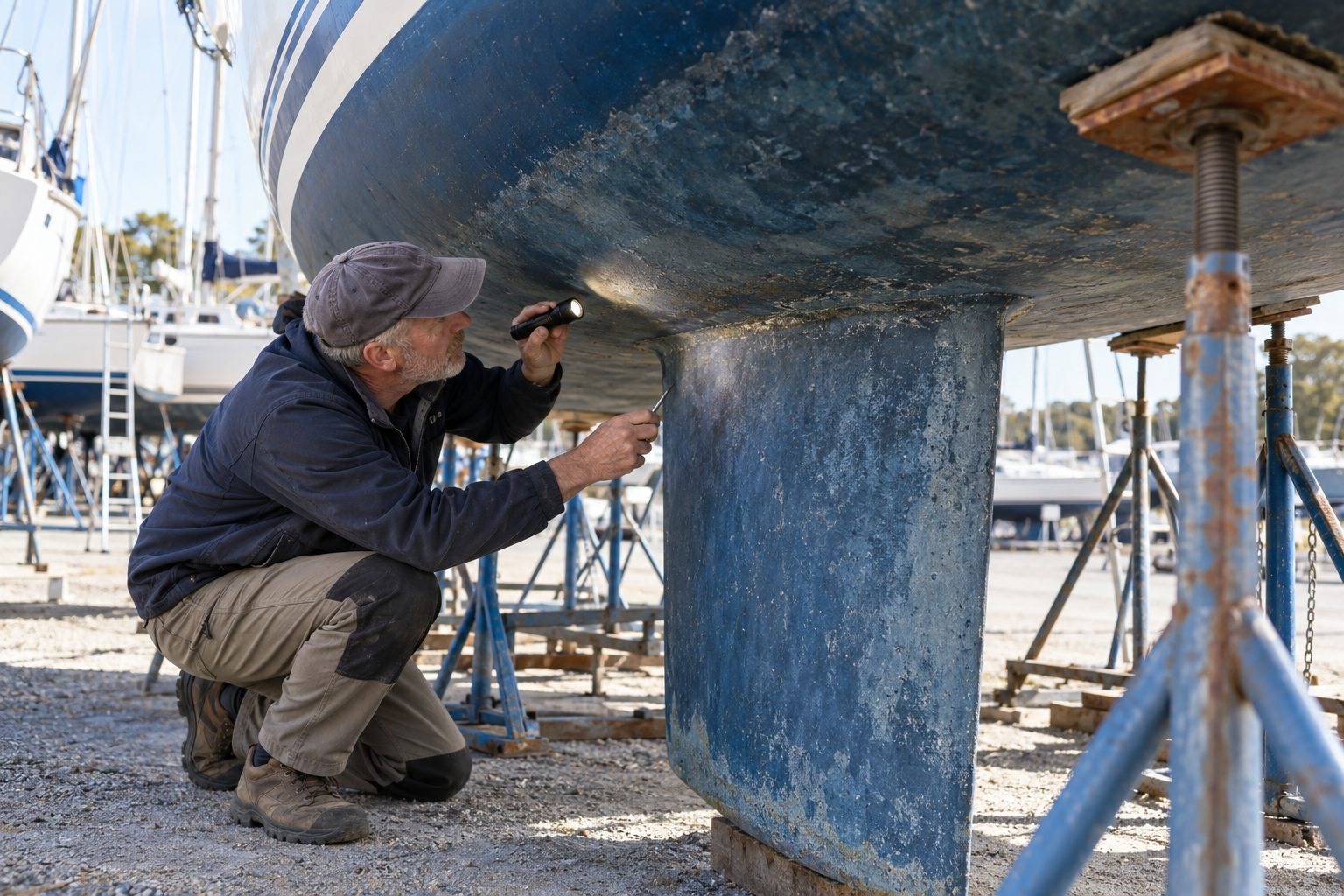
Arrange an independent survey and sea trial, with written contingencies and a clear understanding of travel and haul-out costs.
Secure the transaction
Use a written agreement and reputable closing or escrow arrangements where appropriate. Confirm title and any liens before releasing funds.
Frequently asked questions
What should I verify before buying?
Verify ownership, maintenance records, equipment, condition and the terms of any purchase agreement. Consider an independent survey and specialist inspections.
How can I estimate the total cost?
Combine purchase price with taxes, insurance, storage, inspections, repairs and ongoing maintenance. Local costs vary substantially.
How to Buy a Sailboat Online: decisions, examples and a working checklist
Use online listings to build and screen a shortlist, then verify the actual boat, seller and condition before committing. A strong online process turns attractive claims into specific questions and evidence; it does not replace an independent inspection.
Build searches around requirements you can explain
Start with the sailing area, regular crew, practical size limits and essential accommodation. Keep a separate list of preferences so an appealing photograph does not quietly change the essentials. Save candidate listings with the date you reviewed them because descriptions and availability can change.
Search more than one phrasing for a model, but check that results refer to the same version. A short model name can hide different keel, rig or layout options. Compare the listing with builder information and record uncertainty instead of filling gaps with assumptions. Use the same units when comparing length, draft, fuel and water capacity.
Read the gallery as evidence, not as a tour you have already taken
Look for coverage of the entire boat, not only the saloon and exterior. Missing photographs are a question to investigate rather than proof of a defect. Ask for current views of the areas that affect your decision, including machinery access and visible issues mentioned in the description.
Make a short request with named locations. “Please show the bilge below the saloon sole and the area beneath the port window” is easier to answer than “send more pictures.” If a photograph appears to conflict with the description, ask which is current. Keep the reply with the candidate rather than relying on memory.
Use a remote walkthrough to decide whether to travel
Agree a route and a short list of questions before a video call. Ask the presenter to show how spaces connect, where the boat is located and the equipment relevant to your intended use. Do not ask someone to operate unfamiliar systems or enter unsafe areas to satisfy a remote request.
A walkthrough can reveal whether the layout deserves a visit, but lighting, camera angle and connection quality limit what it proves. It cannot establish hidden structural condition or replace measurements and specialist assessment. Treat a promising call as a reason to arrange the next check, not as completion of the inspection.
Separate claims, records and observations
Use three columns in your worksheet. A seller statement belongs in “claimed”; an invoice or manual may support “documented”; something you or your appointed professional actually observed belongs in “observed.” An invoice for an engine service does not prove every engine component is sound, and an old photograph does not prove current condition.
Ask what is included in the sale and which equipment is nonworking, untested or removed. Identify modifications that differ from the original model. If a required answer is unavailable, note its effect on your willingness to spend time and money on the next step. Unknown information should remain visible in the comparison.
Arrange the in-person stage before making travel plans
Confirm access, boat location, whether it is afloat or ashore, and who can demonstrate systems. Coordinate any independent survey, haul-out and appropriate trial with the relevant professionals. Ask about access limitations early so you do not discover them after traveling.
Verify identities and transaction instructions through appropriate independent channels. Do not treat an emailed payment request, attractive listing or urgent deadline as verification. Use qualified local help for ownership, contract and payment arrangements. Requirements depend on the transaction and jurisdiction, so this research workflow is not a substitute for that process.
Worked shortlist: three listings, one consistent worksheet
Imagine three similar boats: one has a complete gallery but no maintenance dates, another has detailed records but little interior coverage, and the third has an attractive description with an uncertain location. Give each a different follow-up request rather than ranking them only by the asking figure.
The first needs records, the second needs a layout walkthrough, and the third needs basic verification before travel is considered. This approach saves effort by asking the question that could change the decision next. Keep rejected candidates and the reason in your notes so you do not repeatedly investigate the same unsuitable boat.
Your working checklist
Use these prompts in your viewing notes or boat notebook. Record unanswered questions as well as confirmed observations.
Save the listing date and exact model/version.
Request current photographs of decision-critical areas.
Keep claims separate from documents and observations.
Confirm inclusion list, access and who can demonstrate equipment.
Arrange independent checks before treating the shortlist as a purchase decision.
Frequently asked questions
Can I buy a boat without visiting it?
Some buyers appoint independent local professionals, but the quality and scope of that representation matter. A remote process still needs reliable identity, condition and transaction checks; photographs alone are not enough.
Does a detailed listing mean the boat is well maintained?
It makes screening easier, but writing quality is not maintenance evidence. Check records, current condition and the answers to specific questions.
Further reading and source context
These references support terminology and general research methods. Use the exact boat’s documents for specifications and operating instructions; manufacturer examples do not apply to every model.