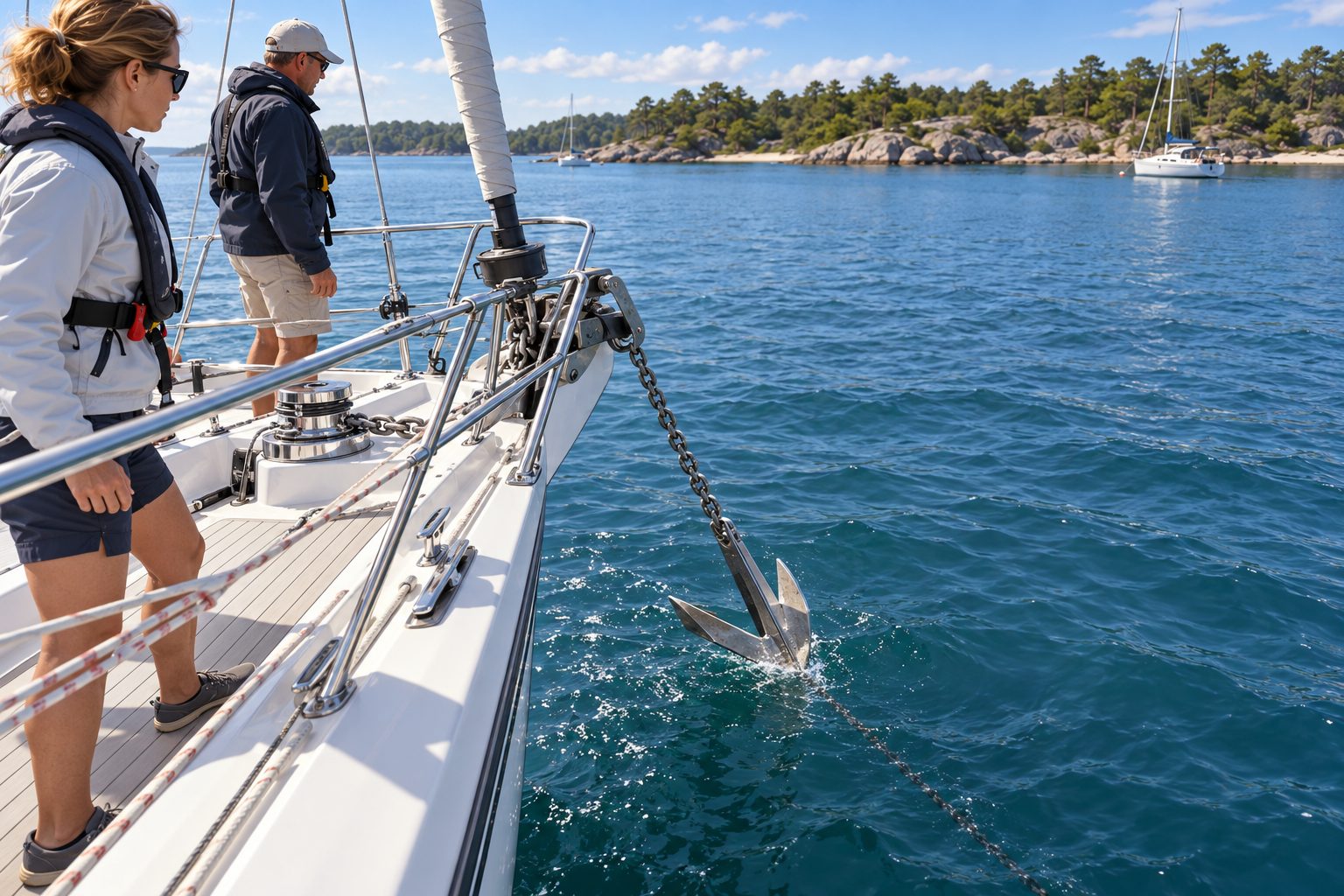
Sailing systems and safety
How to Size Anchor Chain for a Sailboat
A practical sailing guide to how to size anchor chain for a sailboat, covering inspections, safety and ownership decisions. Follow current manufacturer instructions, applicable regulations and qualified professional guidance for safety-critical work.
Chain diameter and grade
Chain strength depends on diameter, grade, construction and condition. Use manufacturer guidance and suitable safety margins.

Anchor and windlass compatibility
Windlass gypsies require specific chain dimensions and calibration; nominal size alone may not ensure compatibility.
Length and scope
Required rode length depends on depth, bow height, weather, bottom and anchoring technique.
Weight in the bow
Heavy chain affects trim and pitching. Consider the overall ground-tackle system rather than maximizing weight alone.
Inspection and replacement
Inspect corrosion, wear, distorted links and shackles, and replace suspect components.
DETAILED GUIDE · 4 MIN READ
How to Size Sailboat Anchor Chain: decisions, examples and a working checklist
Anchor-chain selection is a complete ground-tackle decision involving the boat, intended use, chain specification, windlass and connecting hardware. Nominal diameter alone does not establish compatibility or suitability. Obtain a boat-specific recommendation and record the exact chain standard, grade and relevant component requirements before purchasing a replacement rode.
Describe the boat and intended anchoring use
Provide the supplier with actual boat dimensions, loaded information where needed, anchor details and the conditions covered by your cruising plan. Separate ordinary anchoring plans from exceptional-weather assumptions. A chain recommendation should have a stated basis rather than depend only on what another boat of similar length carries.
Record the existing rode, its known specification and any history of replacement or damage. If the chain cannot be identified confidently, label that uncertainty. Do not assume a nominal measurement establishes material grade or strength. A supplier or appropriate specialist can advise what evidence is needed before the existing equipment is reused.
Match the chain to the windlass
Identify the windlass model and gypsy marking, then obtain the maker's compatibility information. Lewmar supplies gypsies for particular chain specifications; this illustrates why matching only an approximate diameter is insufficient. Ask the dealer to verify the exact chain and gypsy combination before ordering a full length.
Record the chain standard as well as size and grade on the invoice and boat inventory. Similar-looking links may not be interchangeable in the mechanism. If changing the rode, ask whether the connecting hardware, stowage and other installed components also need review. Treat the change as a system assessment rather than a simple exchange of metal by weight.
Plan length and storage from the actual system
Determine the required rode arrangement with appropriate guidance for the intended anchoring conditions and the boat. Keep total carried length separate from the amount deployed at a particular anchorage. A long chain in the locker does not by itself establish that the deployment, attachment or anchoring method is appropriate.
Assess locker capacity, drainage, chain fall and access with the installer or windlass supplier. Ask how the load and location fit the boat's design. Do not assume that unused locker volume is permission to add unlimited weight forward. Include any combination rode and its manufacturer-specified requirements in the planning conversation.
Inspect, mark and document the completed arrangement
Have chain condition and suspect wear assessed appropriately, including the connecting components. Do not translate a casual look at surface rust into a confident remaining-strength figure. Follow manufacturer and specialist guidance on replacement, and document which parts were renewed. A stronger chain does not automatically strengthen every other link in the arrangement.
Use a clear marking and inventory system consistent with the boat's operating practice, and teach the crew how it is read. Retain product specifications, purchase dates and relevant inspection notes. For a used-boat purchase, ask for those records and a suitable demonstration of handling, while remembering that smooth retrieval is not proof of the entire ground tackle's condition. Keep a sample specification or supplier invoice aboard with the windlass manual. This reduces ambiguity when arranging a replacement away from the original supplier.
Your working checklist
Use these prompts in your viewing notes or boat notebook. Record unanswered questions as well as confirmed observations.
- Provide a boat-specific use brief to the supplier.
- Identify chain standard, grade and nominal size.
- Verify the exact gypsy and chain combination.
- Assess locker capacity, drainage and added weight.
- Review connecting components and condition together.
- Keep markings, specifications and service records understandable.
Frequently asked questions
Can I replace chain with any product of the same diameter?
No. Verify the exact chain specification and windlass compatibility, along with the requirements of the complete arrangement. A diameter measurement alone does not establish link geometry, grade or suitability for the installed gypsy.
Is more chain always better?
Additional length must be considered alongside carrying limits, storage, handling and the anchoring plan. Obtain appropriate advice for the actual boat and use. More weight aboard does not compensate for unsuitable components, poor maintenance or an inappropriate deployment plan.
Further reading and source context
These references support terminology and general research methods. Use the exact boat’s documents for specifications and operating instructions; manufacturer examples do not apply to every model.