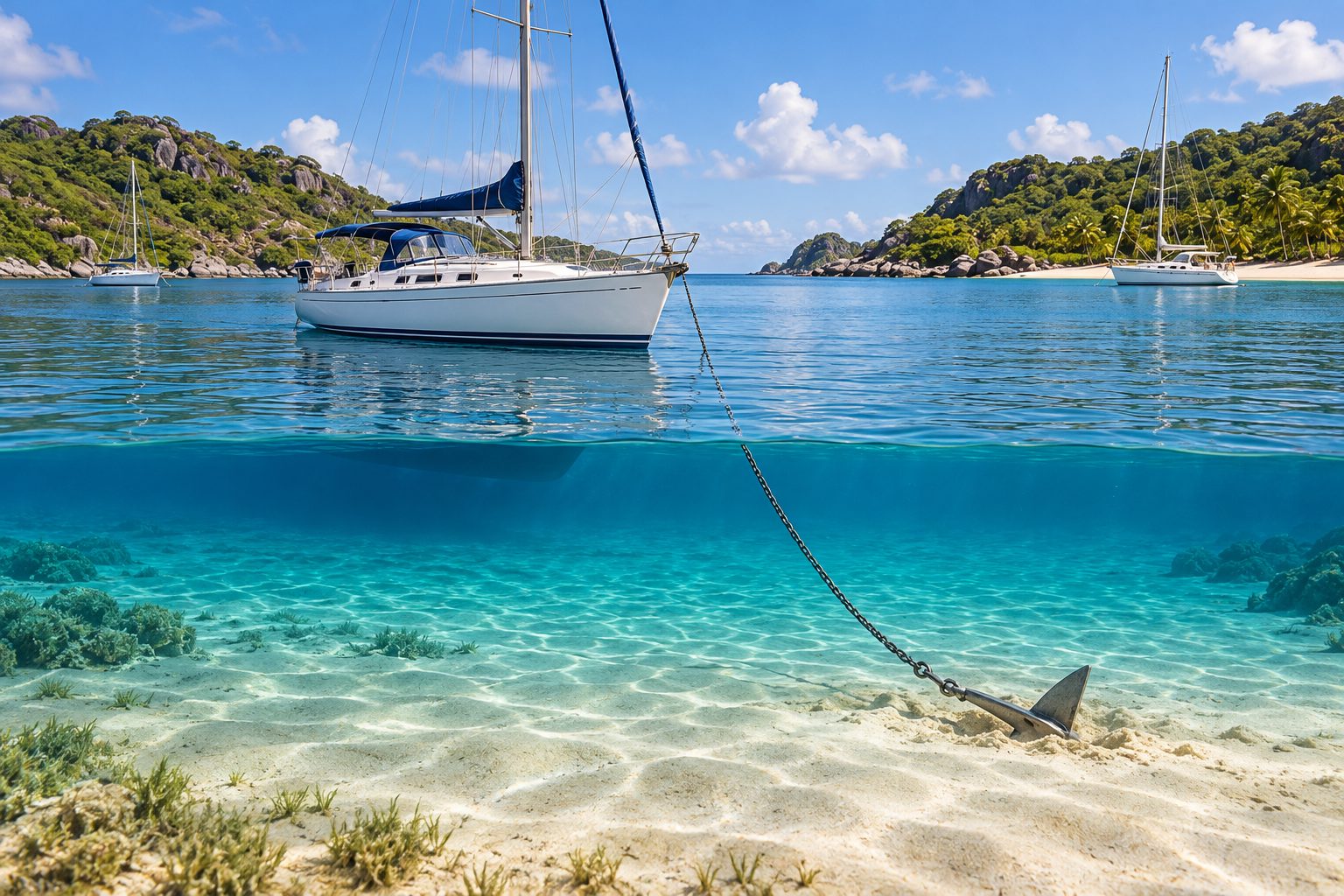
1. Choose and plan the anchorage
Check the chart and local notices for depth, bottom type, hazards, restricted areas, traffic and any anchoring limits. Look for shelter from the forecast wind and swell, good holding for your anchor, enough water at the lowest expected tide, and room for your boat to swing as wind or current changes. Avoid a lee shore where a dragging anchor could leave little time to respond.
Estimate the complete swing circle before entering. It depends on the length of rode you will pay out, the boat’s length, changes in wind and current, tide, and the space other boats need. Leave room for boats with different rode lengths and swing patterns. In crowded or changing conditions, choose another spot if the swing room is uncertain.
Protect the seabed as well as the boat. Avoid prohibited areas, coral and seagrass beds; where possible, choose clear sand with suitable holding. Include the area swept by the chain as the boat swings, and follow local habitat guidance.
2. Check the weather, tide and gear
Review the forecast for the time you expect to stay, including wind shifts, gusts, squalls, swell and current. Check predicted water levels and current where available. A sheltered spot in the present wind can become exposed if the wind shifts or the tide turns.
Before anchoring, inspect the anchor, shackle, swivel if fitted, chain and rope, windlass, bow roller, cleat or chain stopper, and the rode’s connection to the boat. Make sure the bitter end is secured to a strong point below deck and that the rode can run out without tangling. Use the anchor and rode sizes recommended for the boat and the expected bottom and conditions. Follow the windlass maker’s instructions.
Agree on a simple plan with the crew: the approach direction, target depth, amount of rode, hand signals or radio calls, and who controls the helm. Put on lifejackets before anyone goes forward. Keep hands and feet out of chain and rope bights, and keep everyone clear of the rode as it runs.
3. Calculate scope
Scope is the length of deployed anchor rode divided by the vertical distance from the bow roller or chock down to the seabed. That vertical distance is the water depth plus the bow roller’s height above the water. Account for the highest expected water level during the stay when calculating the maximum depth.
A common starting range is about 5:1 to 7:1 in suitable conditions, with more rode often needed as wind, waves, current or exposure increase. The anchor, rode type, bottom, depth and available swing room matter too; this is a rule of thumb, not a guarantee of holding.
Example: If the expected high-water depth is 12 feet and the bow roller is 3 feet above the water, the vertical distance is 15 feet. A 5:1 scope would use about 75 feet of rode; 7:1 would use about 105 feet. If you measure depth before high tide, include the predicted rise in water level.

4. Approach slowly and lower the anchor
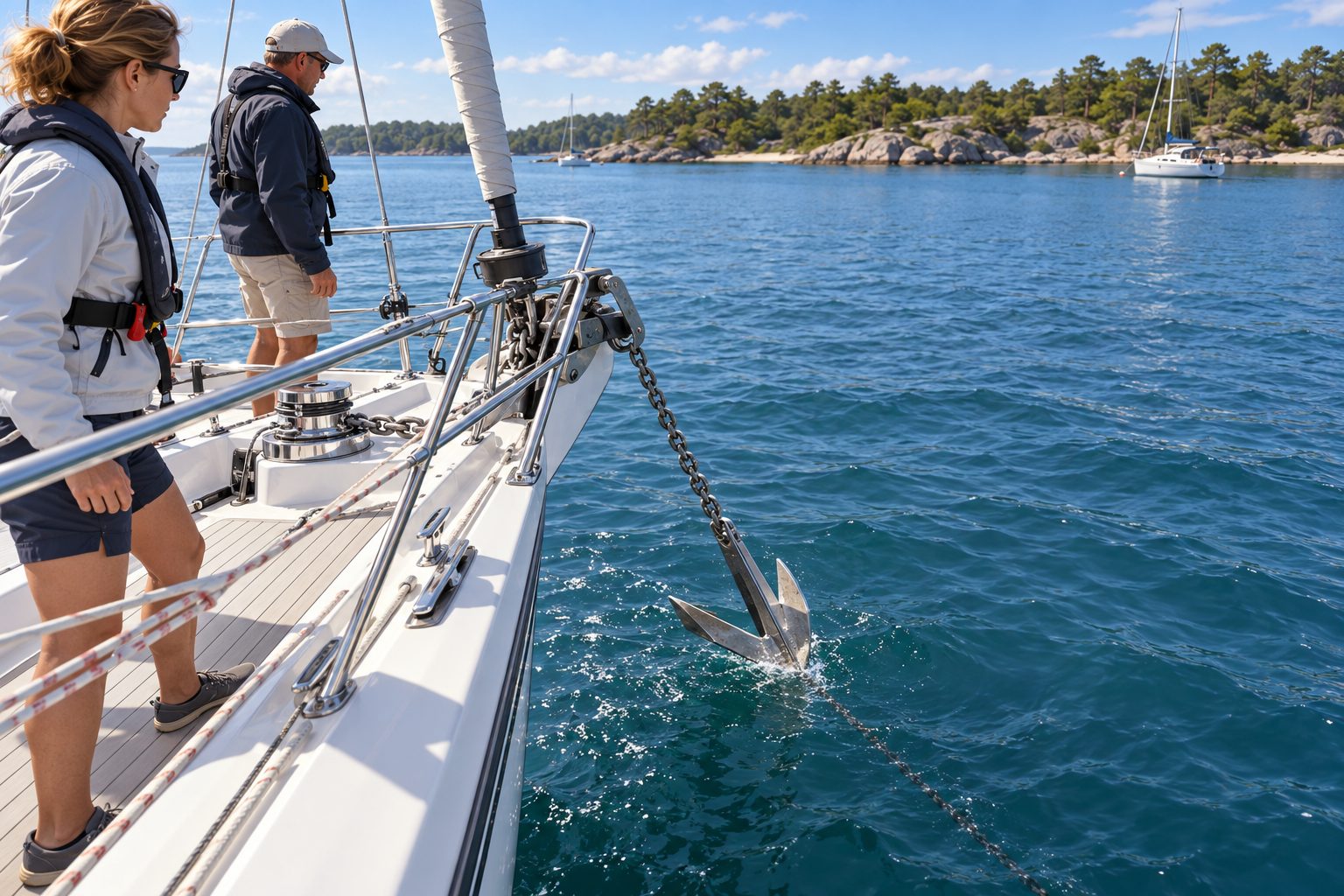
Prepare the boat for anchoring under power. If you have been sailing, furl or lower the sails as needed before the maneuver. Approach slowly toward the dominant wind or current, whichever is setting the boat most strongly, and keep the bow under control. Confirm the depth and check that the planned swing circle is still clear.
When the boat has little or no forward motion and is beginning to drift gently astern, lower the anchor from the bow. Do not throw it. Pay out the rode under control as the boat moves back, keeping it clear of the keel, propeller and rudder. Avoid letting the boat drift over the anchor or dropping a large pile of chain directly on top of it.
When you have paid out the planned scope, secure the rode to a rated cleat or chain stopper so the load is not carried only by the windlass unless the windlass is specifically designed for that use. Keep the bow pointed into the conditions while the rode comes under load.
5. Set the anchor and confirm it is holding
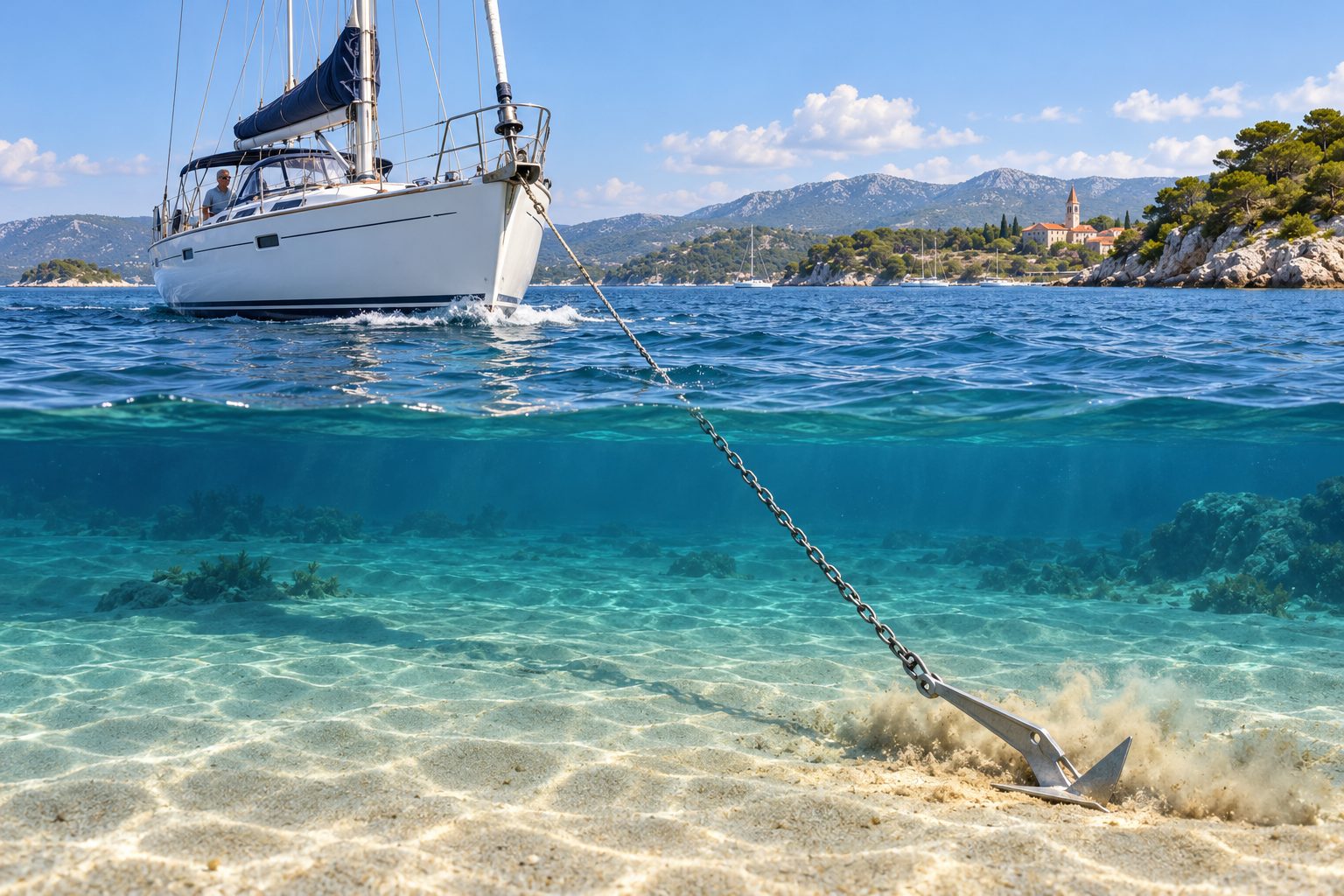
Let the boat settle back until the rode straightens. Apply reverse power gradually and steadily to load the anchor and help it dig in. Avoid a sudden high-throttle pull. Watch the rode and use fixed landmarks, a chartplotter or both to see whether the boat stops moving astern and remains in the same position.
After the initial set, increase the load carefully if conditions and your boat’s equipment allow. If the boat continues to move, the rode jumps or slackens unexpectedly, or the anchor does not hold, do not assume it is secure. Reposition, reset the anchor or choose a different spot. Check the result from more than one reference; a GPS anchor alarm is useful backup but should not replace observation.
6. Check lights and keep watch
Before leaving the deck, check that the boat has the anchor lights, shapes and sound signals required by the navigation rules that apply in that location. Requirements can depend on vessel length and whether you are in inland or international waters.
Set an anchor alarm with a radius that allows for the boat’s expected swing but warns if it moves outside the planned area. Confirm where the anchor lies, not just where the boat is now. Continue to watch the weather, tide, nearby traffic and the boat’s position. Recheck after a wind or current shift, and keep a clear route to the engine and a plan for getting underway if the anchorage becomes unsafe.
7. Retrieve the anchor
Start the engine and bring the boat slowly toward the anchor while the bow crew retrieves rode. Keep communication clear and keep fingers away from the windlass, chain and roller. The engine moves the boat; the windlass retrieves rode. Do not use the windlass to pull the boat forward against a tight rode.
When the rode is nearly vertical, pause and let the anchor break free as the boat moves gently toward it. Once free, retrieve it, secure it in the bow roller or locker, and make sure the rode is stowed so it cannot run loose. If the anchor is fouled, avoid overloading the windlass or fittings. Change the angle of pull carefully or get assistance; use a trip line only when appropriate for the site and conditions.
Common mistakes to avoid
- Choosing a spot without checking low-tide depth, forecast shifts or swing room.
- Calculating scope from water depth alone and forgetting the bow roller height.
- Dropping the anchor while the boat is still moving ahead or throwing it overboard.
- Letting the rode run without securing the bitter end or keeping the crew clear.
- Assuming the anchor is set without checking position under load.
- Relying on an alarm while ignoring the actual boat, weather and nearby vessels.
- Anchoring on sensitive habitat or where local rules prohibit it.