BEGINNER SAILING · LESSON 9 OF 40
Mainsail and Headsail
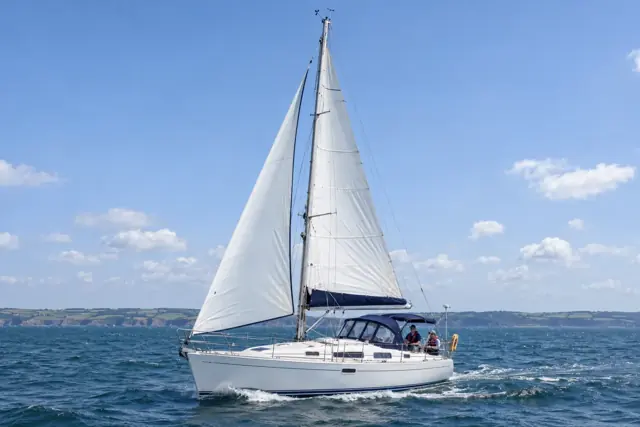
Identify what each sail does and how to adjust them together.
1. Mainsail
The mainsail is attached behind the mast and commonly controlled by the mainsheet, halyard, outhaul and other controls. The boom can move with great force; keep heads clear.
2. Headsail
A jib or genoa flies ahead of the mast and is trimmed with sheets. A furling headsail can be rolled in to reduce exposed area, but not every furling sail is suitable for all reefed conditions.
3. Balance
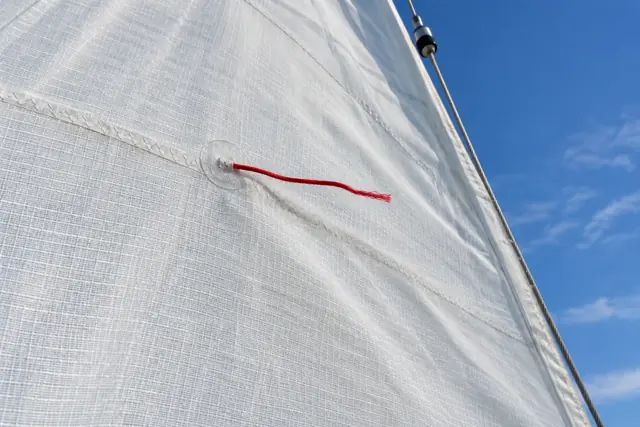
The two sails interact aerodynamically. Adjust them in small steps and watch helm pressure, heel, speed and telltales instead of assuming tighter is always faster.
4. Changing course
When heading closer to the wind, sails are usually trimmed in. When bearing away, sheets are usually eased. Prepare crew for sheet loads and keep hands clear of winch drums.
Identify the controls for each sail
Sketch the mast, forestay and boom. Trace a mainsheet and a headsail sheet on the drawing. One controls the main through its attachment arrangement; the other leads from the headsail clew.

Why name the sail before giving a trim instruction?
Two working sheets may be within reach and they affect different sails.
Practice Quiz
Answer all five questions. Passing score: 80% (4 of 5).