BEGINNER SAILING · LESSON 10 OF 40
Standing and Running Rigging
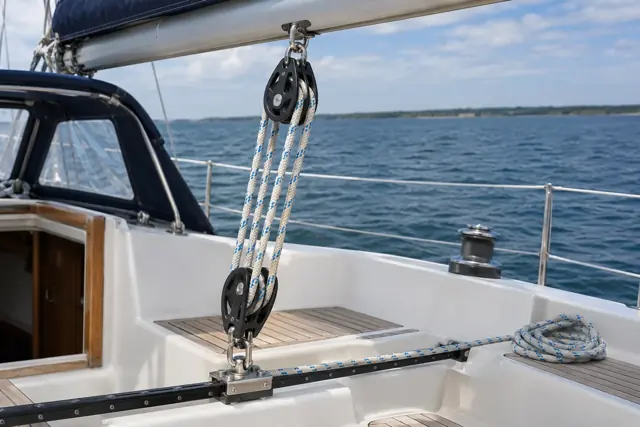
Understand the lines and wires that support and control sails.
1. Standing rigging
Shrouds and stays support the mast. Forestays support the mast forward; backstays or aft stays support it aft depending on rig design. Inspect fittings, corrosion and tension with professional guidance.
2. Running rigging
Halyards raise sails, sheets trim sails, and control lines adjust sail shape. Running rigging moves during sailing and may carry very high loads.
3. Winches and blocks
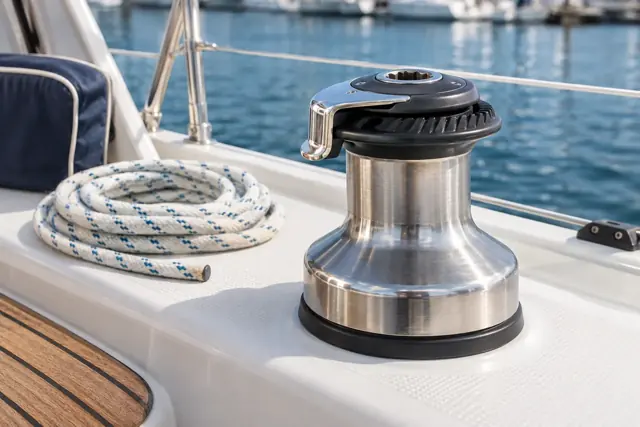
Blocks redirect loads and winches provide mechanical advantage. Keep fingers, clothing and hair clear. Never wrap a loaded line around your hand.
4. Inspection and safe handling
Check for chafe, broken strands, damaged sheaves and loose pins before sailing. Replace suspect parts before they fail, and avoid standing in the path of a heavily loaded line.
Separate support from control
From deck level identify one fitting supporting the mast and one line used to adjust a sail. Trace both visually. Record what each attaches to and where a rigger would need a closer look if damage were suspected.

Is every line running upward a stay?
No. A halyard can also run upward and serves a different job.
Practice Quiz
Answer all five questions. Passing score: 80% (4 of 5).