BEGINNER SAILING · LESSON 7 OF 40
Points of Sail
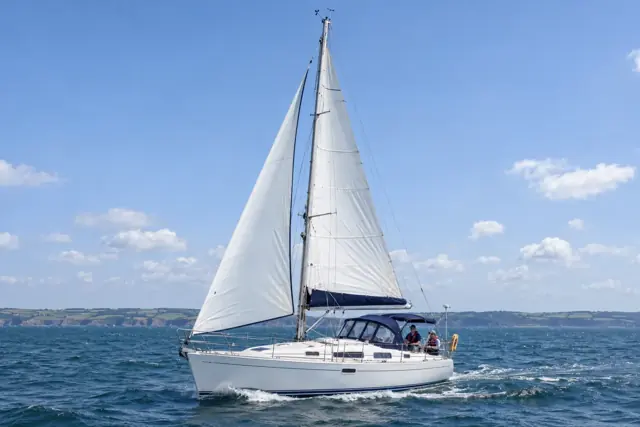
Learn how your course relative to the wind changes sail trim.
1. The no-go zone
A conventional sailboat cannot sail directly into the wind. The angle too close to the wind is called the no-go zone; its width depends on the boat and conditions.
2. Close-hauled and close reach
Close-hauled is sailing as near the wind as the boat can efficiently maintain. Ease the sails progressively when bearing away to a close reach.
3. Beam and broad reach
On a beam reach the wind comes roughly from the side; on a broad reach it comes from behind the beam. Sheets are eased farther as the wind moves aft.
4. Running and transitions
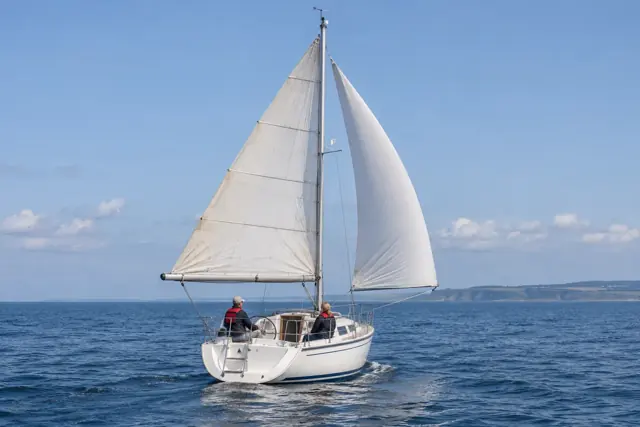
On a run, wind approaches from astern. The mainsail is eased well out and accidental jibes become a major hazard. Use controlled maneuvers and consider a preventer only when correctly rigged.
Draw the wind before the boat
Place a wind arrow at the top of a page and rotate a boat outline beneath it. Label a reach on each side. The words describe the angle to the wind, so a compass heading alone cannot identify the point of sail.
A boat heads east. Is it on a beam reach?
You also need the wind direction.
Practice Quiz
Answer all five questions. Passing score: 80% (4 of 5).