BEGINNER SAILING · LESSON 5 OF 40
Life Jackets and Personal Flotation Devices
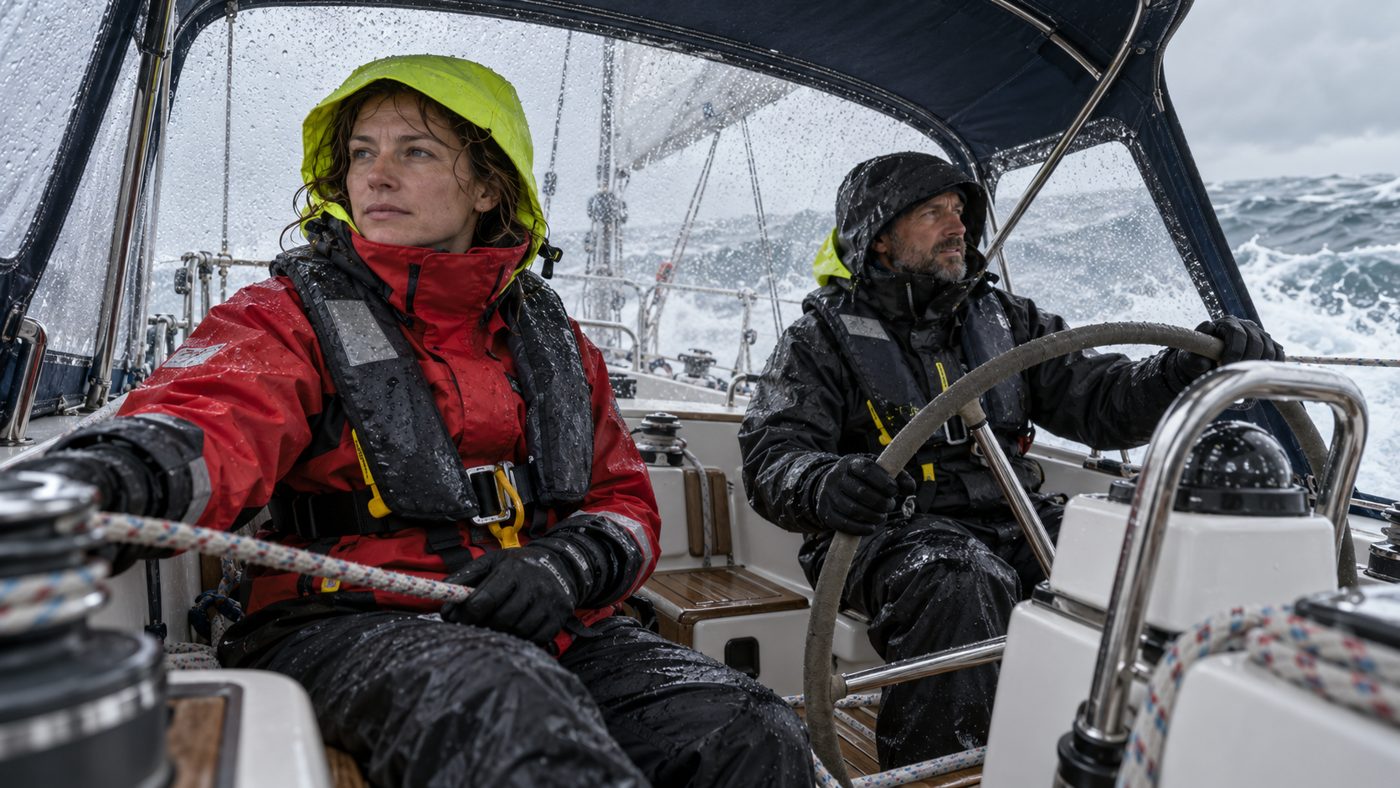
Choose, fit and care for flotation gear that can save lives.
1. Choose for the wearer and conditions
Select an approved PFD appropriate for body size, activity and local regulations. Offshore sailing may call for different equipment from sheltered-water sailing. Children need properly sized equipment, not adult jackets.
2. Fit and adjustment
Fasten all buckles and straps, then check that the PFD cannot ride up over the chin or ears when gently lifted at the shoulders. A loose jacket can fail to keep the wearer properly supported.
3. Inflatable PFDs
Inflatable models require regular inspection of the inflation mechanism, cylinder, indicators and oral inflation tube according to the manufacturer. Some models require manual activation and may not suit every wearer.
4. On deck
Wear a PFD whenever conditions warrant and follow vessel rules. In rough conditions, a properly rigged tether and harness can help prevent going overboard; flotation alone does not stop a fall. Practice recovery procedures with your crew.
Check fit before departure
Try the lifejacket over the layers you will actually wear. Have the skipper check fit and adjustment against the maker’s instructions. Identify the whistle or light on your particular model before going on deck.
What changes when a child puts on a thick jacket?
Recheck fit and fastening over the new clothing using the appropriate child-sized device.
Practice Quiz
Answer all five questions. Passing score: 80% (4 of 5).