BEGINNER SAILING · LESSON 4 OF 40
Essential Safety Equipment
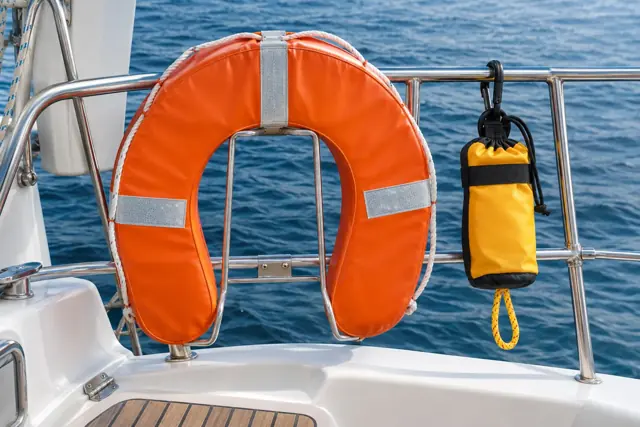
Understand the equipment you need to inspect and know how to use.
1. Wearable and throwable flotation
Carry suitable, correctly sized personal flotation devices for everyone and any additional throwable device required locally. Keep them accessible, inspect their condition and explain their use before departure.
2. Communication and signaling
A working VHF marine radio, sound signaling device, navigation lights and appropriate visual distress signals can help you communicate and be seen. Carriage requirements depend on vessel and waters.
3. Fire and flooding
Carry appropriate serviceable fire extinguishers and know their locations. Check bilge pumps, manual pumping options, seacocks and emergency plugs. Do not enter a smoke-filled compartment.
4. Before leaving
Check forecasts, fuel, battery power, steering, navigation equipment, first-aid supplies and emergency contacts. Tell someone ashore your route and expected return. Always follow the applicable local regulations.
Find equipment from the working position
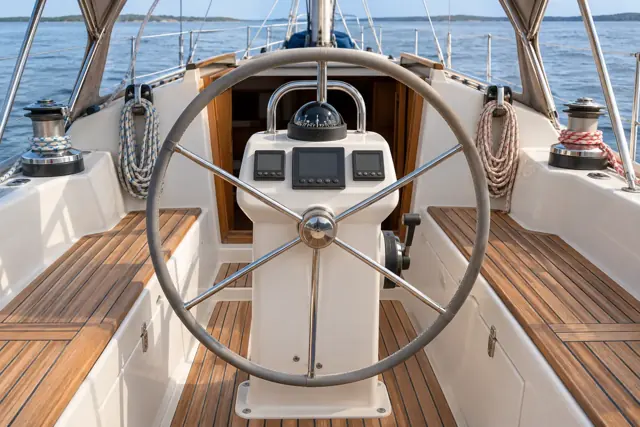
Ask a second crew member to locate the flotation gear, radio and emergency information from the cockpit. Repeat with a locker closed. An inventory can say an item is aboard while a new crew member still cannot find it.
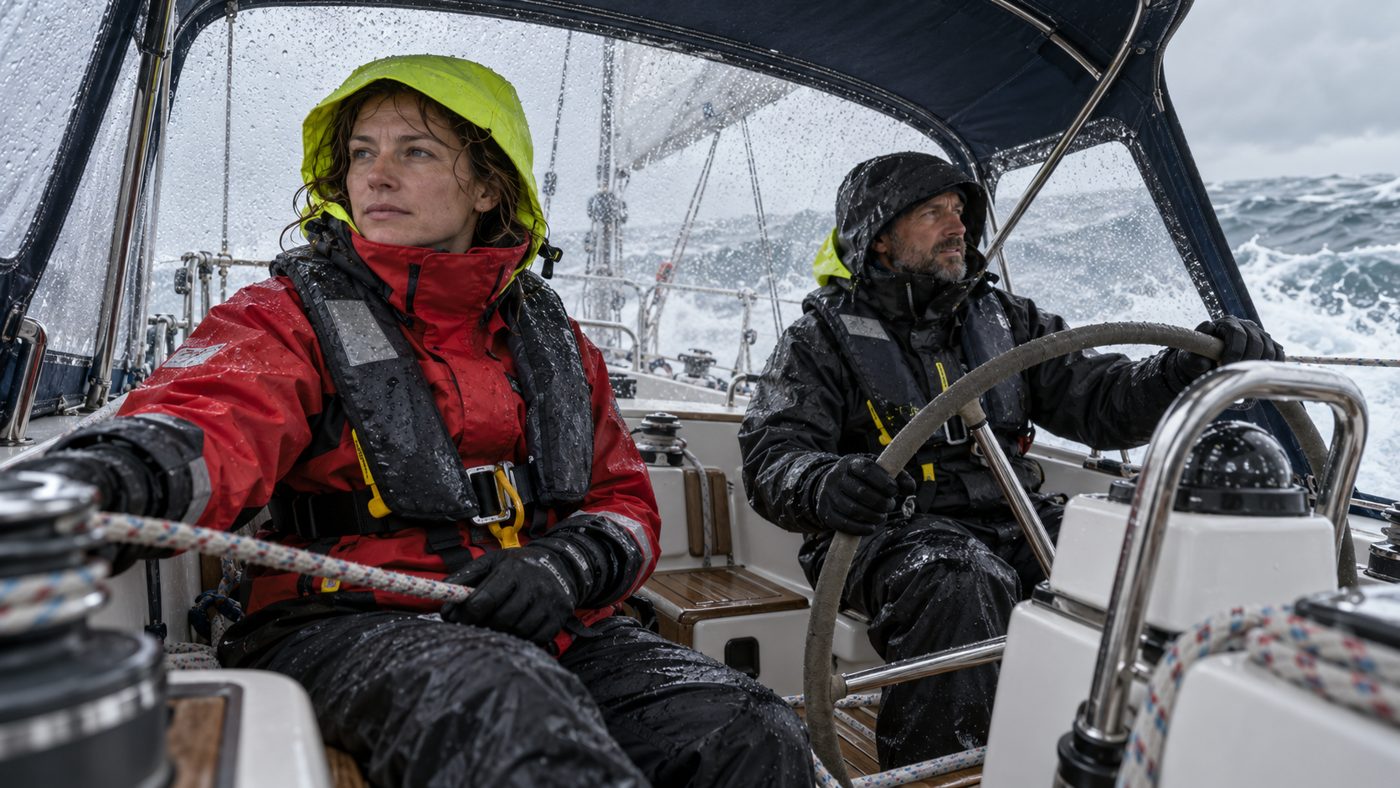
What should go in the briefing after the walk-through?
Name the exact locker and demonstrate how it opens.
Practice Quiz
Answer all five questions. Passing score: 80% (4 of 5).