BEGINNER SAILING · LESSON 32 OF 40
Anchoring Equipment
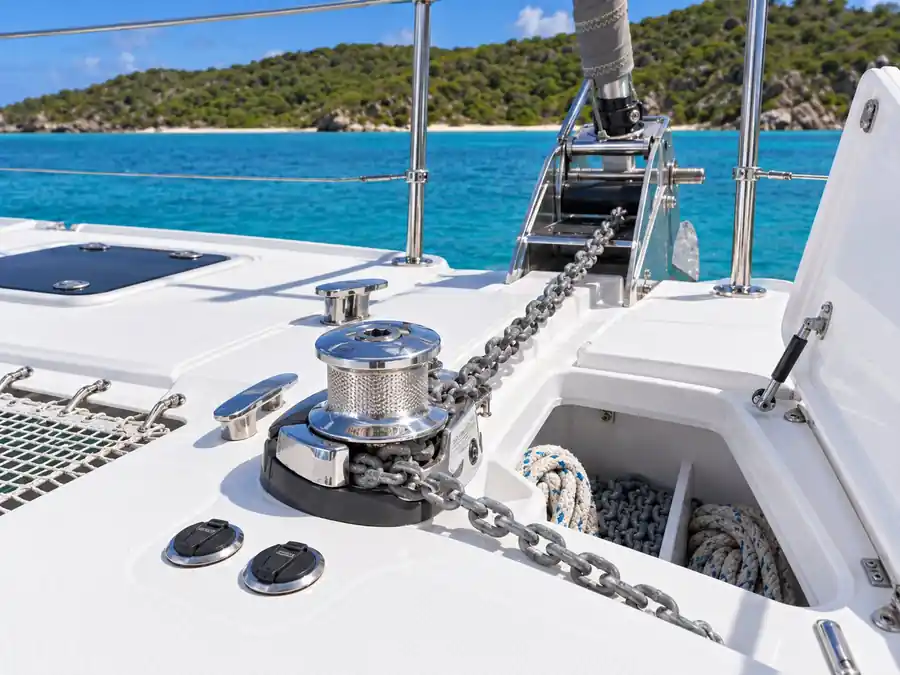
Know the components and limitations of a reliable anchoring system.
1. Anchor types
Common cruising anchors include modern scoop, plow and fluke designs. Holding depends on seabed, setting technique, sizing and conditions, not brand alone. Match the anchor to the vessel and intended use.
2. Chain and rode
The rode connects the anchor to the boat and may include chain and rope. Inspect shackles, swivels where fitted, splices, chain markings and attachment to the vessel. Avoid loading a windlass as the sole securing point.
3. Windlass and snubber
A windlass helps raise and lower the anchor but should not carry sustained anchoring loads. Use a properly rated cleat, bridle or snubber to take strain off the windlass. Keep hands and feet clear of moving chain.
4. Backup and inspection
Carry appropriate backup anchoring equipment and a method to deploy it. Inspect for corrosion, chafe, bent fittings and weak connections before relying on the system.
Follow the load path
Trace the anchor, connection, rode and securing point visually while gear is stationary. Identify the route the rode travels and where feet or hands must stay clear. Ask the skipper to identify the intended securing arrangements.

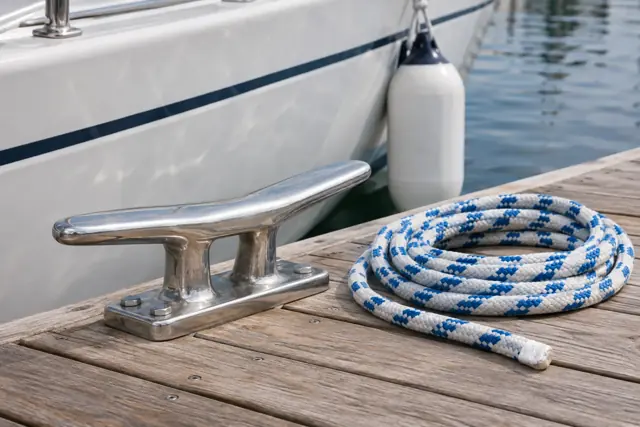
Why inspect more than the anchor itself?
The load travels through each connection to the boat.
Practice Quiz
Answer all five questions. Passing score: 80% (4 of 5).