BEGINNER SAILING · LESSON 33 OF 40
Choosing an Anchorage
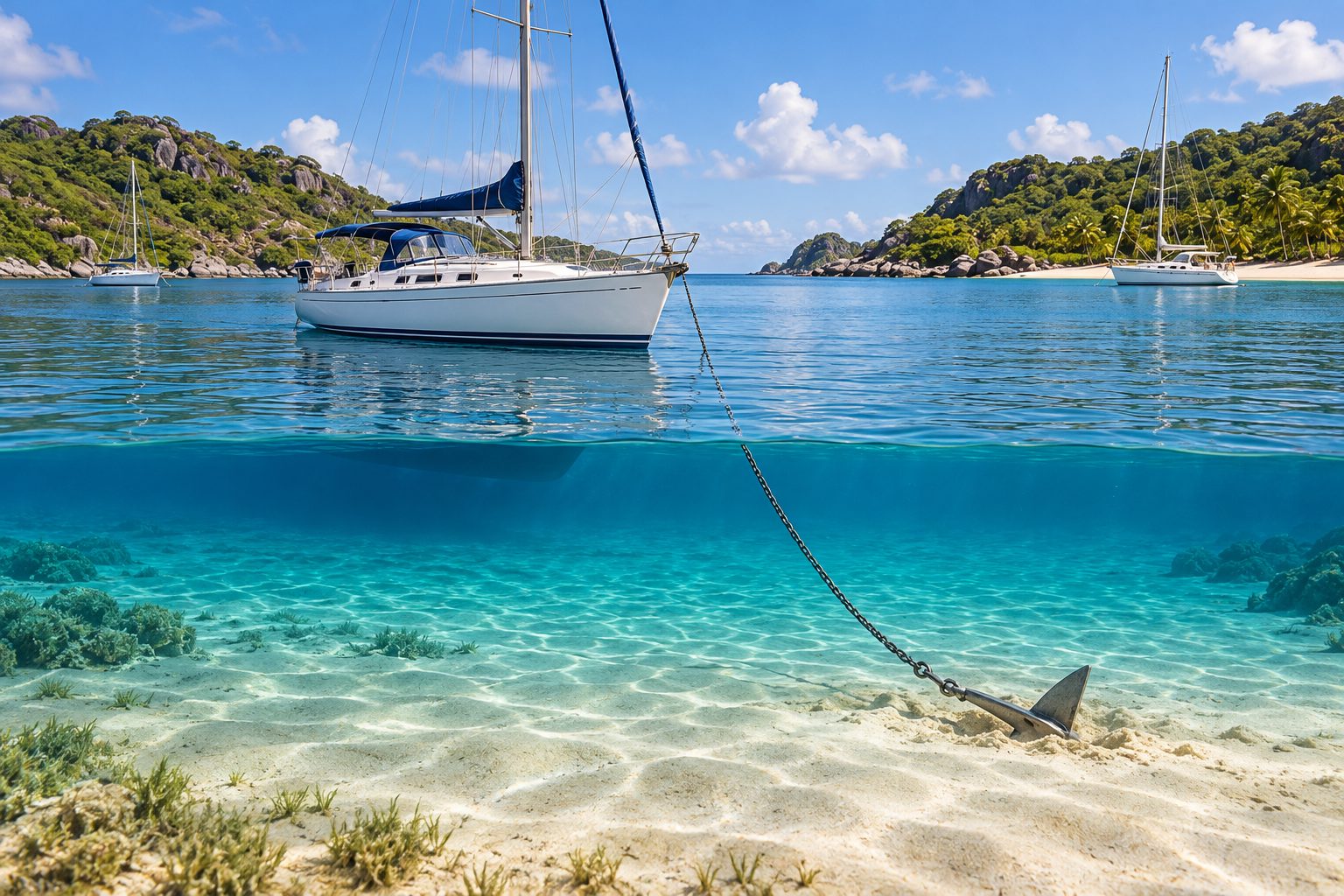
Select a location with shelter, room and suitable holding.
1. Study the chart
Check depth, chart datum, seabed notes, cables, reefs, moorings, restricted areas and expected tidal range. Confirm local anchoring rules and protected areas before dropping anchor.
2. Shelter and exposure
Consider present and forecast wind, swell and current—not just current calm conditions. An anchorage sheltered from one direction may become dangerous if the wind shifts overnight.
3. Swing room
Allow enough room for the boat to swing on its rode as wind and tide change. Consider nearby vessels and fixed hazards. Different boats may swing differently, especially if using different rode lengths.
4. Plan an exit
Identify a safe route out in darkness or deteriorating weather. Verify actual depth and seabed conditions on arrival; charts and electronic positions can contain errors.
Sketch the swinging area
Mark hazards, neighboring boats and exposure to a forecast wind shift. Estimate how the boat could move as the rode stretches out in another direction. Check lowest expected water separately from highest-water scope.

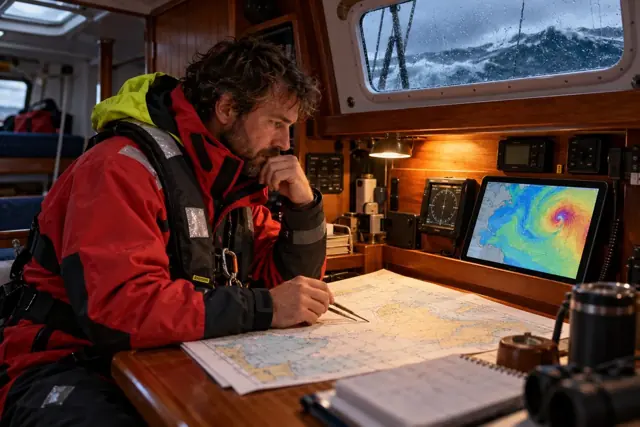
Why check both high and low water?
High water changes scope and low water can reduce keel clearance.
Practice Quiz
Answer all five questions. Passing score: 80% (4 of 5).