BEGINNER SAILING · LESSON 20 OF 40
Raising the Mainsail

Prepare and hoist the mainsail while keeping control of the boom.
1. Before hoisting
Check conditions and crew readiness. Confirm the halyard is attached, reefing lines are clear, sail ties or cover are removed, and no one is in the boom's swing path. Use the engine or steering to maintain control when appropriate.
2. Reduce sail pressure
On many conventional rigs, head into or near the wind to unload the mainsail and ease the mainsheet enough for the sail to rise. Follow the sailmaker and boat-specific procedure, particularly with in-mast furling systems.
3. Hoist smoothly
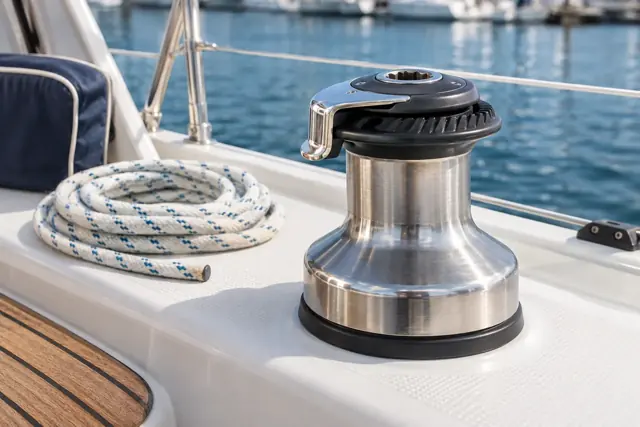
Raise the sail using the halyard while watching for snags at the mast track, lazy jacks and battens. Stop if resistance rises unexpectedly; never force a jammed sail with a winch.
4. Set and check
Tension the halyard appropriately, secure it, and trim the mainsheet for the chosen point of sail. Check battens, reefing lines and boom position. Reef earlier if conditions require.
Trace the hoist before loading it
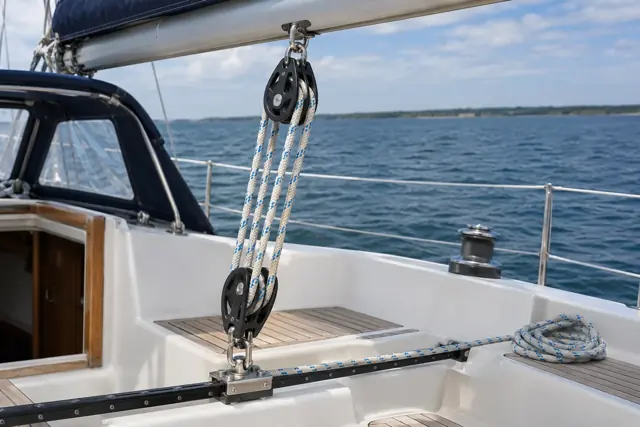
Identify the halyard and trace its visible lead while the sail is down. Look for a wrap, snag or obstruction. Discuss who watches the sail and who handles the line during the supervised hoist.
The sail stops moving but resistance rises. What next?
Stop adding force and identify the obstruction.
Practice Quiz
Answer all five questions. Passing score: 80% (4 of 5).