BEGINNER SAILING · LESSON 19 OF 40
Steering Under Power
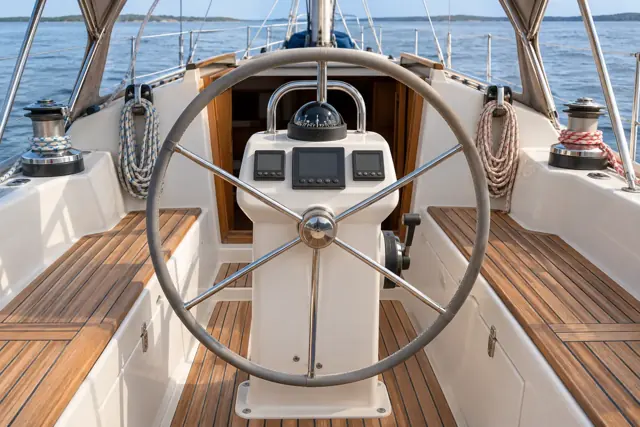
Understand how low-speed handling differs from steering under sail.
1. Rudder and water flow
Most sailboats steer using water flowing past the rudder. At very low speed the rudder may respond sluggishly, and a brief burst of propeller thrust can improve control depending on boat design.
2. Prop walk
Many single-screw boats tend to pull the stern sideways in reverse. Direction and strength depend on propeller rotation, hull shape and installation. Test your boat in clear water before close-quarters maneuvering.
3. Turning and stopping
A sailboat has momentum and does not stop immediately when shifted to neutral. Allow for turning radius, prop wash, windage and current. Avoid rapid forward/reverse shifts that could damage the drivetrain.
4. Practice routine
In a clear area, practice slow turns, stopping and backing while noting how the stern moves. Maintain a lookout, stay clear of swimmers and never place anyone near the propeller.
Separate heading from movement
From sheltered open water with an instructor, compare where the bow points with movement past a fixed landmark. A slow boat in cross-current can be moving sideways over ground while its bow holds steady.
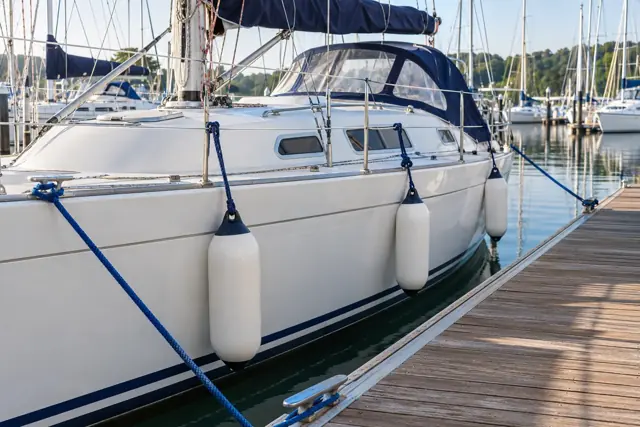
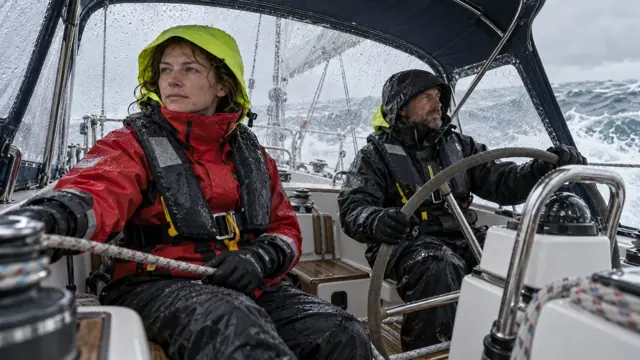
Which reference reveals drift most clearly?
A stationary shore feature or successive reliable position fixes.
Practice Quiz
Answer all five questions. Passing score: 80% (4 of 5).