BEGINNER SAILING · LESSON 11 OF 40
Knots: Bowline
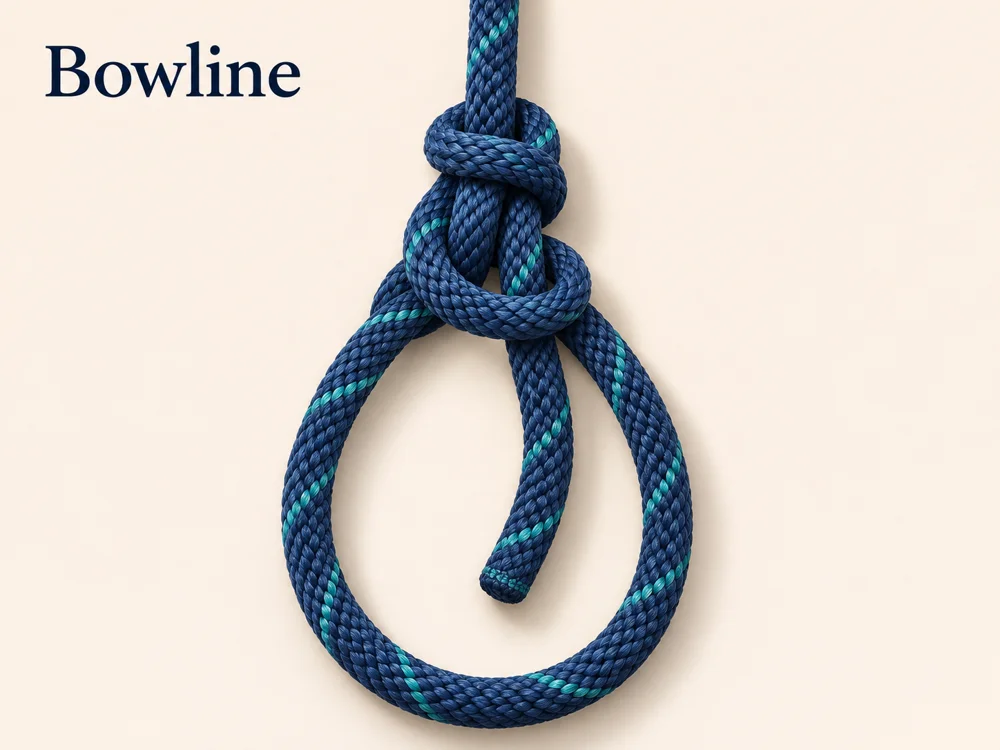
Tie a dependable fixed loop and understand when to inspect and retie it.
1. What the bowline does
A bowline forms a fixed loop at the end of a rope. Sailors use it for many tasks, including attaching sheets to a sail. It can loosen when repeatedly unloaded, so inspect it and use an appropriate backup where necessary.
2. Step 1: Make a small loop
Lay the standing part of the line in front of you. Form a small loop, leaving enough working end to go around the object and finish the knot. Remember which strand passes over the other.
3. Step 2: Thread the working end
Pass the working end up through the small loop, around behind the standing part, then back down through the original loop. The classic memory aid is the rabbit comes out of the hole, around the tree, and back into the hole.
4. Step 3: Dress and check
Pull the standing part and loop to snug the knot evenly. Confirm the working end exits alongside the loop, and leave a suitable tail. Practice with an unloaded line before using the knot for real loads. Never use a recreational bowline as a life-safety knot without appropriate training and backup.
Recognize a fixed loop
Practice with a short unloaded line. Identify the standing part, tail and loop of a finished bowline. Compare your result with the knot illustration from both sides before asking an instructor to inspect it.
Which feature distinguishes the intended loop from a sliding loop?
Its size stays fixed when the standing part is drawn taut.
Practice Quiz
Answer all five questions. Passing score: 80% (4 of 5).