BEGINNER SAILING · LESSON 12 OF 40
Knots: Cleat Hitch
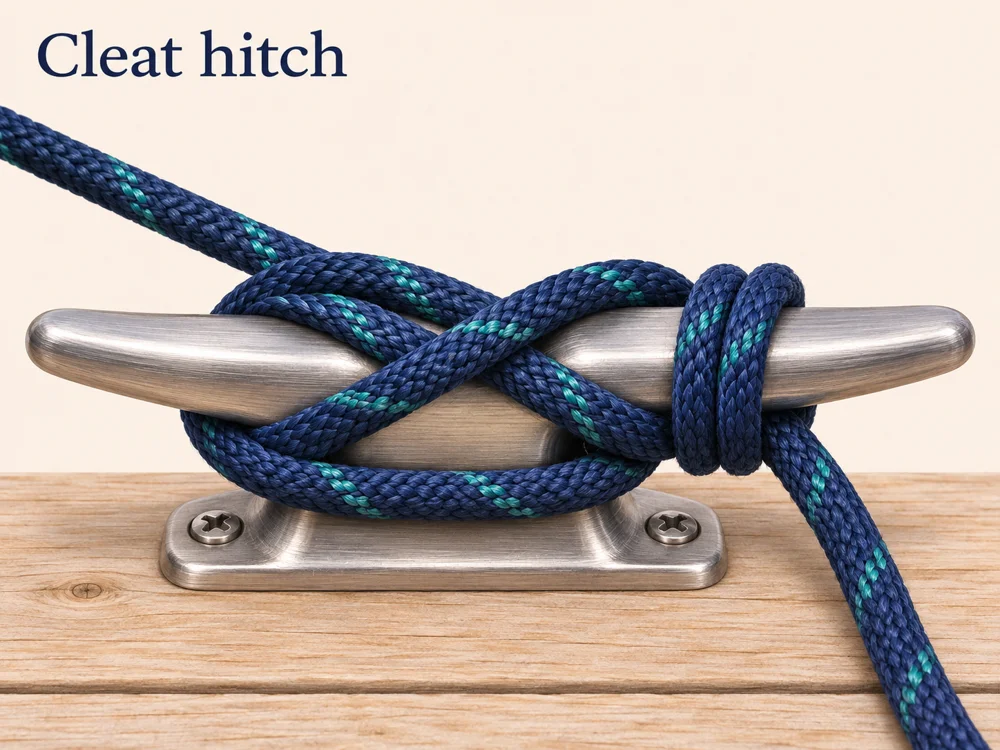
Secure a dock line neatly on a properly sized cleat.
1. Understand the cleat
A horn cleat has two arms around a central base. Choose a sound cleat of adequate size and a line suited to the load. Keep fingers out of the bight and never wrap a line around your hand.
2. Take a turn around the base
Lead the line to the far side of the cleat and make a full turn around the base where practical. This first turn takes much of the strain and helps keep the line from jumping free.
3. Add figure-eight turns
Cross the line diagonally over the cleat to the opposite horn and back, making a figure-eight pattern. Avoid excessive turns that create a bulky jam.
4. Finish and inspect
Finish with a locking half-hitch where appropriate, tucking the working end under the final crossover. Check that the line is secure and can be released safely under expected loads. On heavily loaded or critical lines, follow local seamanship procedures for the specific cleat and situation.
Read the lead onto the cleat
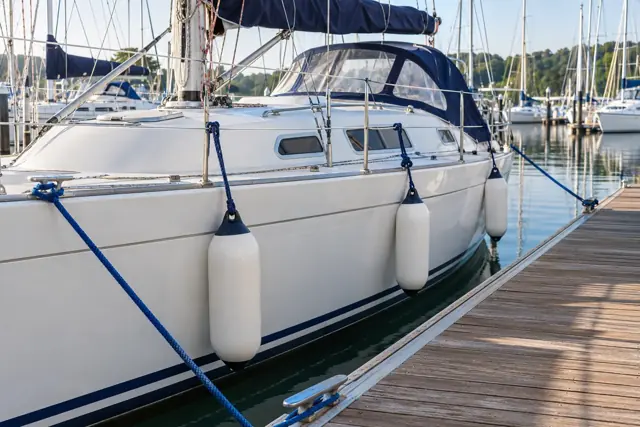
Use a practice cleat and loose line. First point to the direction from which the load would arrive. Visualize where hands would be if the boat surged. Keep hands clear of the space between loaded line and fitting.
Why rehearse with unloaded line?
You can trace the lead and correct mistakes without stored energy in the line.
Practice Quiz
Answer all five questions. Passing score: 80% (4 of 5).