A practical guide to sailboat ownership paperwork and title checks, with buying considerations, inspection tips and ownership advice. Adapt these considerations to the vessel, your crew, local regulations and intended cruising conditions.
Identify registration requirements
Registration and documentation rules vary by flag, location and intended use; check the relevant authority.
Person writing travel plans with passport and map
Verify ownership
Match seller identity to original documents and hull identification details where applicable.
Illustration for Sailboat Ownership Paperwork: Verify ownership
Check liens and encumbrances
Use appropriate registry searches or closing professionals to investigate outstanding claims.
Illustration for Sailboat Ownership Paperwork: Check liens and encumbrances
Document the equipment inventory
Specify included sails, electronics, tender, spares and other items in the purchase agreement.
Complete closing
Keep signed transfer documents, tax records and receipts organized for insurance and future resale.
Frequently asked questions
What should I check first?
Begin with the boat's specifications, maintenance records and suitability for your intended use. Verify important claims independently.
When is professional help appropriate?
Use qualified surveyors, riggers, mechanics or other specialists for safety-critical work or unfamiliar systems.
A fair comparison starts with the way you will use the boat, then checks the condition and documentation of the specific vessel. Model reputation is only a starting point: refits, maintenance history, equipment, and survey findings can change the decision. For Sailboat Ownership Paperwork, begin with the exact equipment, design, or conditions described in your boat’s records. The notes below are a learning framework, not a substitute for the specific manual or a professional inspection.
How to work through it
Write down intended crew size, sailing area, draft limits, storage needs, and realistic purchase budget.
Verify identity, ownership documents, equipment list, maintenance records, and any claimed upgrades.
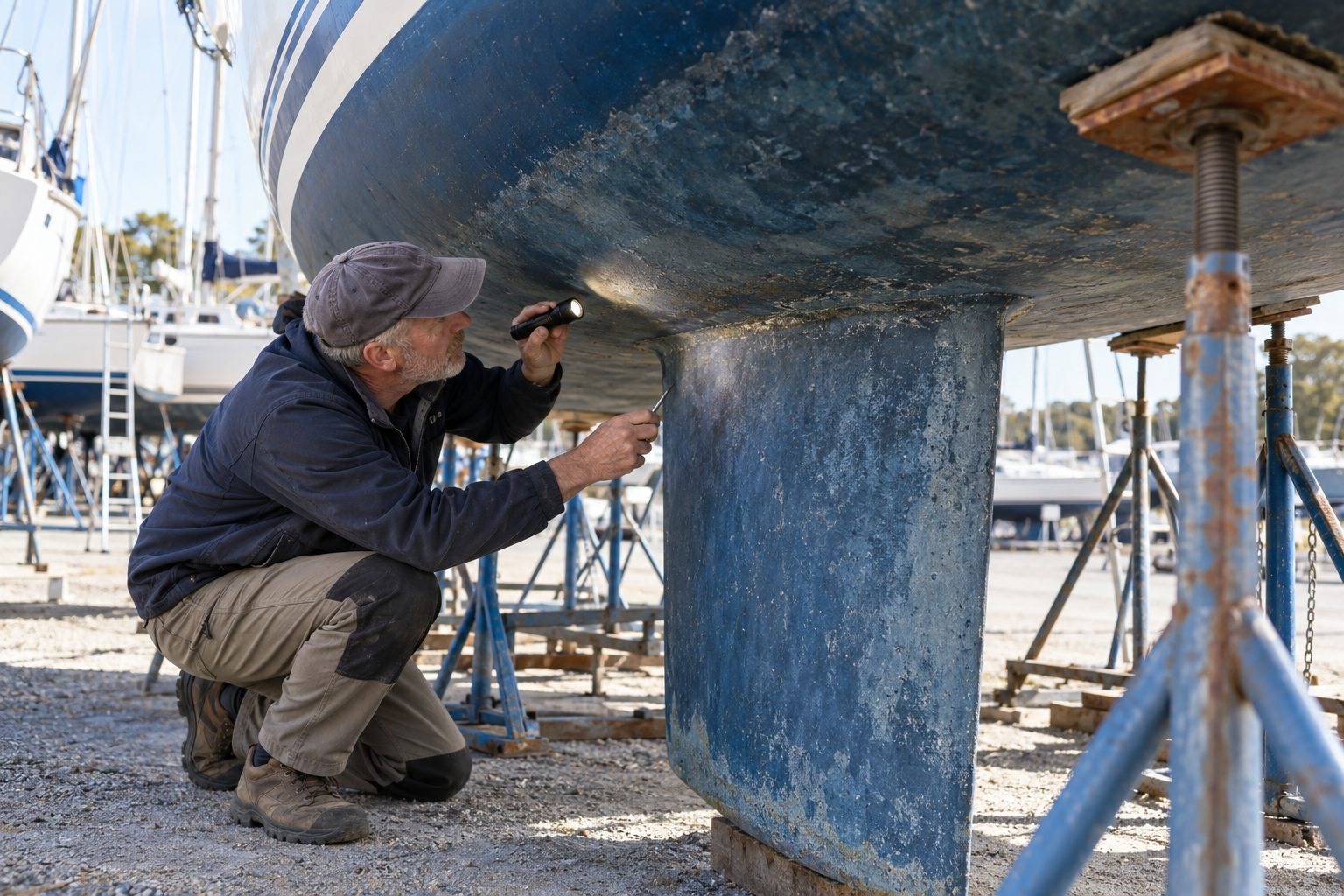
Inspect and sea-trial the actual boat, then use an independent qualified surveyor for a purchase decision.
What to check on your sailboat
Make this a repeatable dockside or passage-planning exercise. Write down what is normal for your boat before you need to diagnose a change.
Identify the exact model, installation, location, and operating conditions involved in ownership paperwork.
Use the boat’s own labels, diagrams, service history, and maker’s manual; note any differences from the published layout.
Check accessibility, visible wear, leaks, chafe, corrosion, unexpected movement, alarms, or changing performance where relevant.
Record the date, conditions, readings, photographs, and what changed after an adjustment or service.
Agree on a conservative fallback if the system or plan does not behave as expected.
Common mistakes to avoid
Comparing asking prices without comparing condition and included equipment.
Treating a broker’s description or a model-year specification as an inspection.
Skipping the independent survey or relying on a sea trial as a substitute for it.
Questions to test your understanding
Does the design match the passages, harbors, and crew you actually expect?
Can the seller document recent service and major repairs?
What near-term work, haul-out, insurance, delivery, and storage costs belong in the budget?
Show a sample answer
A strong answer identifies the boat-specific source of truth, explains what normal operation looks like, names the main risk or limitation, and gives a checkable next step. It also states when the crew should stop and ask a qualified professional.
Illustrative scenario: During a routine check, a crew notices something about ownership paperwork has changed from its recorded normal condition. They avoid guessing, confirm the observation, consult the boat-specific documentation, brief the skipper, and choose the safest available next step while preserving a backup plan.
Sailing systems and legal requirements vary by boat, country, and waters. Verify current local rules and the installed equipment maker’s instructions before relying on a procedure.