Find My Sailboat • Seamanship guide

Heavy Weather Sailing

Prepare early, protect the crew, and keep your options open when the wind and sea build.

Heavy weather is not defined by one wind-speed number. The same forecast can mean very different conditions for a sheltered coastal trip and an offshore passage. Boat condition, wave shape, current, available sea room and crew experience all matter.

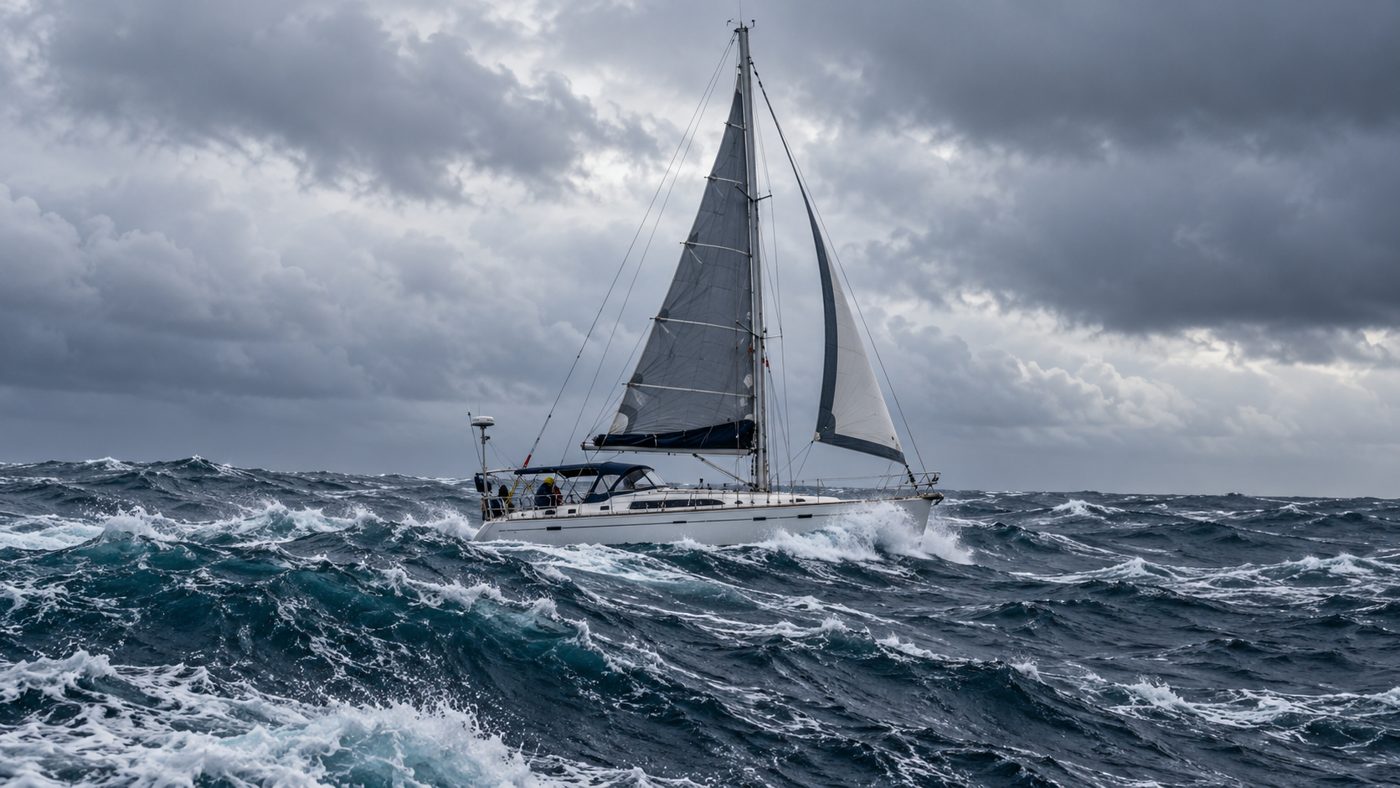
A cruising monohull under reduced sail in rough open water.
A manageable sail plan and sufficient sea room give the crew more options.

General preparation guidance, not a storm-handling procedure for every boat. Learn your vessel’s limits and practice with qualified instruction in manageable conditions. Illustrations are AI-generated and are not rigging diagrams.

1. Make the decision before departure

Read the official marine forecast for the whole route and the time you expect to be exposed. Check warnings, gusts, wind direction, swell, wind waves and tides. A forecast wave height is not a maximum; individual waves can be higher. Wind against current can make seas steeper, and a short wave period can make a modest height punishing.

Plan alternatives and decide what would make you delay, turn back or divert. A schedule should never be the reason to depart into conditions beyond the boat or crew. Check whether a refuge is actually safe to enter in the forecast wind and sea; a harbour bar or exposed entrance may become dangerous.
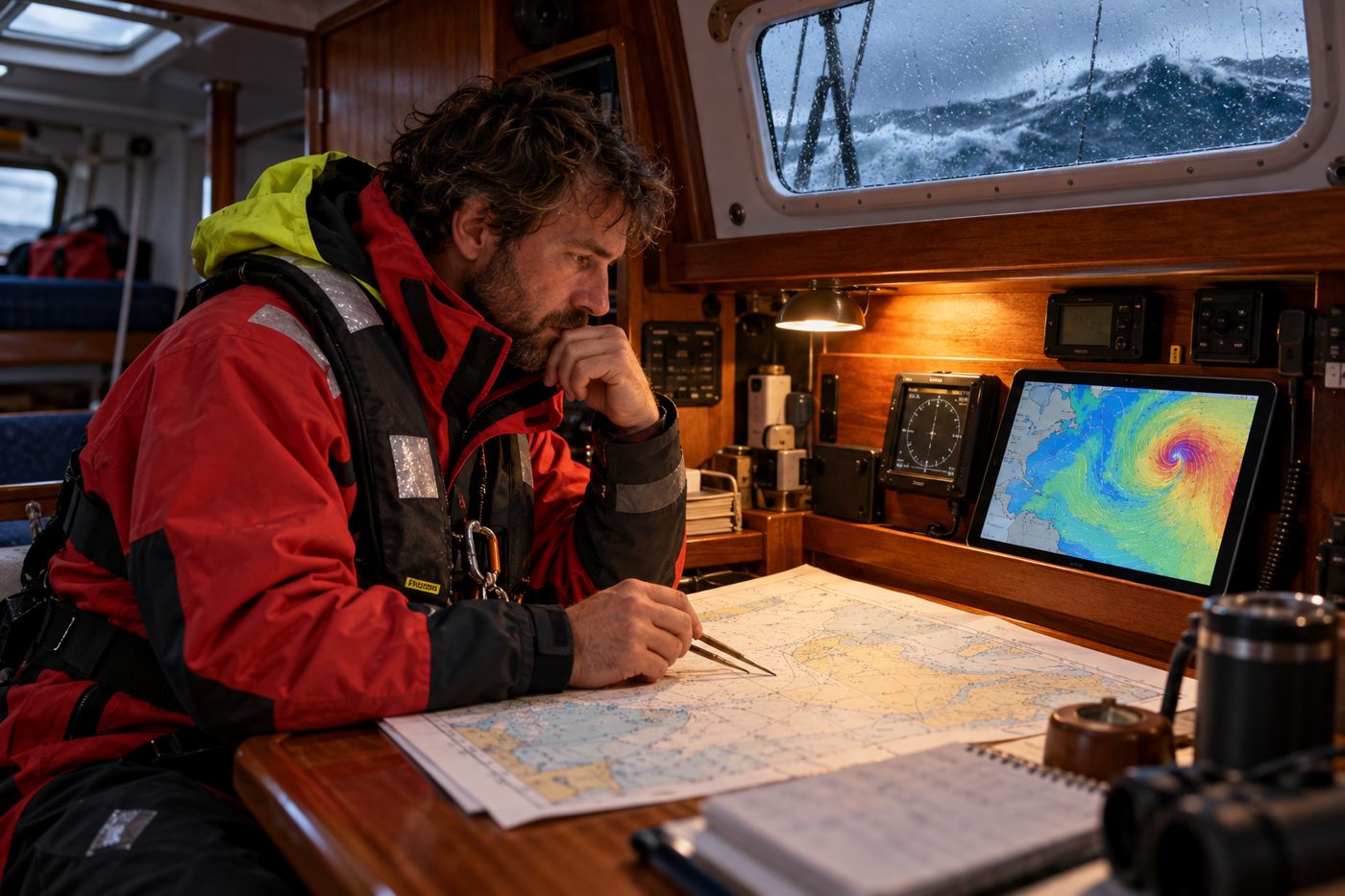
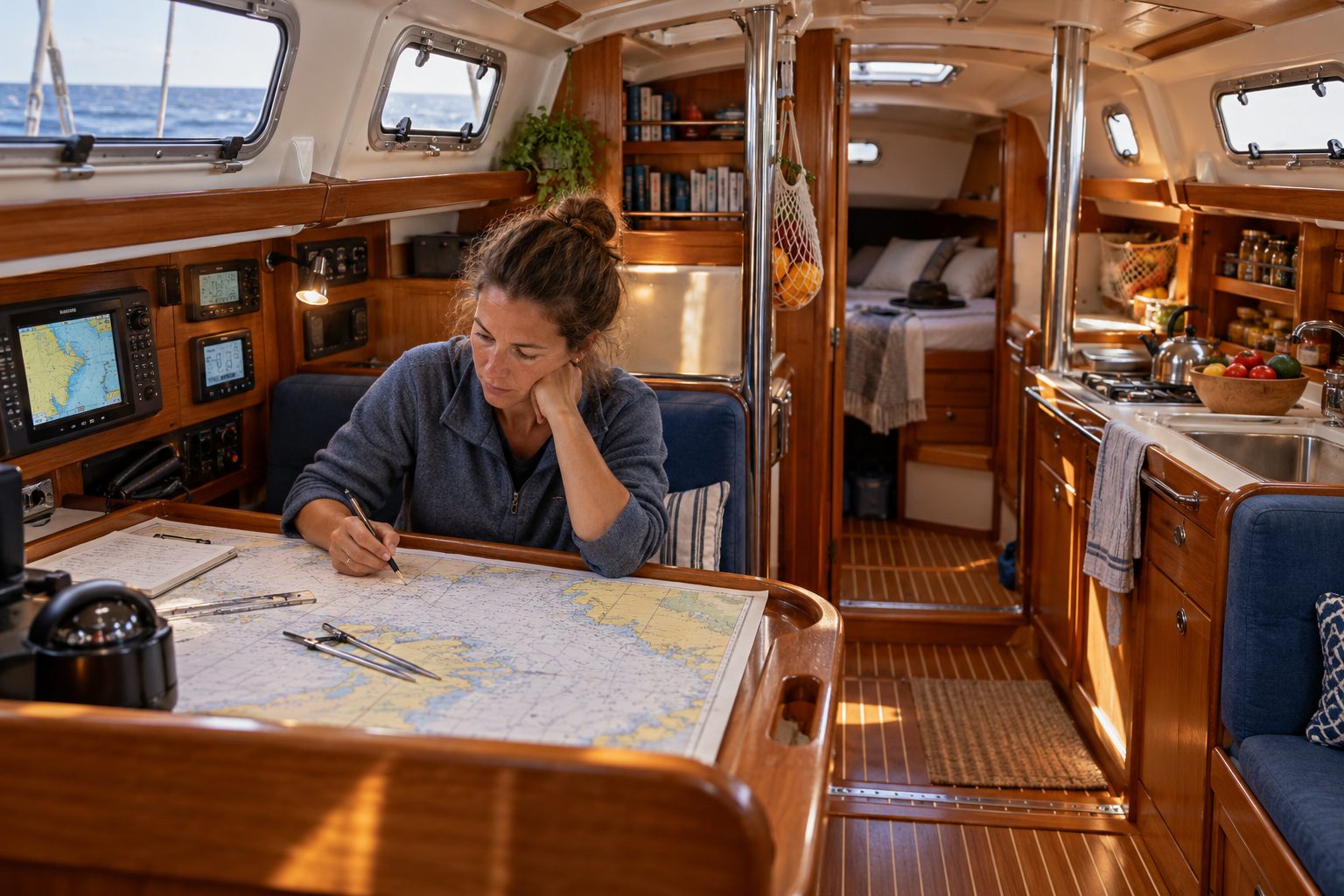
A sailor reviewing passage information at a sailboat navigation station.
Plan the passage, alternative destinations and decision points before conditions deteriorate.

2. Prepare while the work is still easy

Secure loose items above and below deck. Check locker latches, hatches, washboards, cockpit drains and bilge pumps. Keep emergency equipment accessible. Review the reefing system, steering arrangements and communications, and ensure everyone knows their role.

Prepare food, drinking water and dry clothing before the motion becomes tiring. Arrange short, realistic watches and give the off-watch crew somewhere secure to rest. Fatigue reduces the quality of every later decision.

3. Reduce sail early and keep the boat balanced

Reef before the crew is struggling. Excessive heel, heavy helm and repeated loss of control are reasons to reassess the sail plan, not signs to push harder. Follow the boat and equipment makers’ procedures for your reefing system.

Balance the headsail and mainsail for controllable steering. A heavily rolled cruising genoa is not automatically a suitable storm jib. Dedicated storm sails require appropriate fittings, rigging and practice; prepare them in good time if they are part of your boat’s plan.

4. Keep people aboard

Wear properly fitted lifejackets and use suitable harnesses, tethers and engineered attachment points as appropriate. Arrange the system to prevent a person reaching the water, rather than merely remaining attached after falling overboard. Keep movement on deck to essential tasks and communicate before anyone leaves the cockpit.
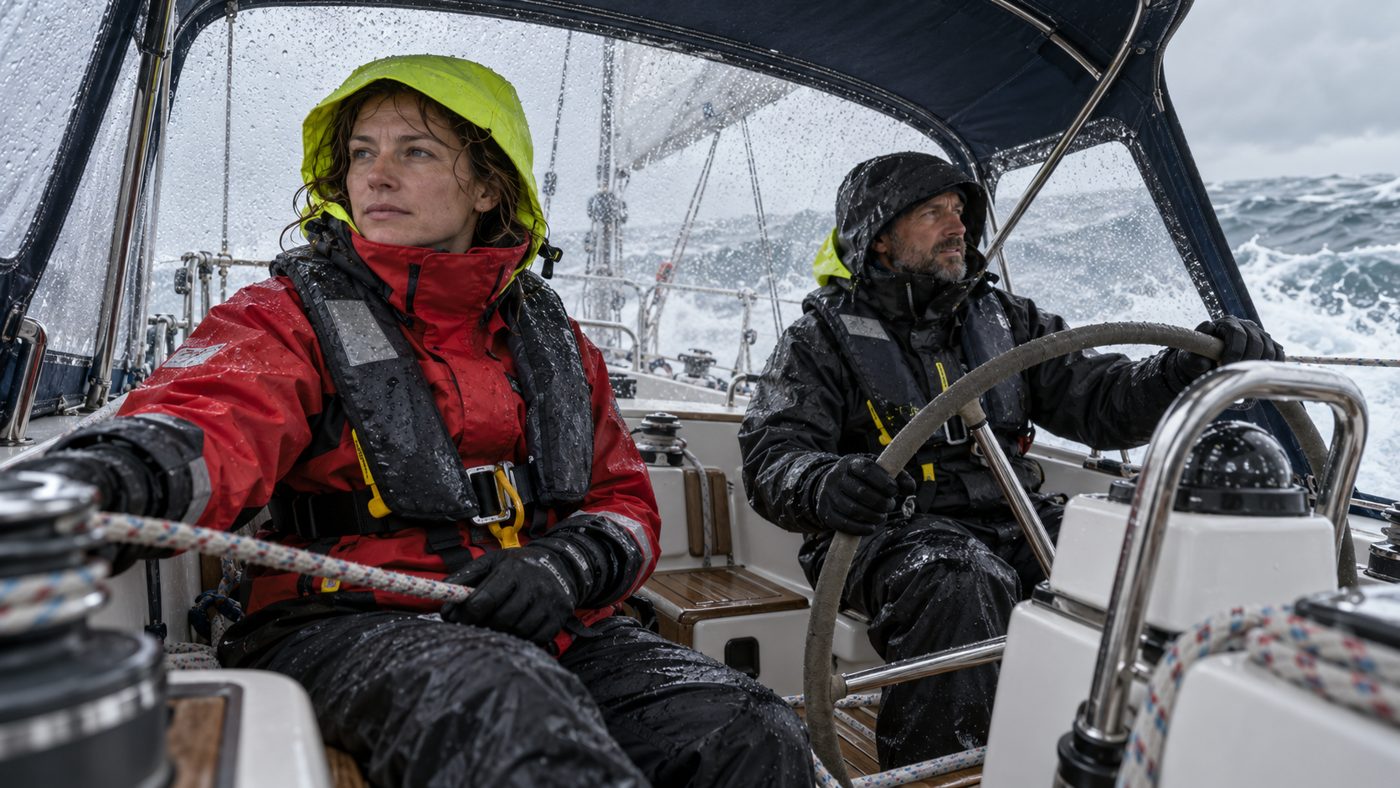
Two sailors wearing lifejackets and foul-weather clothing in a sheltered cockpit.
Crew protection, clear communication and rest are part of the heavy-weather plan.

5. Choose a tactic for the boat and the sea

There is no universal storm tactic or safe steering angle. Review sea room, breaking waves, drift toward hazards and the crew’s ability to sustain the chosen approach.

  • Continue under reduced sail: only while the boat remains controllable and the course leads toward safer water.
  • Heave to: some boats settle well, while others do not. Practice beforehand and account for continuing drift.
  • Run off: requires ample clear water and control of speed and direction. Broaching and accidental gybes remain risks.
  • Drogues and sea anchors: are different systems with different purposes. Use a boat-specific setup, rated strong points, chafe protection and the manufacturer’s instructions. Deployment and recovery require preparation.

Simply dropping all sail does not guarantee safety. Neither does pointing directly into every wave. If the boat is pounding, losing steerage or repeatedly being overwhelmed, reassess the tactic and seek help early.

6. Watch for squalls and changing hazards
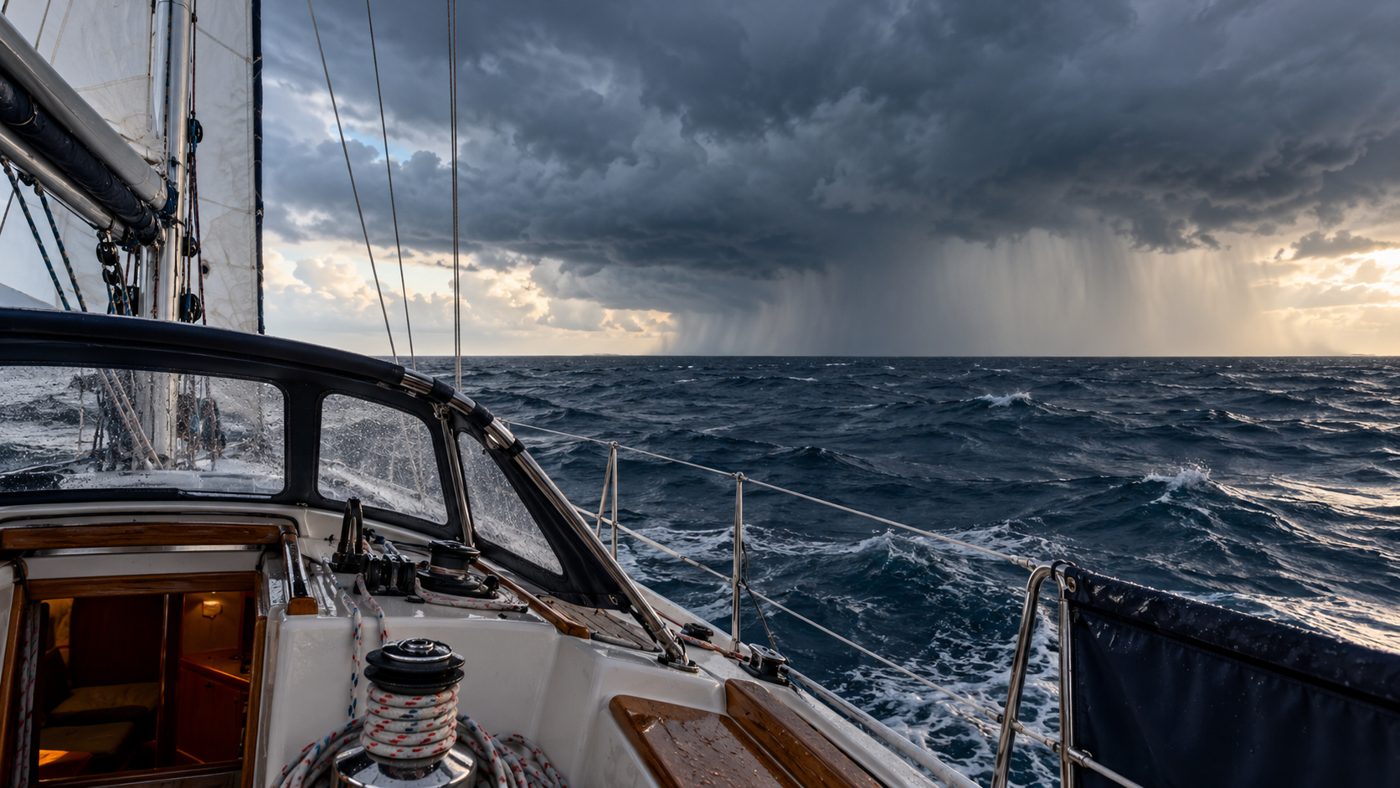
Dark rain clouds approaching over the sea, viewed from a sailboat cockpit.
A squall can bring sudden gusts, a wind shift and sharply reduced visibility.

Monitor the sky as well as instruments. Thunderstorms can bring lightning, abrupt wind changes and poor visibility. Seek safe shelter before they arrive when it is feasible. Keep a lookout and continue checking your position against hazards; an autopilot is not a substitute for watchkeeping.

7. Communicate before the situation becomes desperate

Brief the crew on the VHF, distress equipment and man-overboard plan before sailing. If safety is deteriorating, contact the appropriate rescue service early and describe your position, problem and people aboard. Use a distress alert when there is grave and imminent danger requiring immediate assistance; follow your radio and beacon instructions.

After the weather passes

Reassess the forecast and the crew before resuming the passage. Check for water ingress, chafe, loose fittings, steering damage and rigging problems. Record what worked and what needs attention while the experience is fresh.

Sources and further reading

Use official forecasts for your location, equipment manuals and boat-specific training alongside this introduction.

Keep researching

What makes a good bluewater sailboat? →

← All articles

My saved articles →

KEEP EXPLORING

Related sailing guides

Helpful next reads based on this article.

More seamanship & safety articles →
Offshore sailing crew in foul-weather gearSeamanship & SafetyStorm Sails for Offshore SailingRead guide →Dark storm squall clouds approaching a sailing routeSeamanship & SafetySailboat Hurricane PreparationRead guide →Sailor working with lines while underwayNavigation & WeatherOffshore Watchkeeping for Small CrewsRead guide →Offshore sailor navigating at a chart tableNavigation & WeatherPlanning Your First Offshore PassageRead guide →

Prefer a step-by-step plan? Browse guided reading paths →

Learn Heavy Weather Sailing: a practical guide

Good seamanship turns a hazard into a crew plan before the situation becomes urgent. Assign roles, make equipment accessible, agree on the words or signals the crew will use, and practice in conditions that are controlled. For Heavy Weather Sailing, begin with the exact equipment, design, or conditions described in your boat’s records. The notes below are a learning framework, not a substitute for the specific manual or a professional inspection.

How to work through it

  1. Name the hazard and decide who is responsible for lookout, communication, and boat control.
  2. Check that the required safety equipment is serviceable, correctly sized, and immediately reachable.
  3. Brief the crew on the first action, backup action, and the point at which the skipper will change plans.

What to check on your sailboat

Make this a repeatable dockside or passage-planning exercise. Write down what is normal for your boat before you need to diagnose a change.

  • Identify the exact model, installation, location, and operating conditions involved in heavy weather sailing.
  • Use the boat’s own labels, diagrams, service history, and maker’s manual; note any differences from the published layout.
  • Check accessibility, visible wear, leaks, chafe, corrosion, unexpected movement, alarms, or changing performance where relevant.
  • Record the date, conditions, readings, photographs, and what changed after an adjustment or service.
  • Agree on a conservative fallback if the system or plan does not behave as expected.

Common mistakes to avoid

  • Stowing safety gear where it cannot be reached quickly.
  • Assuming guests know the boat or its commands without a briefing.
  • Waiting for certainty when early conservative action preserves more options.

Questions to test your understanding

  1. Can every crew member explain their first action?
  2. Can the relevant gear be reached without searching or unlocking a locker?
  3. Who ashore knows the route and expected return time?
Show a sample answer

A strong answer identifies the boat-specific source of truth, explains what normal operation looks like, names the main risk or limitation, and gives a checkable next step. It also states when the crew should stop and ask a qualified professional.

Illustrative scenario: During a routine check, a crew notices something about heavy weather sailing has changed from its recorded normal condition. They avoid guessing, confirm the observation, consult the boat-specific documentation, brief the skipper, and choose the safest available next step while preserving a backup plan.

Further reading and primary references

Sailing systems and legal requirements vary by boat, country, and waters. Verify current local rules and the installed equipment maker’s instructions before relying on a procedure.

Explore the full sailing article library →