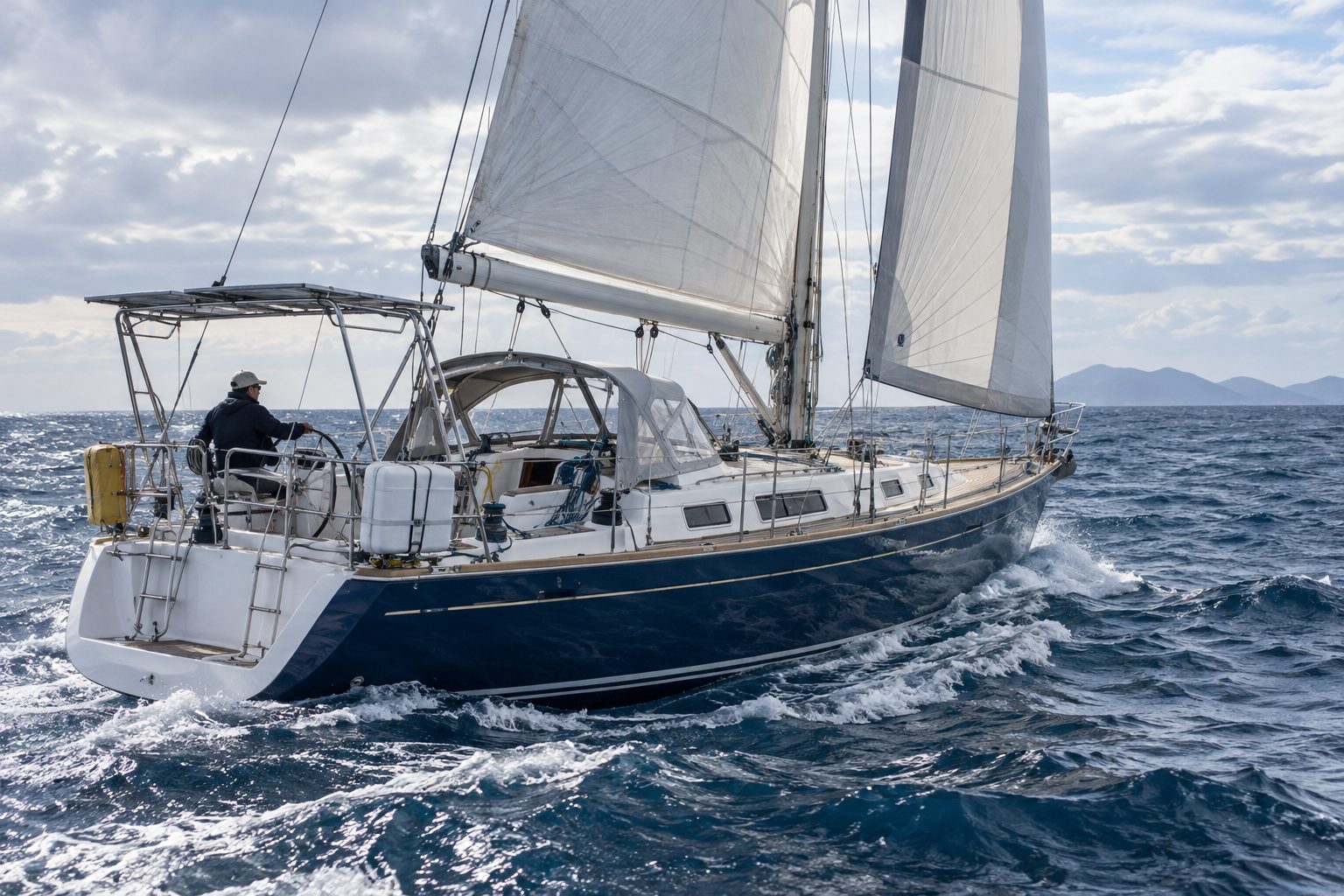
Start with the voyage and crew
“Bluewater” can mean a long coastal passage, a seasonal ocean crossing or years of living aboard. Those plans create different demands. A boat that suits a couple sailing trade-wind routes may not suit a family carrying extra gear, a crew making high-latitude passages or someone who expects to sail short-handed.
Begin with the people, routes, seasons and payload. Then compare boats against those needs. The goal is a sound, appropriately equipped boat that the crew can operate confidently—not the biggest or most heavily built boat available.
1. Sound structure and control of water
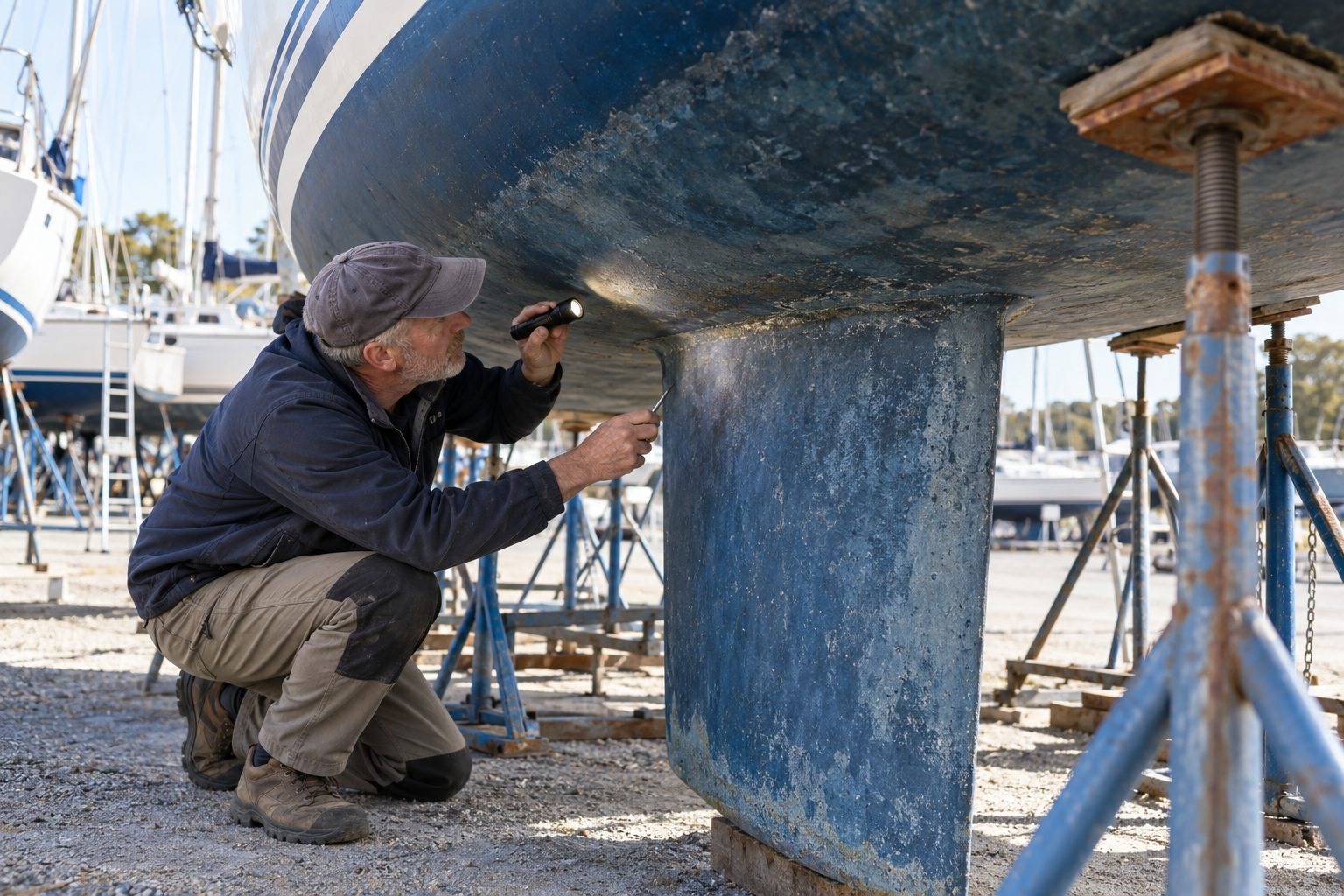
Look for a well-built hull and deck, a sound hull-to-deck joint, secure bulkheads and chainplates, and properly supported keel, centerboard, rudder and steering systems. Check the companionway, hatches, ports, cockpit lockers and other openings for sound closures and signs of leakage. Cockpit drainage, bilge access and working pumps matter when water gets aboard.
These are inspection questions, not visual assumptions. A boat’s age, material or reputation cannot tell you whether an individual hull has hidden damage, fatigue, poor repairs or water intrusion. Have an independent surveyor with offshore-boat experience inspect the boat, and bring in a specialist for any concerns they identify.
2. Stability suited to the design and load
Stability depends on the complete design and how the boat is loaded. Ask for original builder documentation, the boat’s design category or stability information where available, and the maximum load assumptions behind it. Then consider how cruising equipment, stores, dinghy, fuel, water and personal gear affect displacement and trim.
ISO 12217-2 provides methods for assessing the stability and buoyancy of sailing boats 6 metres and longer, including how design categories relate to a boat’s design and maximum load. A category is useful design information; it is not a guarantee of safety in every sea state, loading condition or state of repair. For multihulls, review the boat’s own stability, escape and loading documentation rather than applying monohull expectations.
3. Handling the boat in real conditions
The boat should be manageable by the crew who will actually sail it. Look at the sail plan, reefing arrangement, winch loads, cockpit layout, visibility and access to controls. Can the crew reduce sail early, work safely on deck and steer for long periods? Are suitable heavy-weather sails and attachment points available for the boat?
Evaluate the rudder and steering gear, including wear, water ingress and the emergency steering arrangement. Test it as far as practical during a survey and sea trial. A spare tiller or emergency system only helps if it fits, can be rigged and can control the loaded boat.

4. Reliable systems with a repair plan
Offshore equipment earns its place when it works and can be maintained. Review the engine, cooling and fuel systems, charging sources, batteries, wiring, bilge pumps, plumbing, navigation instruments and communications equipment. Check service records, installation quality, spare-parts availability and whether the crew can diagnose common failures.
Plan for failures as well as normal operation: backup navigation, ways to communicate distress, spare parts and tools, and a workable method to steer if the primary system fails. Match the equipment and emergency gear to the route, crew and local requirements. More electronics do not automatically make a boat more capable.
5. Safe, comfortable living underway
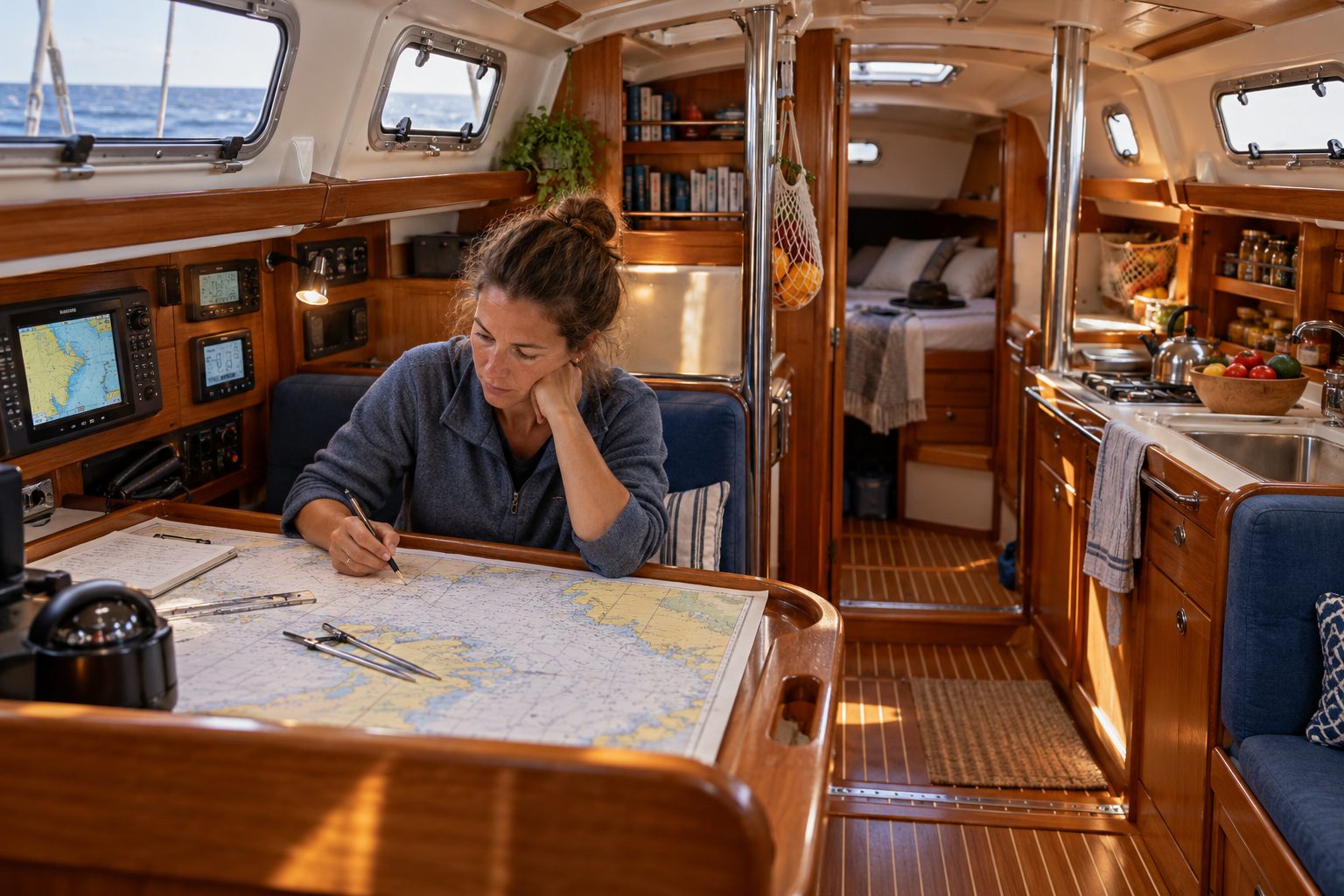
Spend time below as if the boat were moving. Look for handholds along the routes people use, secure places to sleep on either tack, a galley that can be used while heeled, safe companionway access and enough ventilation. Check whether the berths, galley and navigation area work for your crew, including children or anyone with limited mobility.
Comfort is practical: rested crew make better decisions. A layout that looks spacious at the dock may be difficult to use offshore, so assess the boat underway or ask the surveyor and experienced owner about its motion and handling.
6. Enough range, payload and storage
Estimate the boat’s loaded weight and the supplies needed for your longest expected leg. Check water and fuel capacity, refrigeration, energy production, watermaking if needed, food storage, spare-parts storage and dinghy arrangements. Confirm the payload limit and avoid treating every locker as usable capacity; weight high or far from the centerline can affect performance and handling.
Tank size alone does not prove range. Calculate expected use, consider reserve margins and check that pumps, filters, tanks and plumbing can be inspected and serviced. The same applies to electrical systems: estimate daily consumption and verify the charging plan against the crew’s actual habits.
7. Maintenance the owner can keep up with
A capable boat is also one the owner can maintain. Look for access to seacocks, filters, pumps, wiring runs, engine service points and steering components. Ask for invoices and dates for standing rigging, sails, engine work, haulouts, keel or rudder repairs and major refits. Build a realistic budget for deferred maintenance, insurance, storage and future replacements.
Parts and repair support matter, especially for older or less common designs. Before buying, identify what is bespoke, what is widely available and what would need to be shipped to your cruising area.
A useful comparison checklist
- Does the boat’s documented design and load suit the routes and seasons I have in mind?
- What is its safe payload, and what will it weigh fully equipped for my trip?
- Are the hull, deck, bulkheads, keel, rudder and steering sound?
- Can this crew reef, steer, navigate and handle emergencies safely?
- Are the water, fuel, energy and storage plans realistic for the longest passage?
- Can critical equipment be inspected, repaired and supplied where I plan to cruise?
- What did the independent survey and sea trial reveal, and what will the refit cost?
Make the individual boat the final test
Model reputation is a useful place to start, but condition, loading, maintenance and crew preparation decide whether a particular boat fits a particular voyage. Compare the design documentation, inspect the actual boat, sea-trial it when possible and ask an independent surveyor to assess the structure and systems. A suitable boat is one your crew can maintain, provision and sail with a sensible margin for the conditions you plan to meet.