Before you start
Gather the appropriate supplies and review the specific equipment manual.
- Correct engine manual and serial number
- Specified filter and seals
- Fuel-safe catch pan and approved diesel waste container
- Eye protection, gloves, absorbent pads, lint-free cloths
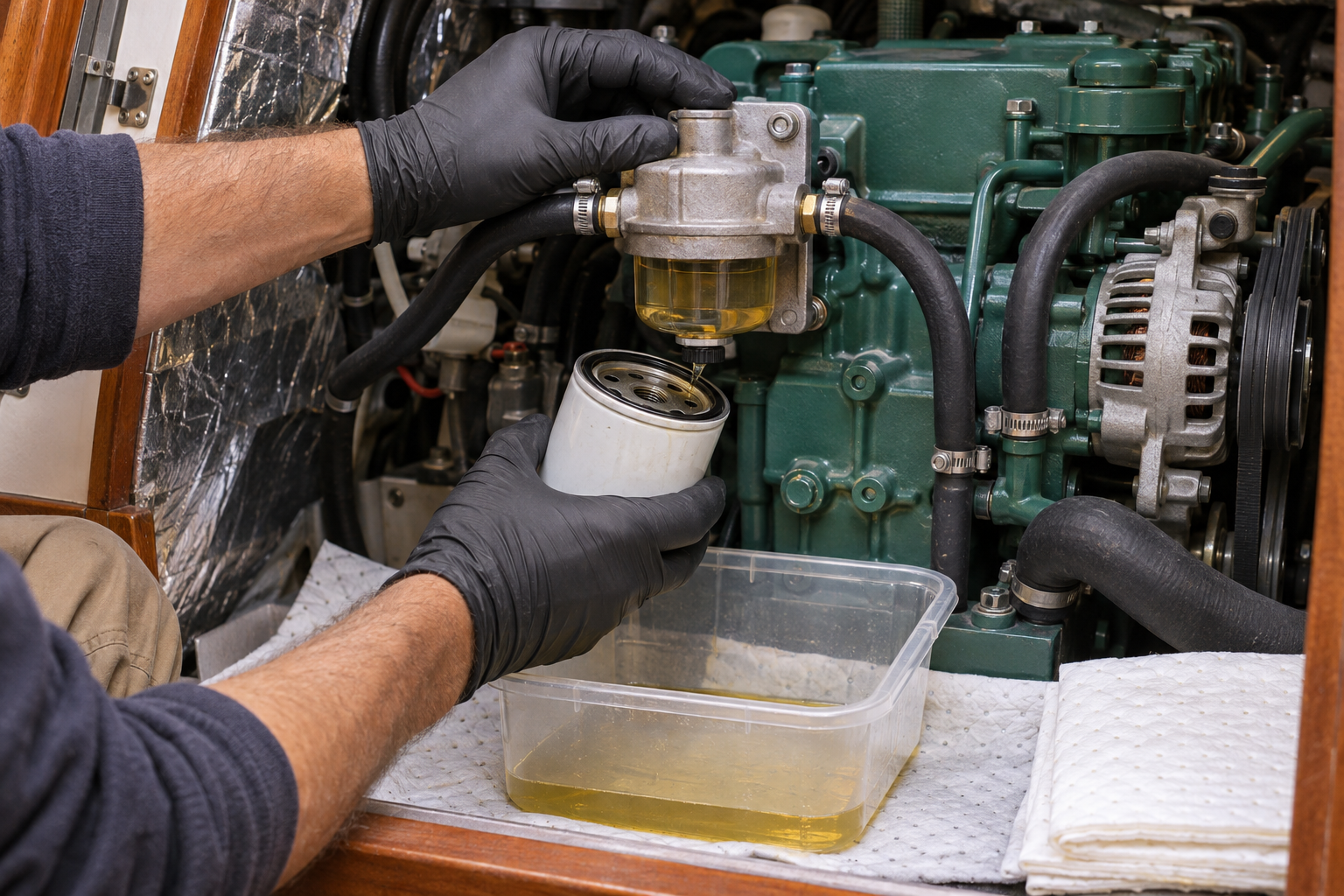
Match the filter and seal to the housing
Identify the primary separator and the engine-mounted filter in the service diagram. Record the exact filter element and seal references before removal. Fuel-system layout and priming procedures differ, especially between mechanical and common-rail engines. Follow the engine manual and leave high-pressure components to a qualified technician.
A starting problem appears immediately after a filter service. What should the service record show?
Which housing was opened, which element and seals were fitted, how priming was carried out and whether leakage was observed. Those details help separate a service-related problem from an unrelated starting fault.
Step-by-step instructions
Confirm engine version and fuel layout
This guide is for the Lombardini / Kohler LDW 502 marine conversion. Read the engine and fuel-system identification plates and match the current operation manual to the serial range. Identify both the engine-mounted filter and any boat-installed water separator; these may use different elements, valves, and bleed points.
Prepare for a clean, contained service
Use the applicable fuel-safety procedure: cold stopped engine, ventilation, no sparks or flames, eye protection, absorbent pads, and approved waste container. Close the identified tank valve and clean the filter head before opening the system.
Remove the installed filter safely
Locate the Lombardini engine plate and identify the marinization conversion. The brand entry is not enough to choose a bleed sequence.
Install the correct filter and seals
Obtain the manual for the exact engine and conversion, then identify the tank valve, lift pump, filter, and documented low-pressure bleed points.
Prime and bleed the low-pressure side
Follow only that manual’s prime-and-bleed sequence and check all joints for leaks. Do not loosen injection pipes. If the correct conversion manual cannot be found, use a qualified marine diesel technician.
Check for leaks and log the work
Wipe the filter head and bleed point dry. Open the fuel valve, inspect before starting, then start only using the manual’s sequence. Stop immediately for seepage, rough running, or alarms. Dispose of fuel and filter waste responsibly and log the date, hours, part number, and findings.
Safety note
Do not bleed high-pressure injection lines. Diesel fuel can ignite on hot surfaces and can cause serious injury if injected under skin. If the identified low-pressure bleed point differs from the manual, stop and ask a qualified marine diesel technician.
Key takeaway
Use the fuel-system diagram and bleed point for the exact engine serial number; keep the low-pressure circuit clean and confirm leak-free operation.
Manufacturer manuals and references
Use the latest documentation that matches the engine serial number and installed configuration.
Where to go next
- How to Change a Lombardini LDW 502 Fuel Filter
Detailed Lombardini / Kohler LDW 502 marine conversion fuel-filter replacement instructions, priming procedure, and post-service leak checks based on the engine maker’s manual.
- How to Replace a Lombardini / Kohler LDW 502 Alternator
A model-specific planning guide for replacing the Lombardini / Kohler LDW 502 marine conversion alternator, matching regulator and pulley, safely isolating the vessel, and checking the completed charging system.
- Does a Lombardini / Kohler LDW 502 Have a Turbo?
Find out whether the Lombardini / Kohler LDW 502 marine conversion is turbocharged and how to plan a safe, serial-number-matched inspection or replacement.
Keep this job on your maintenance schedule
Save the topic as a maintenance task, choose a due date or engine-hour target, and record future service. Free and stored on your device.
Add to my maintenance plannerThis guide is for general education. Follow your equipment manufacturer’s instructions, current navigation guidance and applicable marine safety standards. When uncertain, use a qualified marine professional.