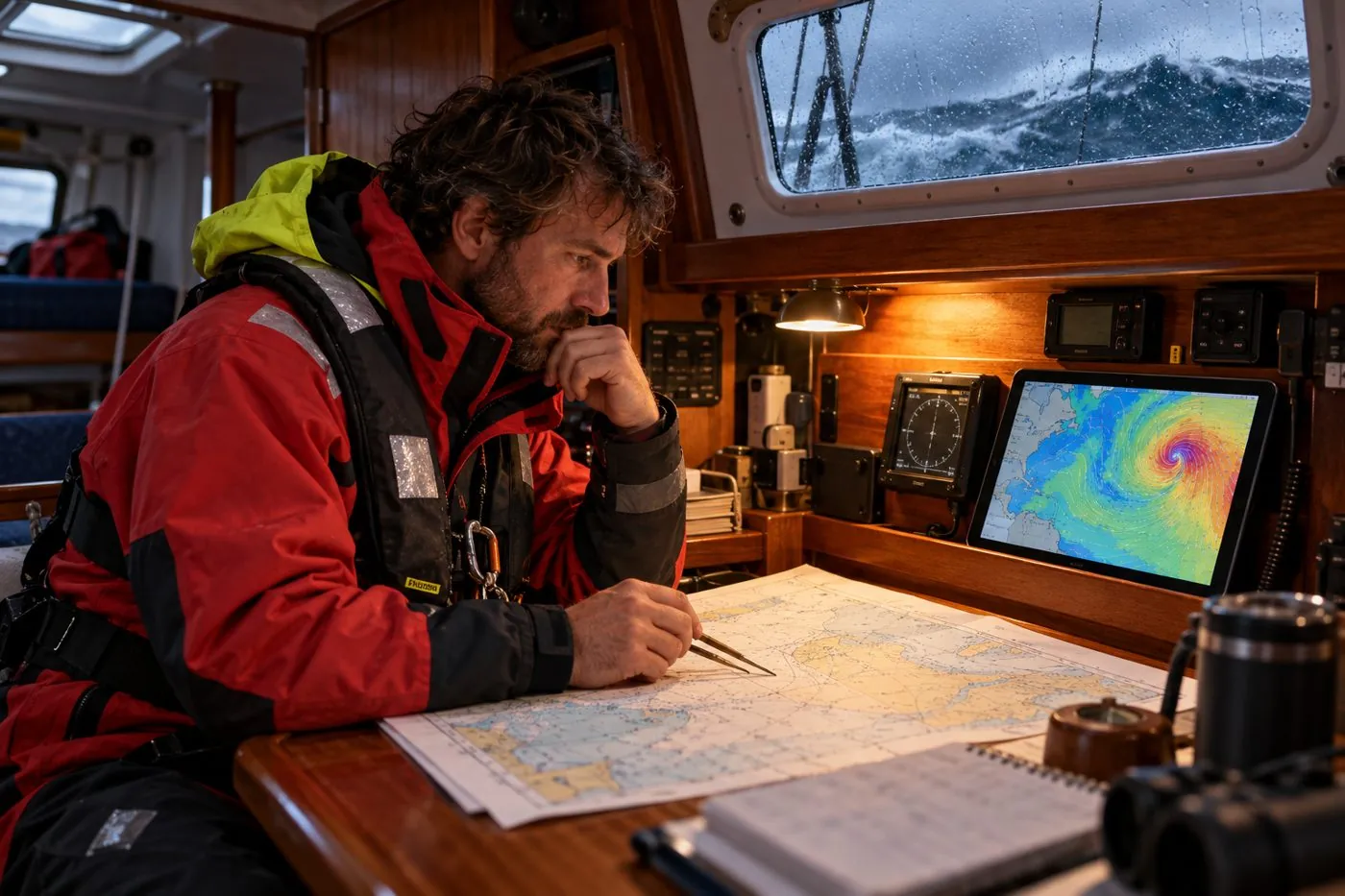
Practice interpreting fictional marine forecasts, identifying weather hazards and choosing safer sailing plans.
All forecasts and conditions on this page are invented for learning. Never use them to plan an actual voyage. Consult current official marine forecasts, warnings and local observations.
Read a forecast for the exposed leg
Match place and time
Identify which part of the fictional route lies outside shelter. Compare the expected time there with the forecast period. A departure observation describes one place at one time.
Read beyond average wind
Compare sustained wind with gusts, wave period and visibility. Decide which change would prompt a new plan and identify where that choice still leaves room to divert.
Build a practice marine forecast
Change the conditions to see which risks deserve extra attention. This is not a vessel-specific go/no-go recommendation.
Continue evaluating conditions
No preset threshold crossed, but weather can still be unsafe depending on direction, period, thunderstorms, geography and your boat.
Forecast interpretation scenarios
Answer five questions. Read the explanation after grading.
Always follow official marine weather services, warnings and emergency instructions. Weather risk depends on local geography, boat capability and crew experience.