BEGINNER SAILING · LESSON 27 OF 40
Reading Wind and Clouds
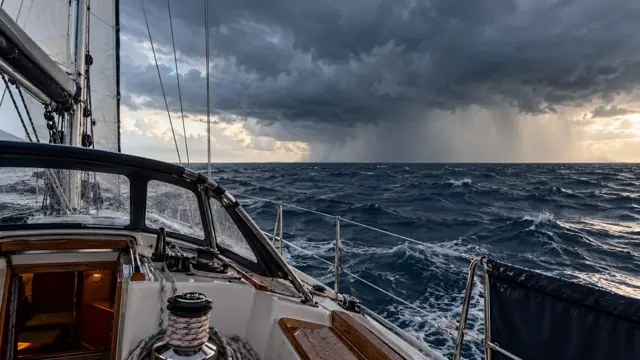
Recognize changes in the sky and on the water.
1. Watch the water
Dark streaks and cat's paws can reveal gusts approaching across the surface. Note their direction and speed, and prepare to ease or reduce sail if needed.
2. Cloud clues
Towering cumulus clouds can signal strong convection and squalls; thickening layered cloud may precede a front. Cloud types alone cannot reliably predict a storm, so consult current forecasts.
3. Pressure and visibility
A falling barometer may accompany changing weather, but local patterns vary. Haze, fog and rain reduce visibility and require slower speed, sound signals where required and careful navigation.
4. Act early
Secure loose gear, check reefing options and keep a safe route to shelter. Lightning is hazardous: avoid exposed metal where possible and follow established vessel lightning procedures.
Build a weather observation log
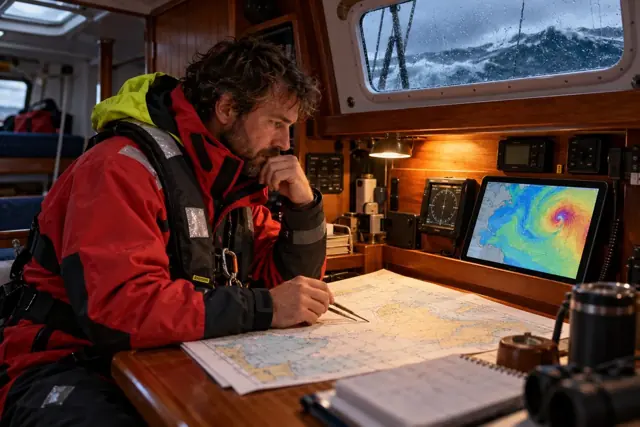
At regular intervals record wind direction, visible landmarks, cloud changes and the time. Compare trends with the latest forecast and warnings. A dark cloud by itself cannot establish its exact track or severity.
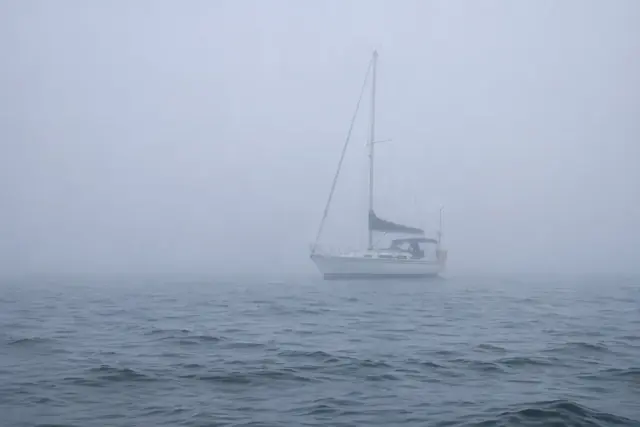
Why record which headland disappeared?
Its known position gives the next watch a useful visibility reference.
Practice Quiz
Answer all five questions. Passing score: 80% (4 of 5).