BEGINNER SAILING · LESSON 24 OF 40
Gybing

Turn the stern through the wind while controlling the boom.
1. Why gybing needs care
A gybe changes the side of the wind by turning the stern through it. The boom can cross violently and injure crew or damage equipment, especially in strong wind.
2. Plan the maneuver
Check for traffic and sea room. Brief crew, ensure everyone stays clear of the boom and mainsheet, and consider whether tacking around is safer in the conditions.
3. Control the boom
Use an appropriate controlled-gybe technique for the boat, commonly bringing the mainsheet in to reduce boom travel before turning. Keep the mainsheet and traveler clear of people and hands.
4. Turn and ease
Steer gradually through dead downwind while controlling the boom's transfer. Once the sail fills on the new side, ease the mainsheet to the new course and check the headsail. Never attempt an uncontrolled gybe in heavy conditions.
Mark the boom’s path
On a sketch viewed from above, mark where the boom and mainsheet can travel in a gybe. Include the sheet sweep as well as the boom itself. Discuss safe crew positions before a supervised maneuver.
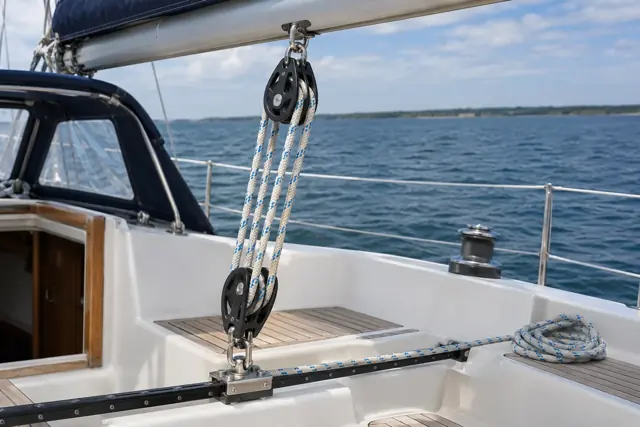

Why is ducking the boom alone insufficient?
Moving sheet and tackle can also strike or trap someone.
Practice Quiz
Answer all five questions. Passing score: 80% (4 of 5).