BEGINNER SAILING · LESSON 17 OF 40
Leaving the Dock
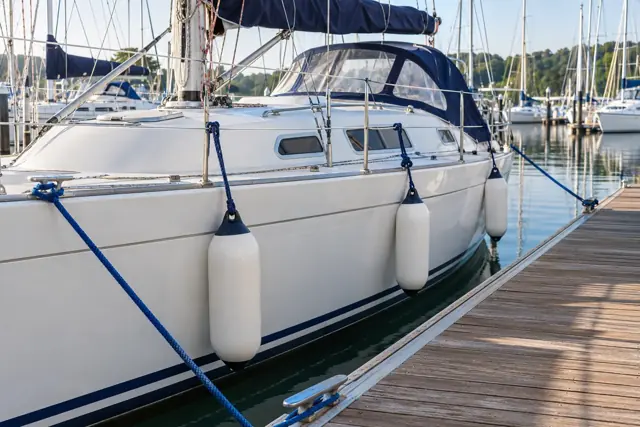
Plan a controlled departure using wind, current and crew communication.
1. Read wind and current
Observe which way wind and current push the hull before removing lines. Consider nearby boats, shallow water and traffic. A plan that works in calm weather may fail in crosswind.
2. Assign jobs
Brief the crew on line order, fender retrieval, lookout and an abort plan. No one should jump ashore or push off with hands or feet.
3. Use controlled power
Start the engine, confirm steering and cooling, and use brief, deliberate throttle inputs. Release lines in a planned sequence so the boat stays under control. Do not rely on spring-line techniques without practice and suitable fittings.
4. Leave safely
Move clear of docks and swimmers at minimum effective speed, then retrieve lines and fenders only when safe. If control is lost, pause or return to a safe position rather than forcing the maneuver.
Identify the first drift
Observe nearby flags and the water beside the berth. Ask which direction the hull is likely to move as restraint comes off. Brief what to do if the actual movement differs from the prediction.
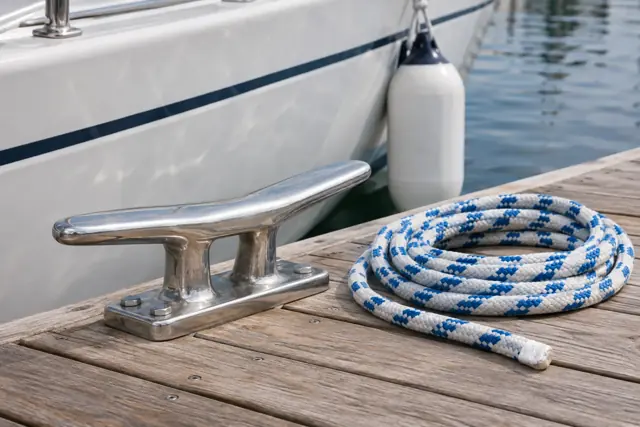

What makes an early pause worthwhile?
There may still be enough room to reset without rushing the line crew.
Practice Quiz
Answer all five questions. Passing score: 80% (4 of 5).