BEGINNER SAILING · LESSON 15 OF 40
Starting and Stopping the Engine
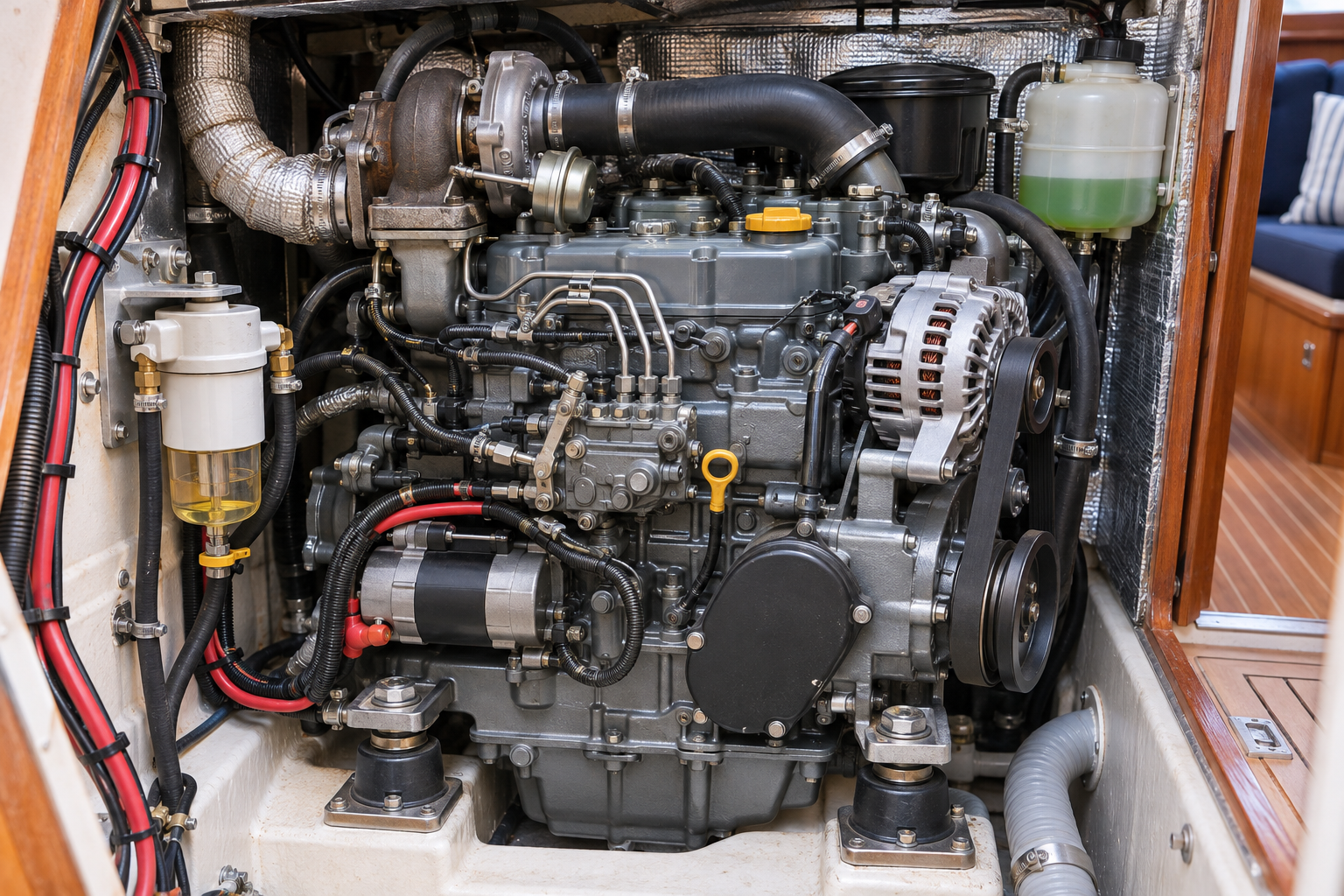
Follow a safe marine diesel routine and your engine maker's instructions.
1. Before starting
Read your specific engine manual. Check engine oil, coolant level when safe, belts, fuel supply, ventilation, leaks and raw-water seacock position. Confirm the gear selector is neutral and the area around the propeller is clear.
2. Start and confirm
Follow the manufacturer's preheat and cranking procedure. Avoid prolonged cranking. Once started, check oil-pressure and charging indications, alarms, exhaust cooling-water discharge where fitted, and leaks.
3. Underway
Warm up and load the engine according to its manual. Monitor temperature, charging, vibration, smoke and cooling-water flow. If an alarm sounds or cooling water stops, reduce load and shut down as appropriate to investigate.
4. Stopping and securing
After sustained high load, allow a manufacturer-recommended cool-down. Shift to neutral and stop using the proper control, not an emergency cutoff unless needed. Secure the boat, then close the raw-water seacock if your operating procedure requires it and record any faults.
Make a baseline engine log
With the owner’s manual in hand, identify the normal start sequence, alarm indications and shutdown control for this installation. Log what you observe during a supervised start so changes are easier to recognize later.

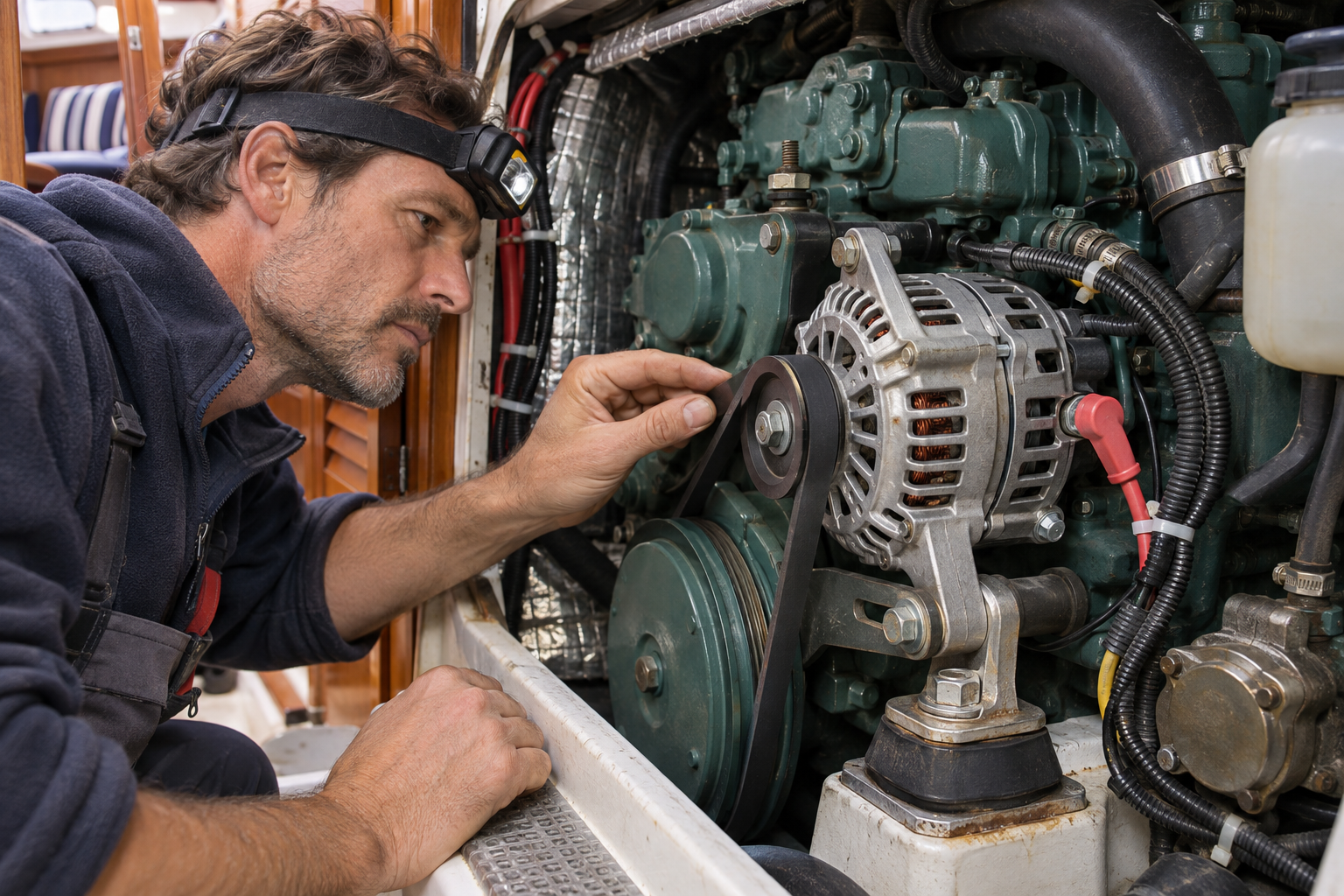
What if the expected cooling indication is missing?
Alert the skipper promptly and follow the engine-specific procedure.
Practice Quiz
Answer all five questions. Passing score: 80% (4 of 5).