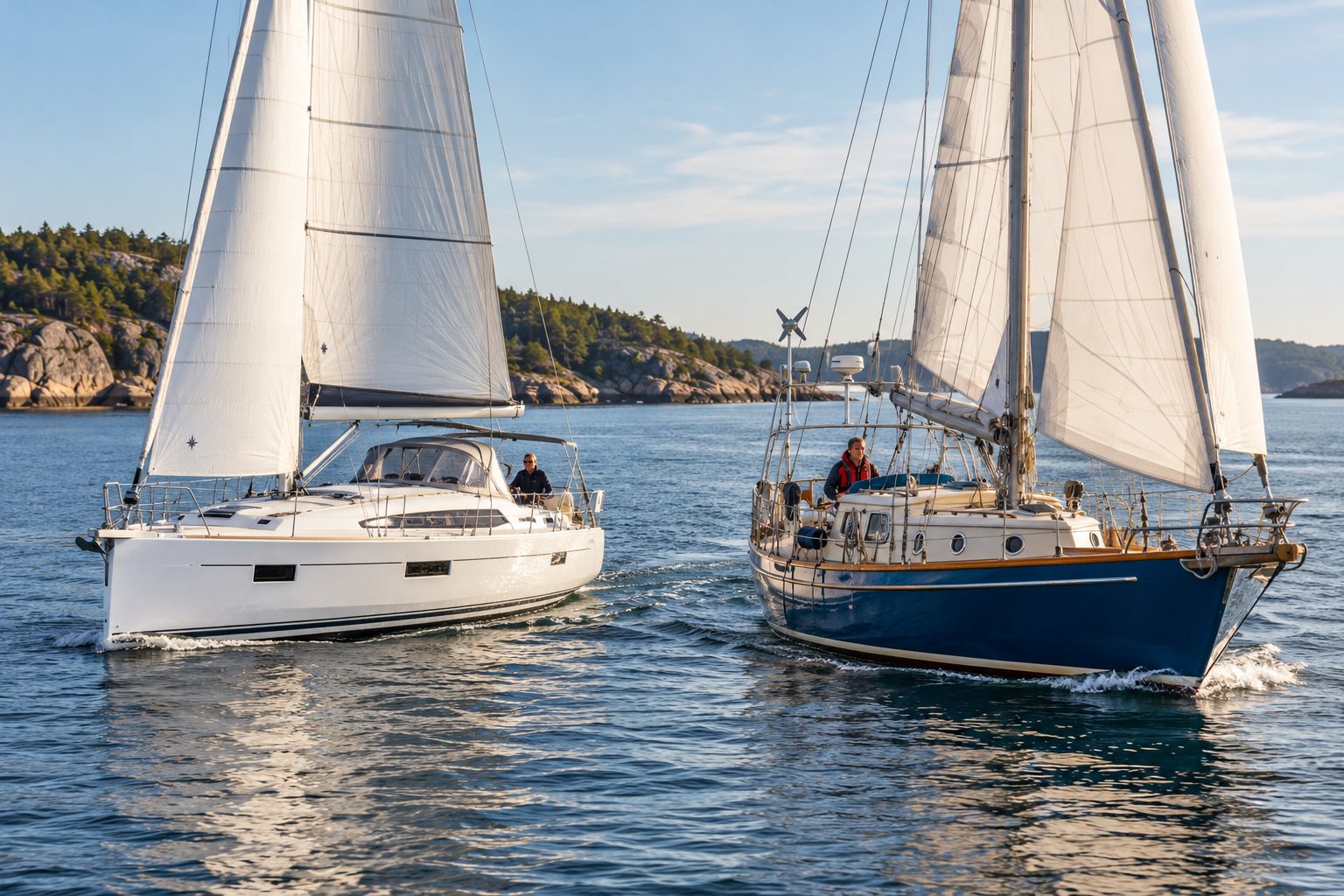
What counts as a production sailboat?
A production boat is built repeatedly to a standard design, often using molds, jigs, repeatable parts and established assembly steps. Buyers may choose from a set of layouts, equipment packages and finishes. A production run can be large or small; “production” does not necessarily mean every boat is identical or that the builder never changes the design.
Because the same model was built more than once, there may be model-specific manuals, owner knowledge, spare parts, survey experience and comparable resale listings. These are useful advantages only when the manufacturer or supplier network still supports that model and the boat’s records are available.
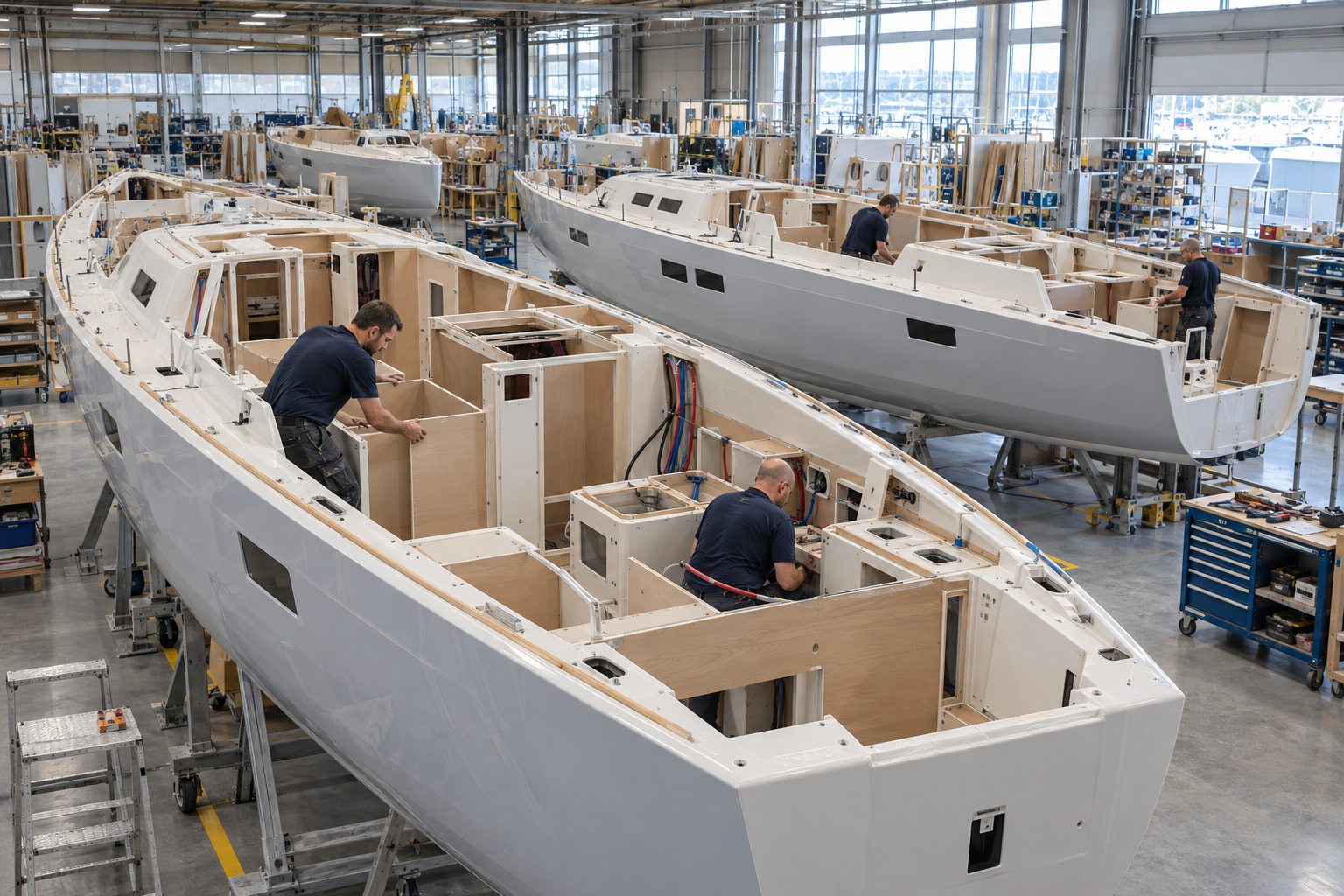
What counts as a one-of-a-kind boat?
A one-off boat is designed, adapted or built for a particular owner, brief or unusual use. The owner may work with a naval architect and builder to choose dimensions, materials, layout, draft, payload, systems and equipment. “Custom” can describe a unique hull, a heavily modified design, or a boat built from a design that has only been completed once.
This freedom can solve a real need: a specific draft, crew arrangement, operating area, accessibility requirement or piece of equipment. It can also add design fees, long build times and decisions the owner must manage. Bespoke parts or systems may be harder to replace, and a later buyer may have fewer comparable boats, manuals or people familiar with the design.
Custom does not mean overbuilt or offshore-ready. A unique boat still needs sound engineering, careful construction, suitable loading assumptions and a thorough inspection.
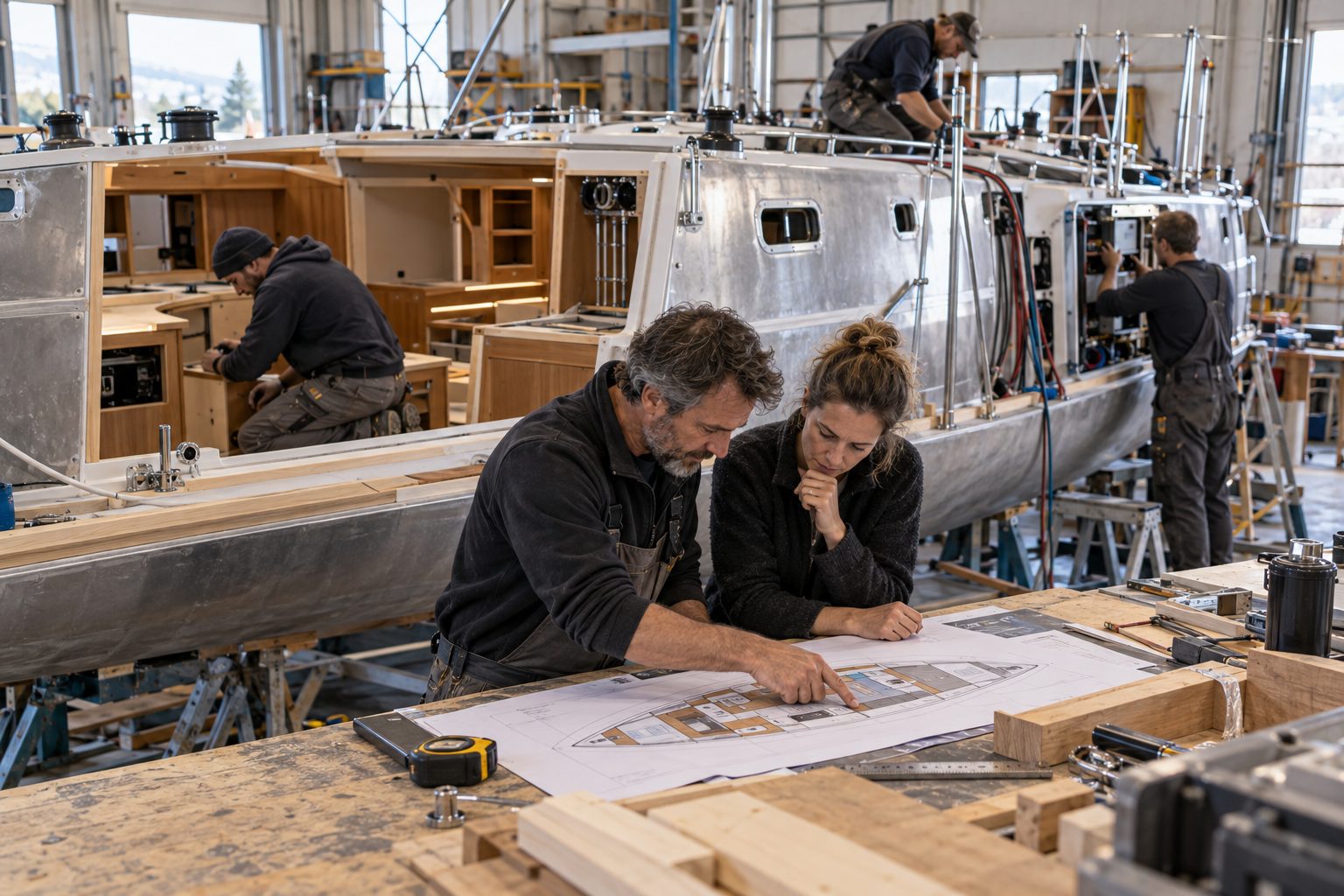
The middle ground: semi-custom and limited production
Many boats fall between the two categories. A builder may produce a proven hull in a limited run while allowing substantial choices in interior, rig, propulsion or systems. A one-off may also use a recognized design that has been built before. Ask what is actually standard, what was changed and who approved each change.
Two boats with the same model name can differ after decades of refits and owner modifications. Two boats called “custom” can have very different levels of engineering, documentation and workmanship. The category is a starting point for questions, not a quality score.
Compare the boat, not just the label
For any boat, ask for its design information, construction or refit records, equipment manuals, service history and evidence of applicable standards or certification. A documented standard can help you understand what was assessed, but it does not replace inspection or prove the condition of a particular boat today.
For a production model, confirm its model year, builder, version and installed options. Look for the owner’s manual, wiring and plumbing diagrams, parts references and any manufacturer notices that apply.
For a one-off or heavily modified boat, ask for the designer’s drawings, structural calculations where available, material specifications, as-built drawings, system diagrams and a list of later changes. Find out who can answer technical questions if the original designer or builder is no longer available.
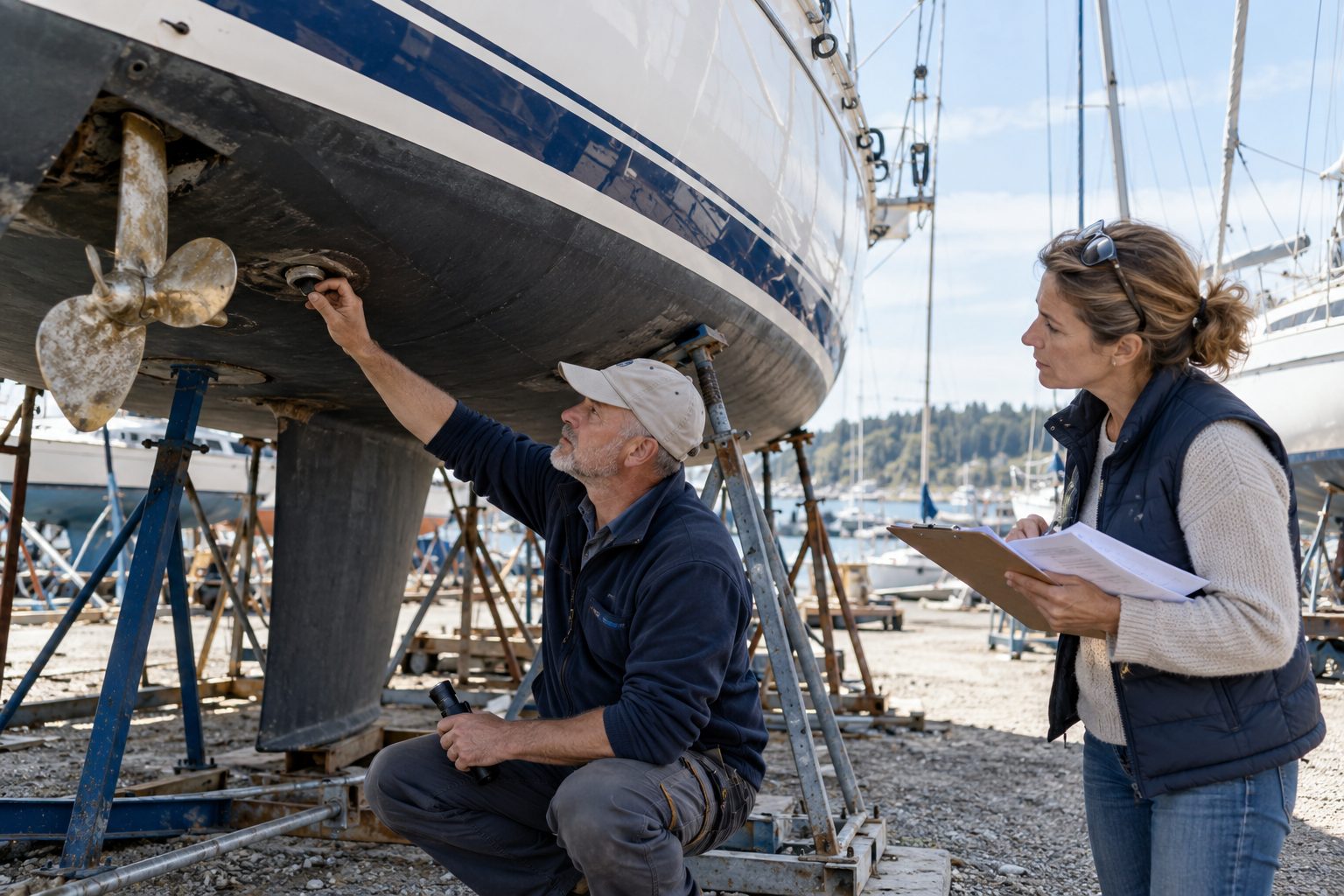
Construction standards and certification
Ask which rules, standards or design methods the builder used, and request the supporting documents. ISO 12215 covers parts of small-craft hull construction and scantlings, including structural details and rig loads. In the United States, ABYC publishes standards for recreational-boat design, construction, equipment and systems; NMMA certification is one way a manufacturer may demonstrate conformity with applicable ABYC standards. Applicability and certification vary, so verify the exact boat, model year and scope rather than relying on a general claim.
A professionally engineered one-off can be designed and built with relevant standards in mind. A mass-produced boat can still have defects, prior damage or undocumented changes. Standards help frame the review; a qualified independent surveyor evaluates the individual boat.
Which type should you consider?
- Look at production boats first if you want an established model, familiar layout, more comparable listings, predictable equipment options or a broader pool of owners and service providers.
- Look at semi-custom boats if a known design works for you but you need meaningful choices in the layout, rig or systems.
- Consider a one-off if your route, draft, payload, accessibility or operating needs are difficult to meet with standard models—and you have time, budget and qualified help to assess its design and records.
For a used boat, weigh the purchase price together with the cost of repairs, refit work, parts, insurance and future resale. A low-priced one-off can become costly if its systems are undocumented or its components are unique. A well-supported production boat can also be expensive if it has deferred maintenance or damage.
Buyer’s checklist
- Who designed and built the boat, and what experience did they have with this design and material?
- Do the drawings, build specification and installed equipment match the boat in front of you?
- What standards, design category or certification apply, and can the seller provide records?
- Are the hull, deck, keel, rudder, rig and steering sound according to an independent survey?
- Can you get parts, manuals and technical help in the places where you plan to cruise?
- What did a sea trial reveal about handling, systems, noise, leaks and the boat’s actual condition?
- Can your crew maintain, provision and operate this boat safely?
The short answer
Production boats often make it easier to compare models and find shared knowledge. One-of-a-kind boats offer more room to shape a boat around a specific mission. Either can be a good choice when the design is appropriate, construction is documented, condition is sound and the boat can be supported where you plan to use it. Let the evidence on the individual boat make the decision.