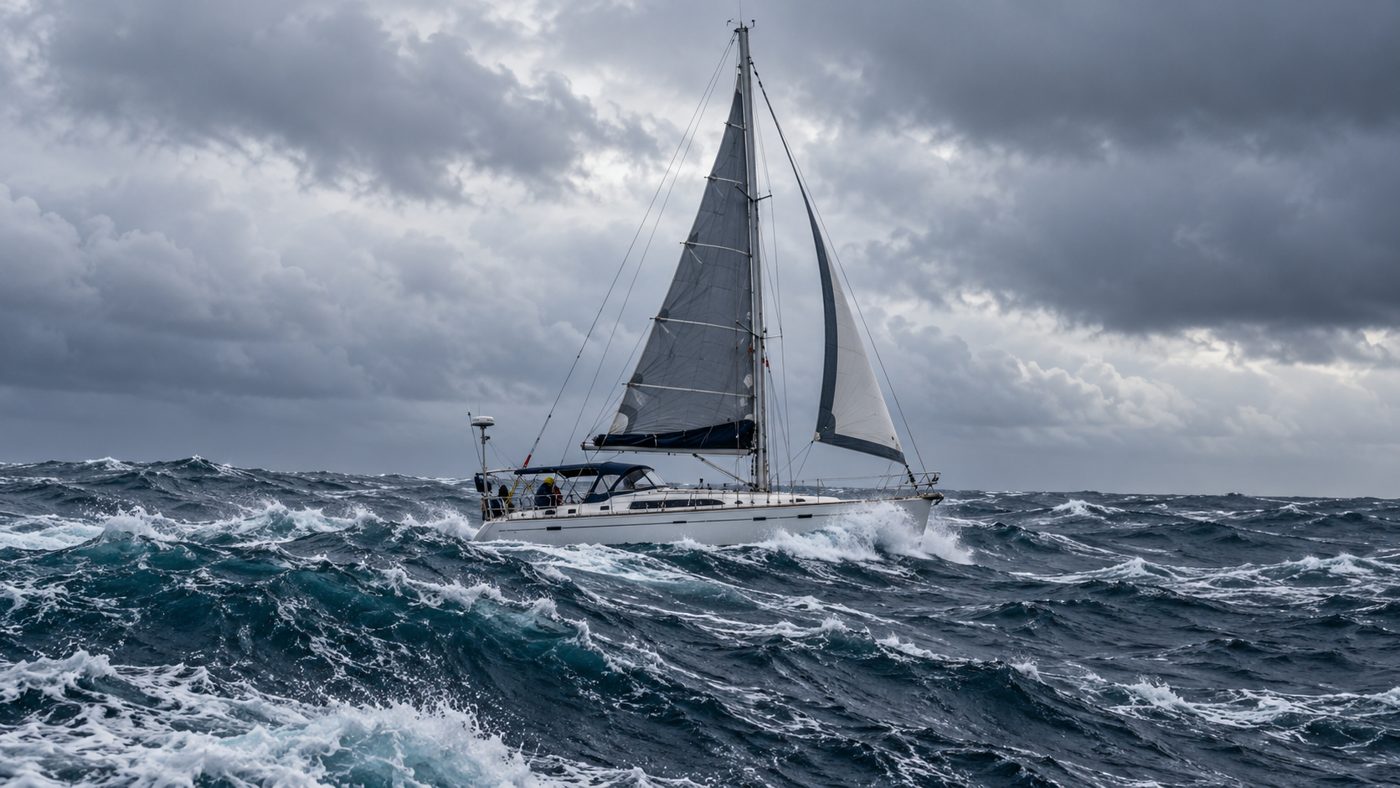
General preparation guidance, not a storm-handling procedure for every boat. Learn your vessel’s limits and practice with qualified instruction in manageable conditions. Illustrations are AI-generated and are not rigging diagrams.
1. Make the decision before departure
Read the official marine forecast for the whole route and the time you expect to be exposed. Check warnings, gusts, wind direction, swell, wind waves and tides. A forecast wave height is not a maximum; individual waves can be higher. Wind against current can make seas steeper, and a short wave period can make a modest height punishing.
Plan alternatives and decide what would make you delay, turn back or divert. A schedule should never be the reason to depart into conditions beyond the boat or crew. Check whether a refuge is actually safe to enter in the forecast wind and sea; a harbour bar or exposed entrance may become dangerous.
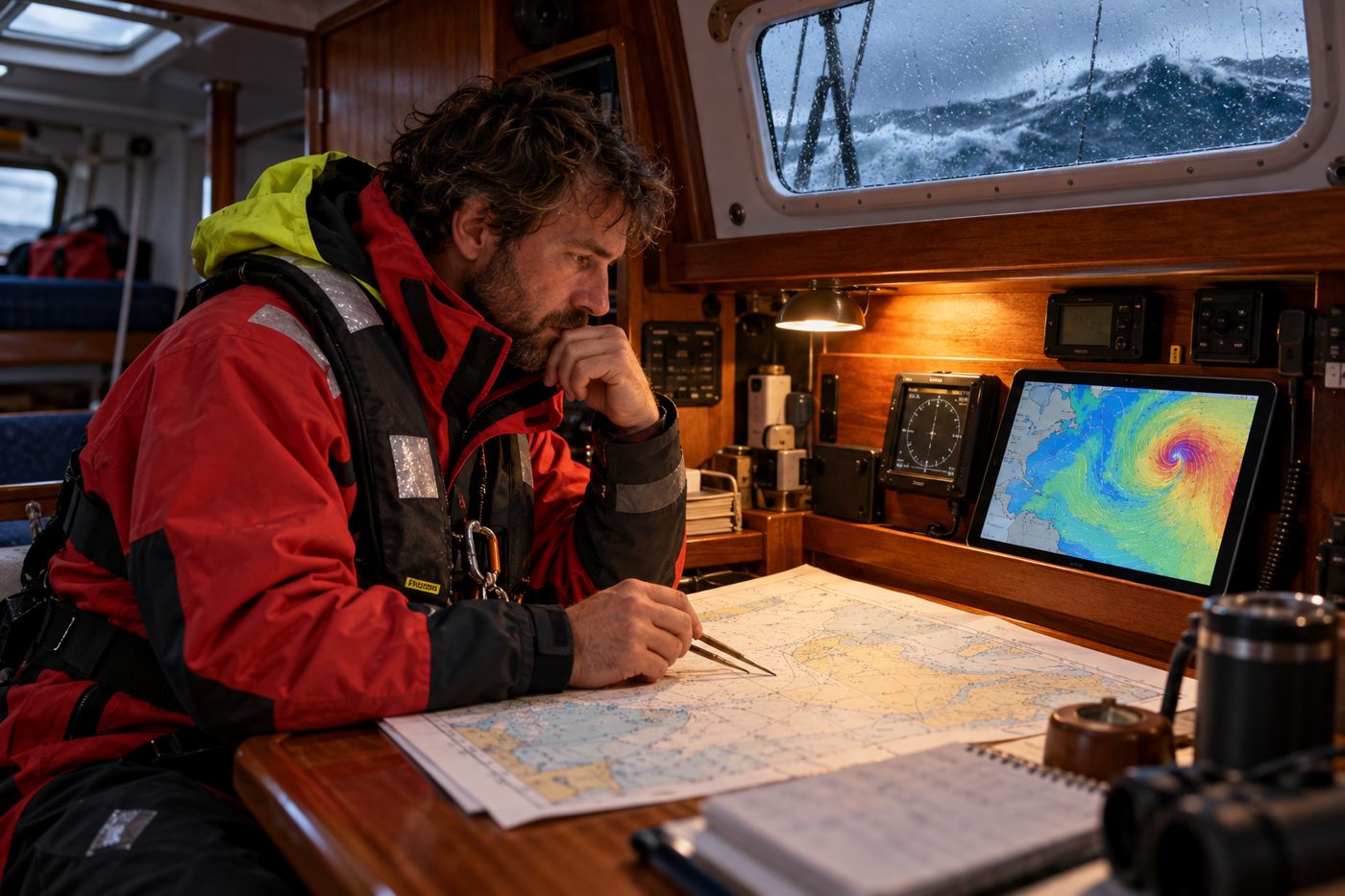
2. Prepare while the work is still easy
Secure loose items above and below deck. Check locker latches, hatches, washboards, cockpit drains and bilge pumps. Keep emergency equipment accessible. Review the reefing system, steering arrangements and communications, and ensure everyone knows their role.
Prepare food, drinking water and dry clothing before the motion becomes tiring. Arrange short, realistic watches and give the off-watch crew somewhere secure to rest. Fatigue reduces the quality of every later decision.
3. Reduce sail early and keep the boat balanced
Reef before the crew is struggling. Excessive heel, heavy helm and repeated loss of control are reasons to reassess the sail plan, not signs to push harder. Follow the boat and equipment makers’ procedures for your reefing system.
Balance the headsail and mainsail for controllable steering. A heavily rolled cruising genoa is not automatically a suitable storm jib. Dedicated storm sails require appropriate fittings, rigging and practice; prepare them in good time if they are part of your boat’s plan.
4. Keep people aboard
Wear properly fitted lifejackets and use suitable harnesses, tethers and engineered attachment points as appropriate. Arrange the system to prevent a person reaching the water, rather than merely remaining attached after falling overboard. Keep movement on deck to essential tasks and communicate before anyone leaves the cockpit.
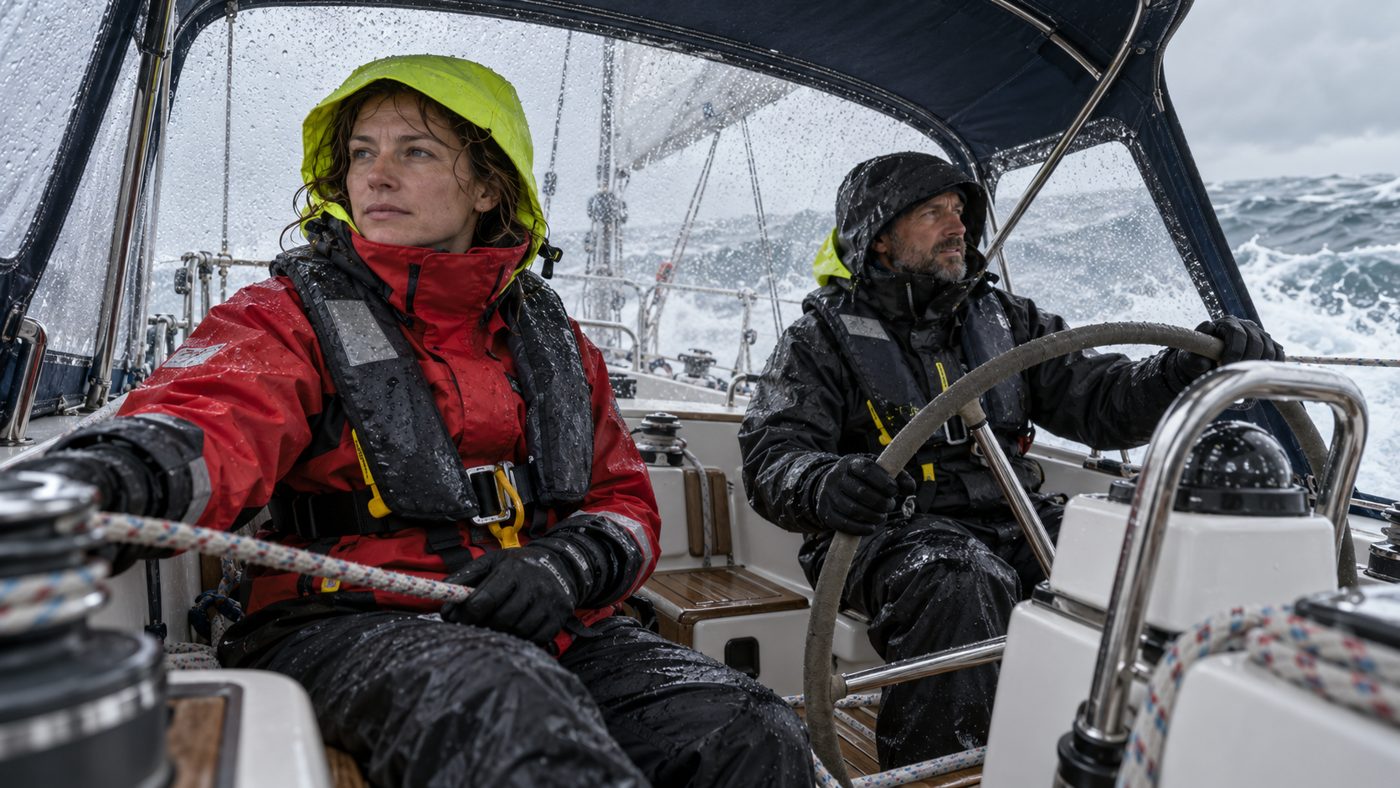
5. Choose a tactic for the boat and the sea
There is no universal storm tactic or safe steering angle. Review sea room, breaking waves, drift toward hazards and the crew’s ability to sustain the chosen approach.
- Continue under reduced sail: only while the boat remains controllable and the course leads toward safer water.
- Heave to: some boats settle well, while others do not. Practice beforehand and account for continuing drift.
- Run off: requires ample clear water and control of speed and direction. Broaching and accidental gybes remain risks.
- Drogues and sea anchors: are different systems with different purposes. Use a boat-specific setup, rated strong points, chafe protection and the manufacturer’s instructions. Deployment and recovery require preparation.
Simply dropping all sail does not guarantee safety. Neither does pointing directly into every wave. If the boat is pounding, losing steerage or repeatedly being overwhelmed, reassess the tactic and seek help early.
6. Watch for squalls and changing hazards
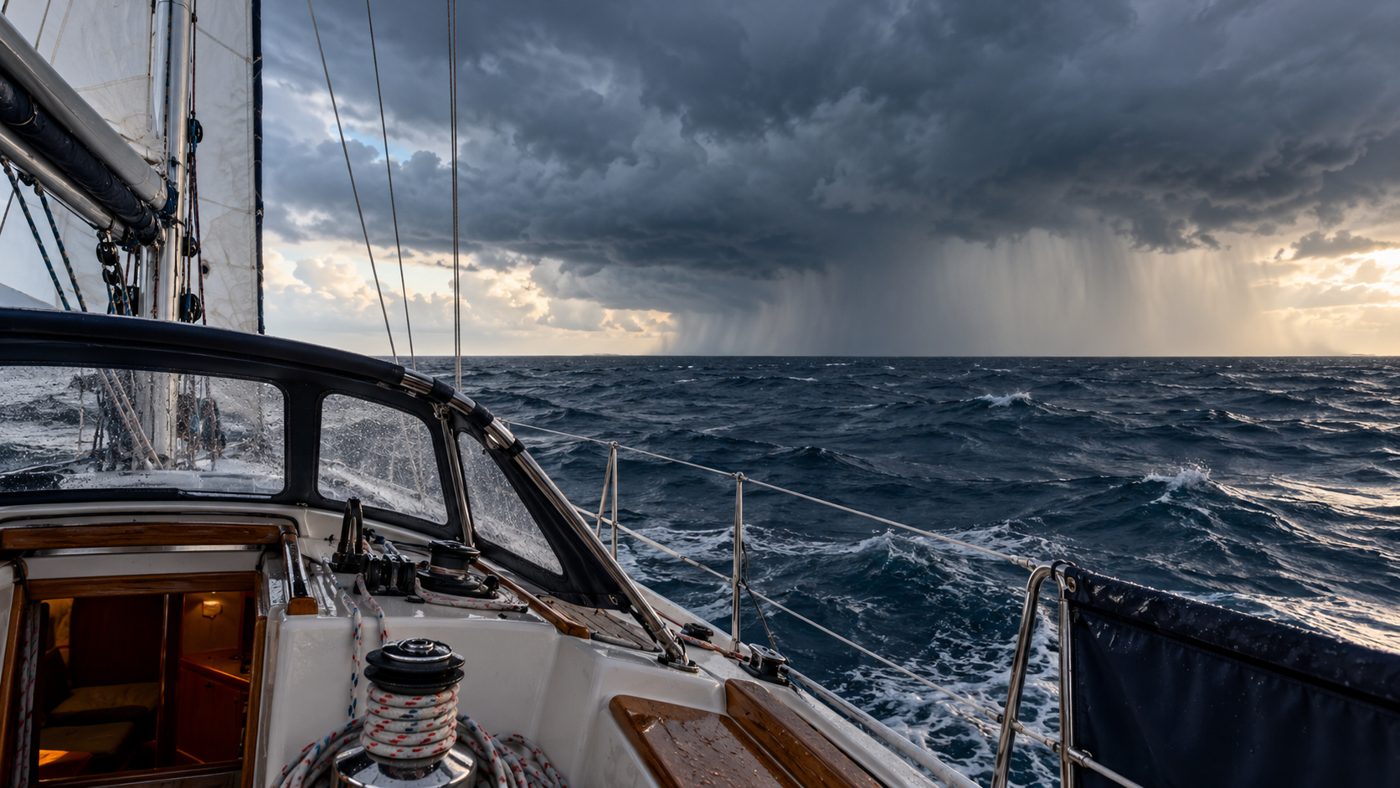
Monitor the sky as well as instruments. Thunderstorms can bring lightning, abrupt wind changes and poor visibility. Seek safe shelter before they arrive when it is feasible. Keep a lookout and continue checking your position against hazards; an autopilot is not a substitute for watchkeeping.
7. Communicate before the situation becomes desperate
Brief the crew on the VHF, distress equipment and man-overboard plan before sailing. If safety is deteriorating, contact the appropriate rescue service early and describe your position, problem and people aboard. Use a distress alert when there is grave and imminent danger requiring immediate assistance; follow your radio and beacon instructions.
After the weather passes
Reassess the forecast and the crew before resuming the passage. Check for water ingress, chafe, loose fittings, steering damage and rigging problems. Record what worked and what needs attention while the experience is fresh.