Place and secure a portable fuel tank
A tank that slides when someone boards can pull on the connector or block the operator’s feet. Choose its position with the dinghy loaded as it will be used.
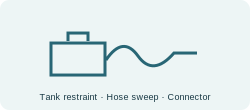
1. Plan the route
Use an approved tank in the location and ventilation conditions specified by the makers. Keep it stable, clear of hot parts and protected from feet and cargo. Route the hose without sharp bends, rubbing at the transom or tension at either connector.
2. Verify before starting
Secure the tank with its intended restraint. Follow its particular venting and priming procedure. Check the entire route for wetness or fuel odor with the motor stopped. Resolve leaks before operating it.
Workshop question
The bulb collapses only when the stern bag is aboard. What do you inspect?
Check your answer
Look for the bag pinching the hose or restricting the tank arrangement before replacing engine parts.
Example engine reference · Honda BF4A, BF5D and BF6A owner’s manual. Match the published procedure to your own model and serial range.