Before you start
Gather the appropriate supplies and review the specific equipment manual.
- Operator’s manual for exact engine model
- Engine serial number and service log
- Specified oil and filter
- Oil extractor or drain equipment
- Filter wrench, catch pan, absorbent pads, and PPE
Verify the fill and reading procedure
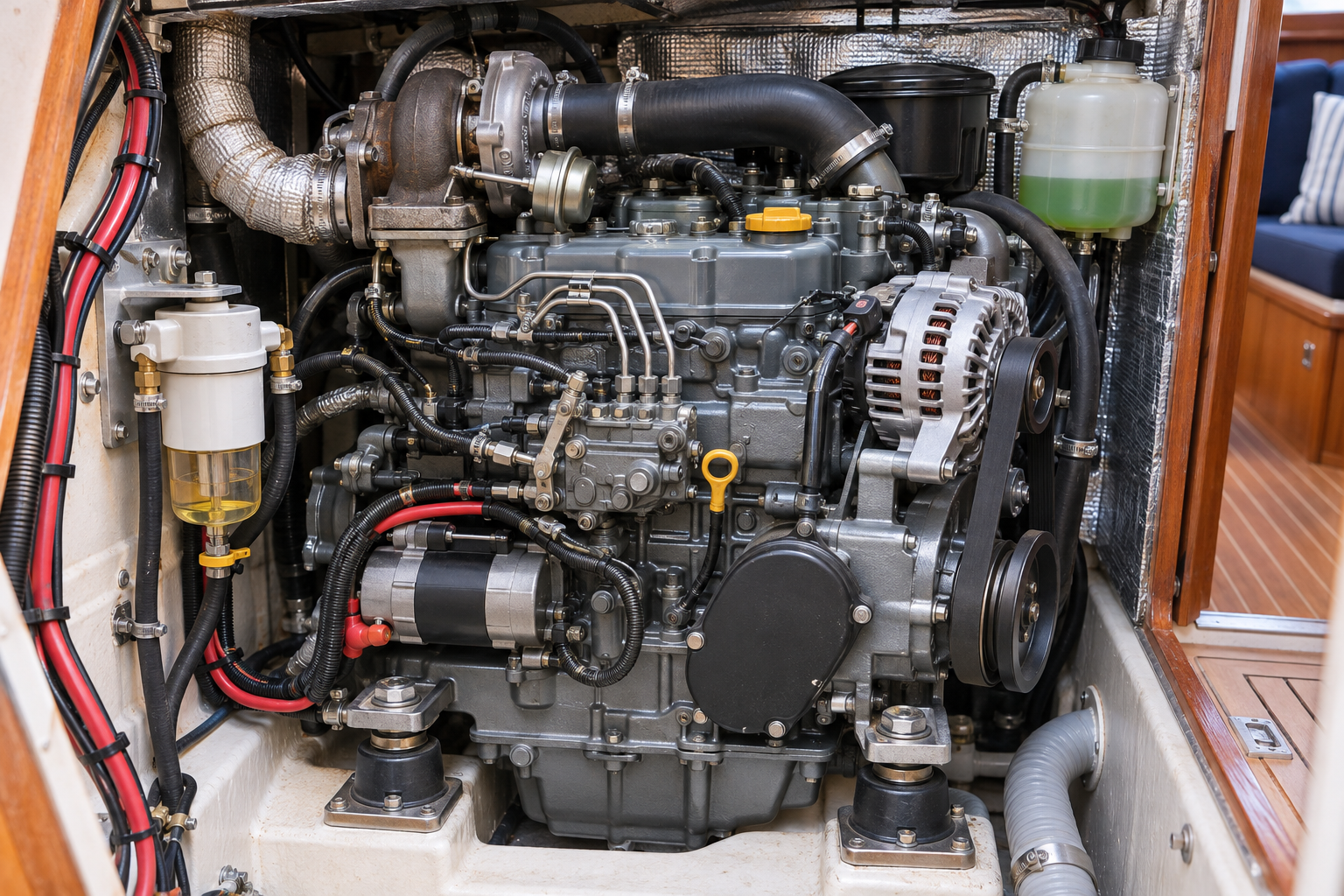
Before the job, identify the installed engine, its sump arrangement and the specified dipstick procedure. A nominal capacity from a brochure is useful for ordering supplies. The operator manual describes how to establish the level on the actual installation.
Why might the amount drained differ from a published capacity?
Residual oil, the filter and the installation angle can affect the amount recovered. Record what was removed and verify the final level by the correct procedure before closing the job.
Step-by-step instructions
Identify the engine and its manual
Record the full model and serial number from the engine plate. Westerbeke’s document library covers both Westerbeke and Universal marine engines, but parts, capacities, and procedures vary among models. Download or obtain the operator’s manual for the exact engine before buying oil or a filter.
Determine when service is due
Westerbeke’s maintenance FAQ says to change engine oil and filter every 100 operating hours or once each season, whichever comes first, and says to follow the maintenance schedule in the operator’s manual. Check the manual for the schedule applicable to your engine and do not extend its interval because you use synthetic oil.
Prepare the boat and engine
Ventilate the compartment, secure the boat, place controls in neutral, stop the engine, remove the key, and prevent accidental starting. Use gloves and eye protection, place absorbent pads and a catch container, and warm the oil only if the exact manual directs it. Hot oil can burn.
Drain or pump the oil using the specified method
Follow the manual for your model’s drain hose, pump connection, or sump access. Many installations provide a lube-oil drain hose, but verify the actual arrangement rather than assuming it is present. Collect the used oil in a closed container; do not drain it into the bilge.
Replace the filter using model-specific instructions
Use the filter specified for the engine serial number. Keep a catch pan below the filter, remove it carefully, and clean the seating surface. Install the replacement filter according to its instructions and the engine manual; gasket lubrication, pre-filling, and tightening details can differ by filter and model.
Refill with the listed oil and check the level
Use the oil specification and refill quantity in the exact operator’s manual. Add oil gradually and check the dipstick using the required engine position and wait time. Never assume that two Westerbeke or Universal models share the same oil capacity or viscosity.
Run briefly and inspect
Refit the filler cap and dipstick, remove tools and rags, and restart only when it is safe. Check oil pressure promptly and stop if the warning remains on. Inspect for leaks around the filter and drain connection, then stop the engine and recheck the level as directed by the manual.
Record and dispose of the service waste
Log date, engine hours, oil grade, amount added, filter part number, and observations. Take used oil and the filter to an approved recycling or hazardous-waste facility.
Safety note
Westerbeke’s 100-hour or seasonal interval is general guidance; the correct maintenance schedule and oil specifications depend on the specific Westerbeke or Universal model. Confirm the operator’s manual and engine serial number before servicing.
Key takeaway
For Westerbeke and Universal engines, use the exact operator’s manual for oil and filter specifications and follow the manufacturer’s hours-or-season schedule.
Manufacturer manuals and references
Use the latest documentation that matches the engine serial number and installed configuration.
Where to go next
- Sailboat Diesel Turbocharger Inspection and Replacement Guide
Learn how to confirm whether a marine diesel is turbocharged, inspect common turbo symptoms, and plan a manual-led turbocharger replacement without damaging the engine or exhaust system.
- How to Check a Marine Diesel Engine Before Departure
A repeatable visual check for oil, coolant, belts, leaks and the raw-water exhaust.
- How to Troubleshoot an Overheating Marine Diesel
Identify the safest first checks when an engine temperature alarm sounds.
Keep this job on your maintenance schedule
Save the topic as a maintenance task, choose a due date or engine-hour target, and record future service. Free and stored on your device.
Add to my maintenance plannerThis guide is for general education. Follow your equipment manufacturer’s instructions, current navigation guidance and applicable marine safety standards. When uncertain, use a qualified marine professional.