Before you start
Gather the appropriate supplies and review the specific equipment manual.
- Operator manual for the exact D2-75 version
- Absorbent rags and catch container
- Gloves and eye protection
- Approved disposal container
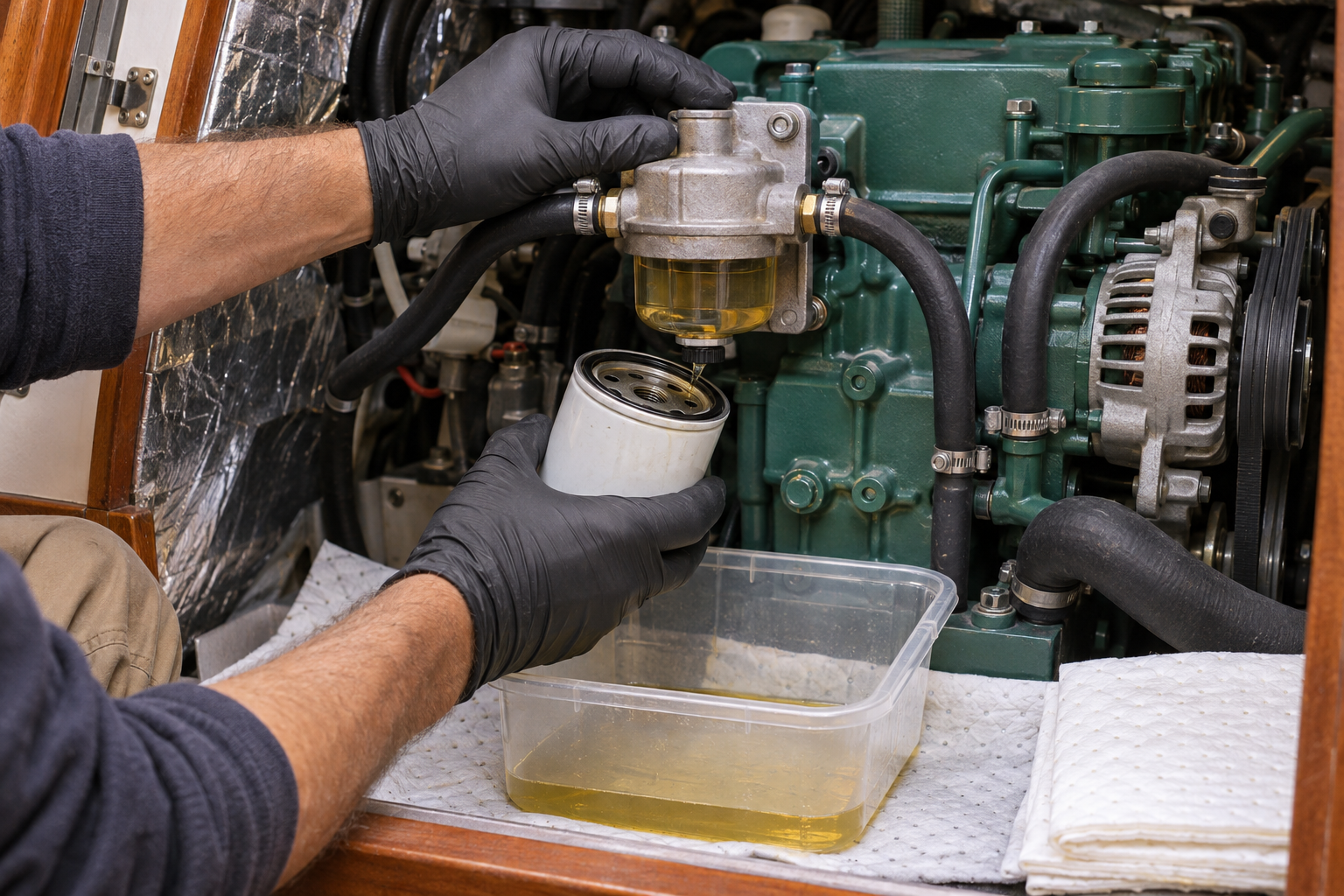
Match the filter and seal to the housing
Identify the primary separator and the engine-mounted filter in the service diagram. Record the exact filter element and seal references before removal. Fuel-system layout and priming procedures differ, especially between mechanical and common-rail engines. Follow the engine manual and leave high-pressure components to a qualified technician.
A starting problem appears immediately after a filter service. What should the service record show?
Which housing was opened, which element and seals were fitted, how priming was carried out and whether leakage was observed. Those details help separate a service-related problem from an unrelated starting fault.
Step-by-step instructions
Confirm that bleeding is called for
The D2-55/D2-75 operator manual calls for bleeding after a filter change or after the tank has run dry. If the engine stopped for another reason, diagnose that fault instead of repeatedly pumping or cranking.
Secure and cool the engine
Let the engine cool, stop it, remove the key, place controls in neutral, and prevent accidental starting. Ventilate the compartment, keep ignition sources away, and place absorbent material around the filter mounting.
Locate the correct low-pressure bleed point
Use the diagram for your D2-75 version to identify the fuel-filter vent screw and hand pump. Do not loosen the injection pump or high-pressure injector lines.
Open the vent screw carefully
The earlier D2-55/D2-75 manual describes opening the filter-mounting vent screw about three turns. Keep rags around the point to contain fuel. Use the location and opening amount shown in your exact manual if they differ.
Pump until the fuel is free of air
Operate the hand pump until no air bubbles are visible at the vent. Continue pumping while tightening the vent screw, as the manual directs. Wipe the area dry and inspect for seepage.
Start and check
Clear all tools and rags before starting. Check the filter mount and vent point from a safe position, away from hot and moving parts. Stop if fuel leaks, the engine runs unevenly, or an alarm appears.
If fuel will not reach the vent
Do not force the pump or continue cranking. Check fuel level, tank shutoff, filter seating, seals, and hoses against the manual. A blocked supply or air leak may be the cause. Contact an authorized Volvo Penta workshop if the fault persists or involves injection equipment.
Safety note
This is a low-pressure bleeding procedure. Volvo Penta reserves injection-pump and injector work for an authorized workshop. Do not loosen high-pressure lines. Fuel spills are a fire risk.
Key takeaway
Bleed the D2-75 only at the low-pressure point shown in its manual, then confirm smooth operation and a leak-free filter assembly.
Manufacturer manuals and references
Use the latest documentation that matches the engine serial number and installed configuration.
Where to go next
- How to Prime and Bleed a Yanmar JH-CR Fuel System
How to prime and bleed the Yanmar JH-CR 3JH40 / 4JH45 / 4JH57 / 4JH80 / 4JH110 low-pressure fuel system after filter service, fuel starvation, or fuel-system work.
- How to Prime and Bleed a Yanmar 3YM30AE
How to prime and bleed the Yanmar 3YM30AE low-pressure fuel system after filter service, fuel starvation, or fuel-system work.
- How to Prime and Bleed a Nanni N4.50
How to prime and bleed the Nanni N4.50 low-pressure fuel system after filter service, fuel starvation, or fuel-system work.
Keep this job on your maintenance schedule
Save the topic as a maintenance task, choose a due date or engine-hour target, and record future service. Free and stored on your device.
Add to my maintenance plannerThis guide is for general education. Follow your equipment manufacturer’s instructions, current navigation guidance and applicable marine safety standards. When uncertain, use a qualified marine professional.