Before you start
Gather the appropriate supplies and review the specific equipment manual.
- Nanni N4.50 operation manual
- Clean lint-free rag
- Engine oil specified in the manual
- Maintenance log
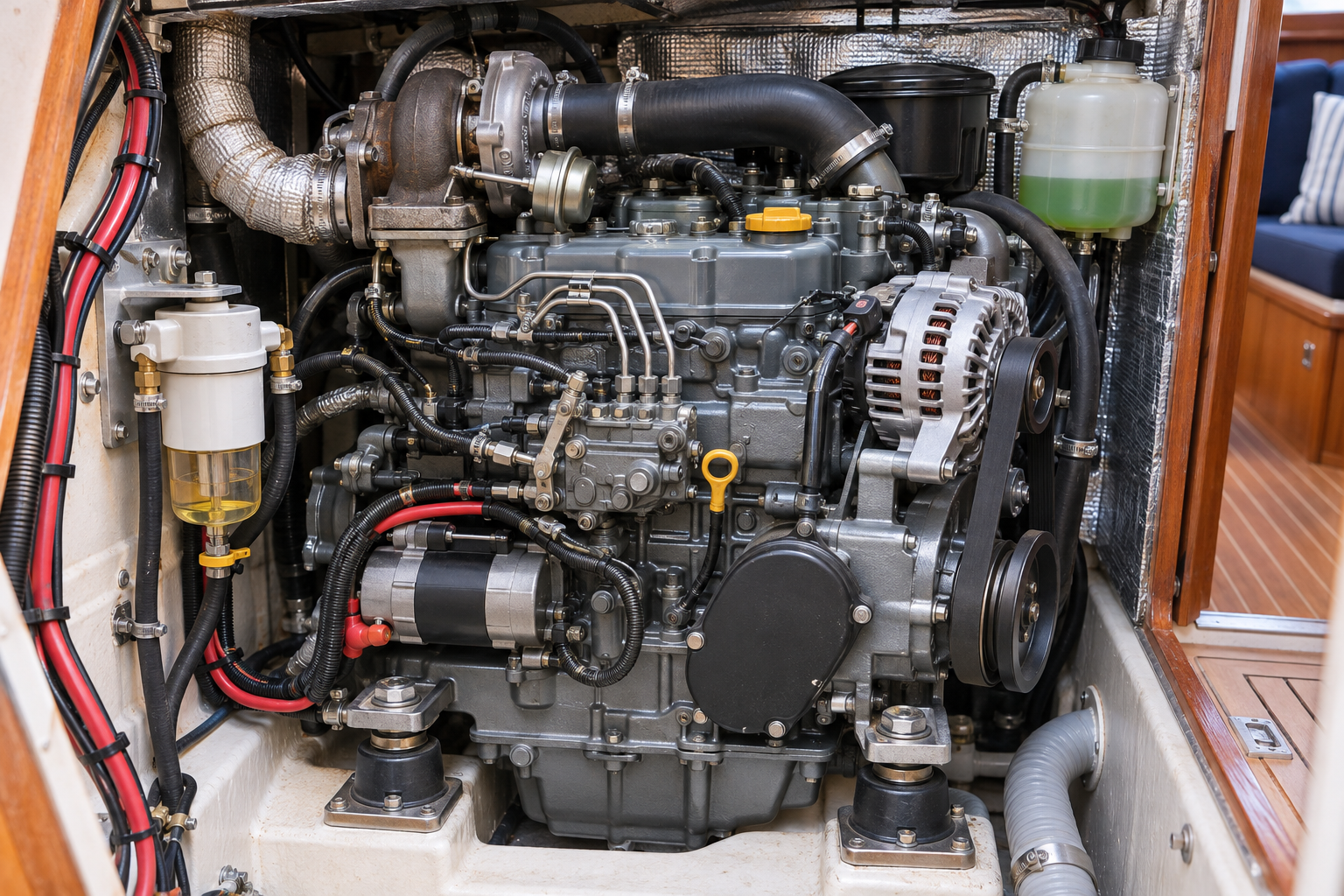
Verify the fill and reading procedure
Before the job, identify the installed engine, its sump arrangement and the specified dipstick procedure. A nominal capacity from a brochure is useful for ordering supplies. The operator manual describes how to establish the level on the actual installation.
Why might the amount drained differ from a published capacity?
Residual oil, the filter and the installation angle can affect the amount recovered. Record what was removed and verify the final level by the correct procedure before closing the job.
Step-by-step instructions
Confirm the engine and oil requirements
Verify that the engine is a Nanni N4.50 and use the corresponding manual. Nanni warns that unsuitable oil can affect warranty claims; use the oil quality and viscosity listed for this engine and expected conditions. Do not assume that another Nanni model uses the same specification.
Check before starting
Nanni’s N4.50 manual says to check engine and transmission oil before starting the engine. Make sure the boat is in the position required by the manual. Locate the engine dipstick and do not confuse it with the separate transmission dipstick.
Read the dipstick correctly
Pull out the engine dipstick, wipe it clean, reinsert it fully, and remove it again. Read the level between the Mini and Maxi marks. If the engine has been running, follow the manual’s waiting instructions so oil can return to the sump before checking.
Top up slowly if needed
If the level is low, remove the engine oil filler cap and add a small amount of the same oil already in the engine. Nanni advises not to mix different oil types. Wait several minutes for oil to drain into the sump, then repeat the dipstick check.
Stop at the maximum mark
Do not fill above the Maxi mark. Overfilling can cause engine problems. If the reading is unexpectedly low or changes quickly between checks, inspect for leaks and seek qualified help rather than repeatedly topping up without finding the cause.
Track early service on a new or rebuilt engine
Nanni’s N4.50 manual calls for oil and oil-filter replacement after the first 20 operating hours on a new or reconditioned engine. Confirm the current manual for your engine and record the hour-meter reading so this early service is not missed.
Record what you checked
Log the date, engine hours, dipstick reading, oil added, and any leak or consumption observations. A rising or falling level between checks can point to a developing problem that deserves investigation.
Safety note
This guide covers oil-level checks on the Nanni N4.50 and does not replace the engine manual. Engine oil and transmission oil are separate; use the correct dipstick and specifications for each. Do not overfill.
Key takeaway
For the Nanni N4.50, check oil before starting, read the engine dipstick between Mini and Maxi, add the specified oil slowly, and observe the manual’s first-service requirement.
Manufacturer manuals and references
Use the latest documentation that matches the engine serial number and installed configuration.
Where to go next
- How to Check a Marine Diesel Engine Before Departure
A repeatable visual check for oil, coolant, belts, leaks and the raw-water exhaust.
- How to Inspect Marine Engine Coolant Hoses Safely
Recognize cooling-hose aging before it causes coolant loss or overheating.
- How to Change Engine Oil on a Yanmar JH-CR Sailboat Engine
A manual-led oil and filter change for the Yanmar 3JH40, 4JH45, 4JH57, 4JH80, and 4JH110 JH-CR family, with careful notes on version-specific filter and refill procedures.
Keep this job on your maintenance schedule
Save the topic as a maintenance task, choose a due date or engine-hour target, and record future service. Free and stored on your device.
Add to my maintenance plannerThis guide is for general education. Follow your equipment manufacturer’s instructions, current navigation guidance and applicable marine safety standards. When uncertain, use a qualified marine professional.