Coastal effects · Lesson 9 of 19
Fog, rain and visibility
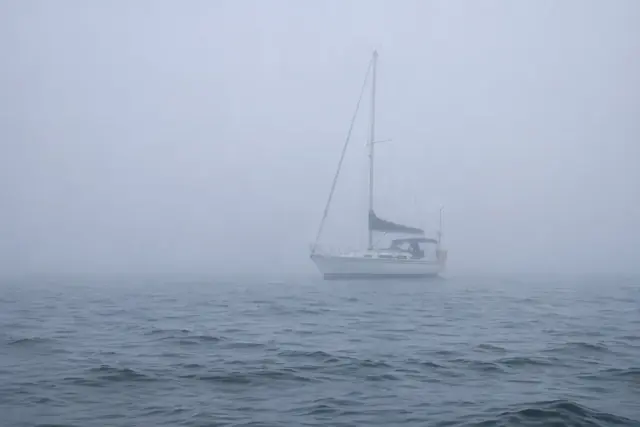
Fog forms when near-surface air reaches saturation. Moist air moving over colder water is one marine setting where this can happen. A small air-temperature/dew-point spread is a clue, not a guarantee. Compare upstream observations and the sea temperature along the route.
Apply it aboard
Estimate visibility using an identified object at a known range. A rain curtain can hide an entrance abruptly even without fog. In deteriorating visibility, reassess safe speed, lookout, traffic and whether there is room to wait or divert.
Check your understanding
A lighthouse at three miles disappears, but a nearer buoy remains visible. What can you report?
Compare your reasoning
Record the objects, ranges, time and direction. Visibility may vary by sector, so avoid claiming one exact range all around the boat.
Forecast and observation references · NWS Marine · Ocean Prediction Center · National Hurricane Center · Buoy observations