Specialty course · Open to everyone
Storm Sailing & Heavy Weather Safety
Follow a passage from the first weather check through the watch after the storm. Each of the six chapters includes photographs, a decision to work through and a practice question.
MODULE 1 OF 6
Storm Awareness and Forecasts
Read official marine forecasts, warnings, fronts, squall lines and tropical cyclone advisories. Check forecast issue time and local observations. Weather models are guidance, not guarantees.
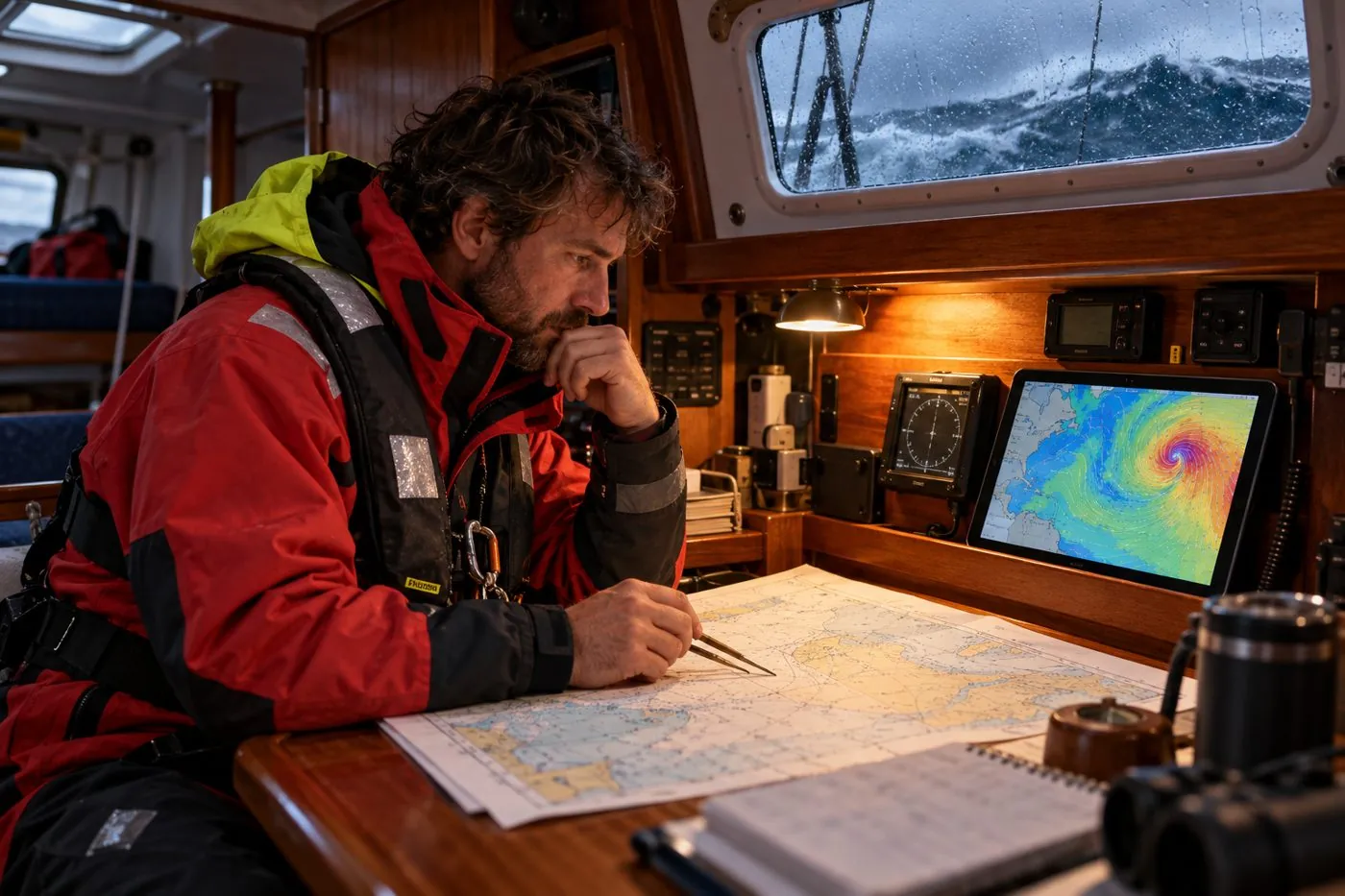
Read the forecast along the route
Write down the issue time, time zone and the period covered. Read the marine forecast for departure, the exposed part of the passage and arrival. Look at gusts, wind shifts, wave direction and period alongside wave height. Compare the forecast with recent observations. A sheltered marina can feel calm while the headland outside is already rough.
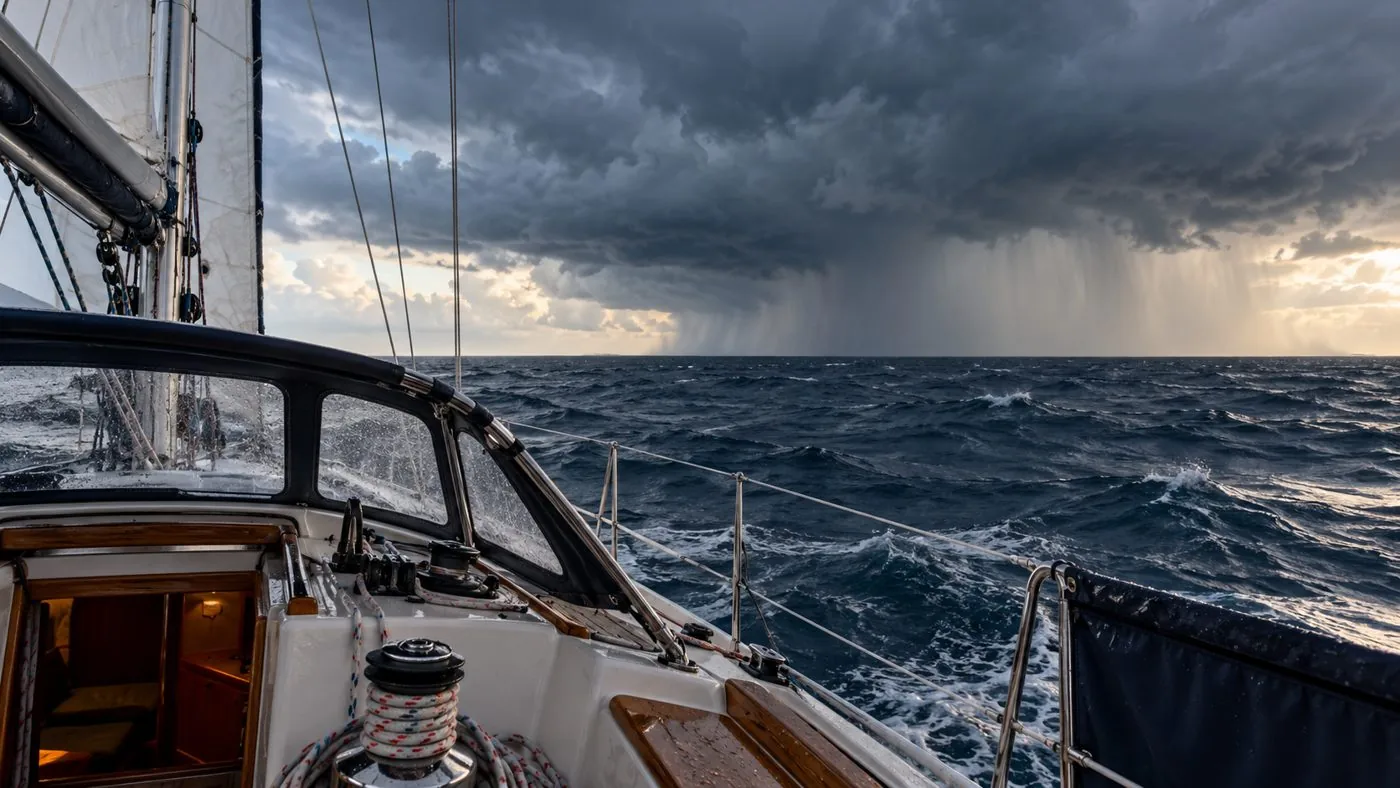
Recognize a squall
A dark rain curtain, approaching thunder or an abrupt change in the wind deserves attention while the boat is still easy to handle. Tell the crew what is coming, look for safe shelter and monitor official warnings. Rain can hide traffic and landmarks just when the wind changes. In lightning, crew who can shelter in the cabin should avoid contact with metal and electrical equipment.
Plan for tropical weather ashore
The hurricane track cone describes uncertainty about the center. Damaging wind and seas can extend well outside it. Read the advisory, wind extent and local port instructions together. Make a securing or haul-out plan with the marina early enough for the crew to leave safely under local evacuation guidance.
MODULE 2 OF 6
Preparing the Boat
Inspect rigging, steering, bilge pumps, watertight closures, emergency communications and securing points. Stow loose objects, check companionway boards and prepare safety equipment before conditions worsen.
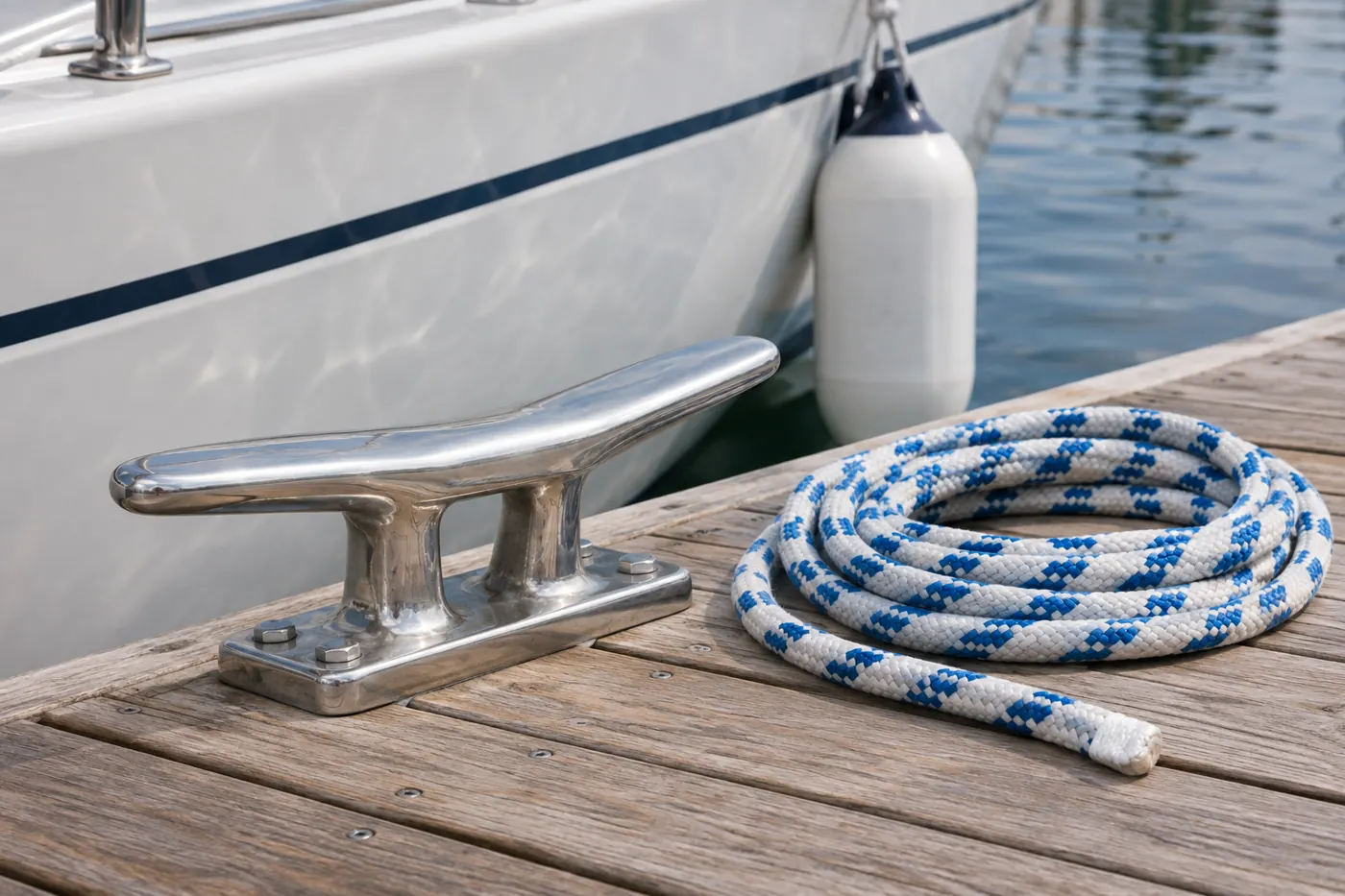
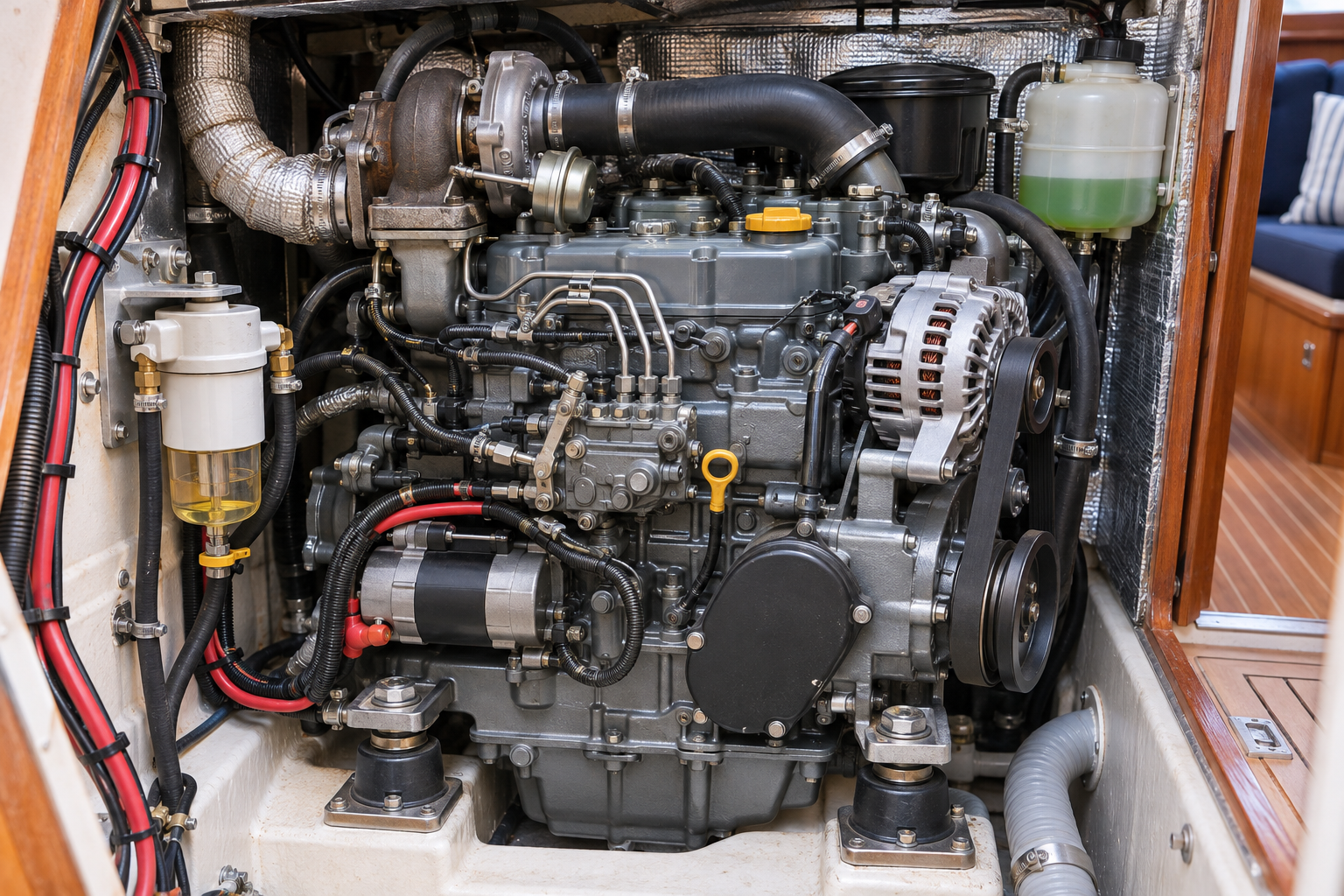
Walk the boat from bow to stern
In shelter, inspect the anchor restraint, dinghy, deck lockers and loose gear. Trace sheets and reefing lines by hand while unloaded. Check that cockpit drains are clear and that no loose line can reach the propeller. Leave access to emergency steering, pumps and extinguishers clear.
Prepare the cabin for heel
Imagine the cabin tipped to either side. Secure the stove, tools, batteries, floorboards and heavy stores. Set up a berth from which a resting sailor cannot fall. Close vulnerable openings, check companionway closures can be operated from either side and put lights, water and warm layers within reach.
Test the backups
Have the second watchkeeper locate the manual bilge pump handle, emergency tiller, handheld radio and position record. Check batteries and conduct routine equipment tests using the manufacturer’s test mode. Agree who can take the helm if the skipper is occupied below.
MODULE 3 OF 6
Reefing and Sail Reduction
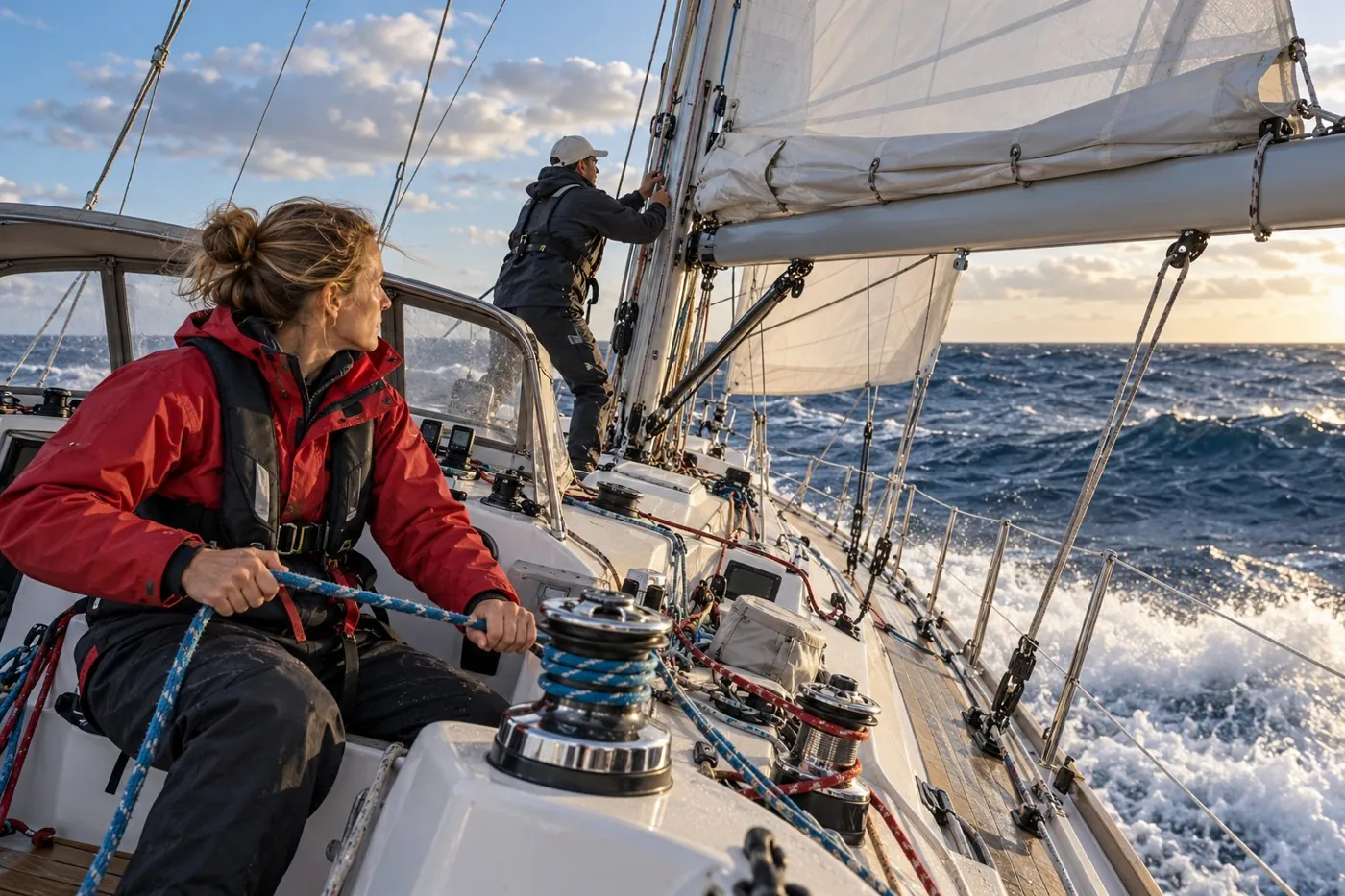
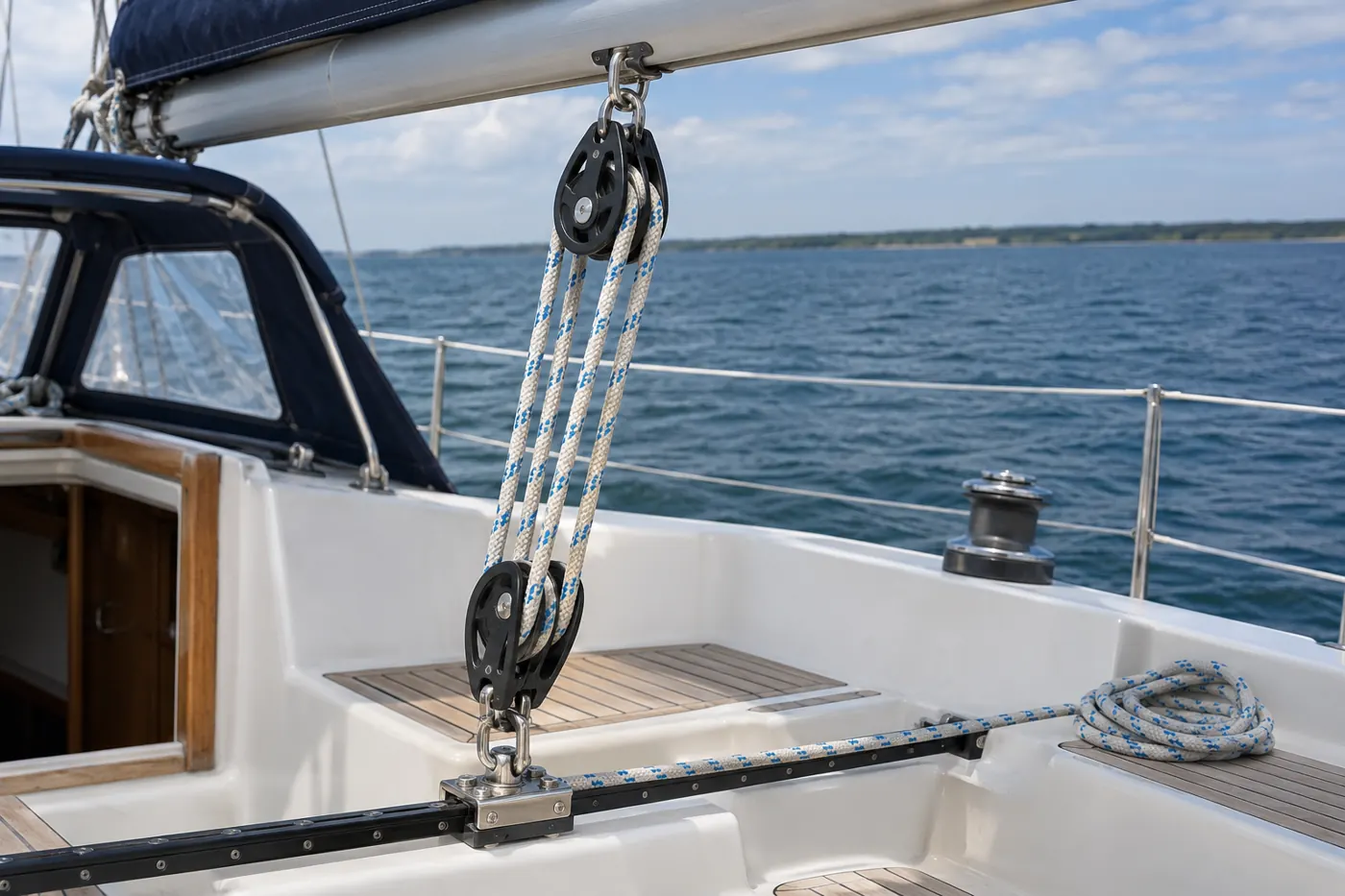
Reduce sail before the boat becomes overpowered. Practice reefing and storm sail setup in moderate weather, and follow vessel-specific instructions. Keep crew clear of loaded sheets and the boom.
Choose an early reefing cue
Use the sailmaker’s and builder’s guidance for your boat, loading and rig. Increasing helm load, repeated loss of course and a crew struggling to trim are prompts to reassess. On a multihull, heel can give little warning of loading. Agree on the sail plan before darkness, fatigue or building seas make changes harder.
Brief the change before touching a line
Name the person steering, the person handling each control and the person watching for traffic. Identify the correct reef and confirm how its tack and clew are secured on this installation. Keep hands out of blocks and feet out of coils. If a line jams or a fitting takes an unexpected load, stop and reassess before applying more winch power.
Recheck balance after reducing sail
Check how the helm feels, whether the boat can hold its intended track and whether the reefed sail or its lines are rubbing. Deep reefs, storm jibs and trysails require suitable attachment points and practice. Learn the setup in manageable conditions with an instructor familiar with the rig.
MODULE 4 OF 6
Crew Safety and Watchkeeping
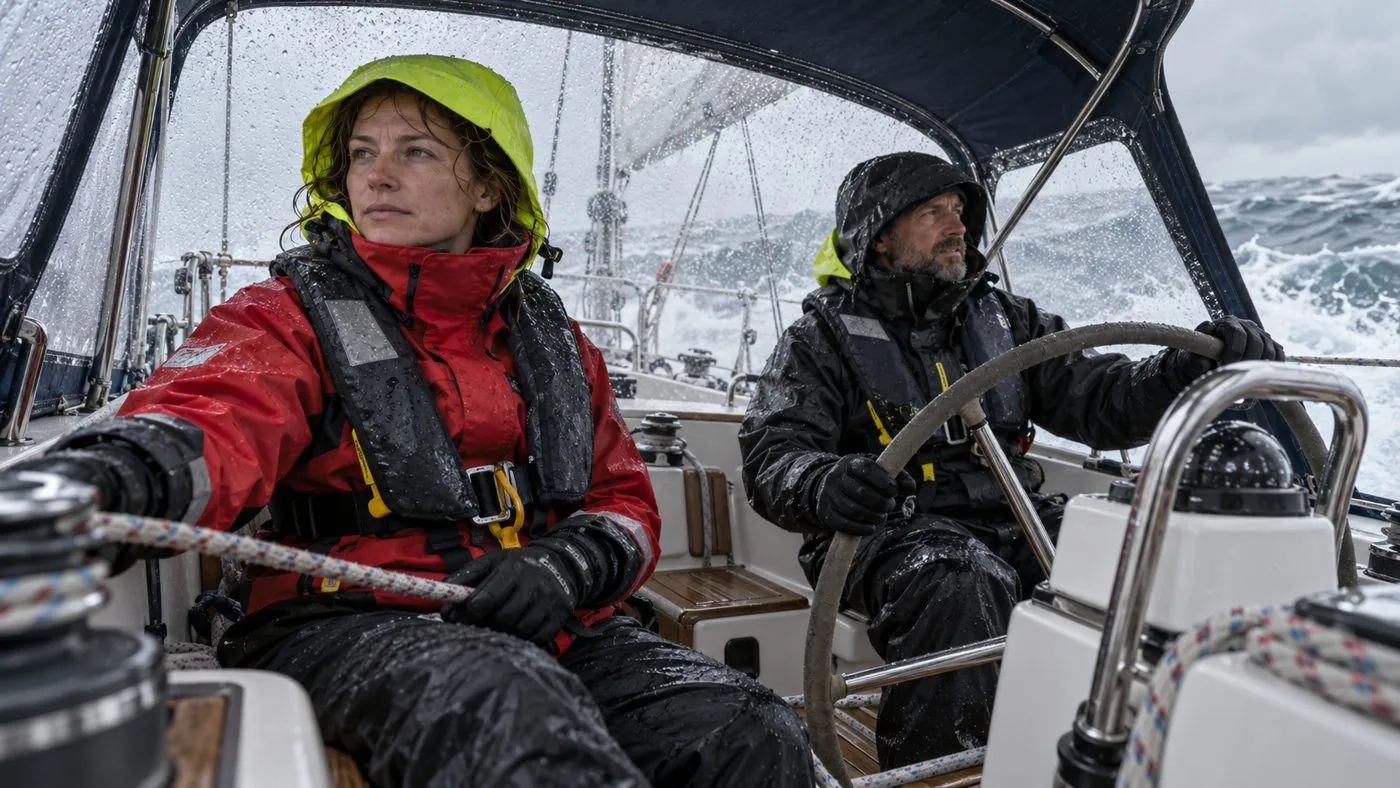
Brief crew on personal flotation devices, harnesses and tethers where appropriate, safe movement, watches, fatigue and man-overboard response. No one should work on deck alone in dangerous conditions without an agreed safety plan.
Keep people aboard
Fit lifejackets to the people wearing them, including over foul-weather layers. Brief the boat’s designated attachment points and deck routes. A tether long enough to let someone fall over the rail can leave them dragging alongside. Plan movements to keep the wearer inboard. Keep children and nonessential crew in a secure, supervised place.
Give the relief watch a usable handover
Pass on present position, actual track, nearest danger, traffic, sail plan and when to call the skipper. Ask the relief to repeat the most urgent item. Shorten watches when cold, nausea or exhaustion affects attention. Bring food, drinking water and dry layers within reach before conditions deteriorate.
Rehearse recovery with the actual crew
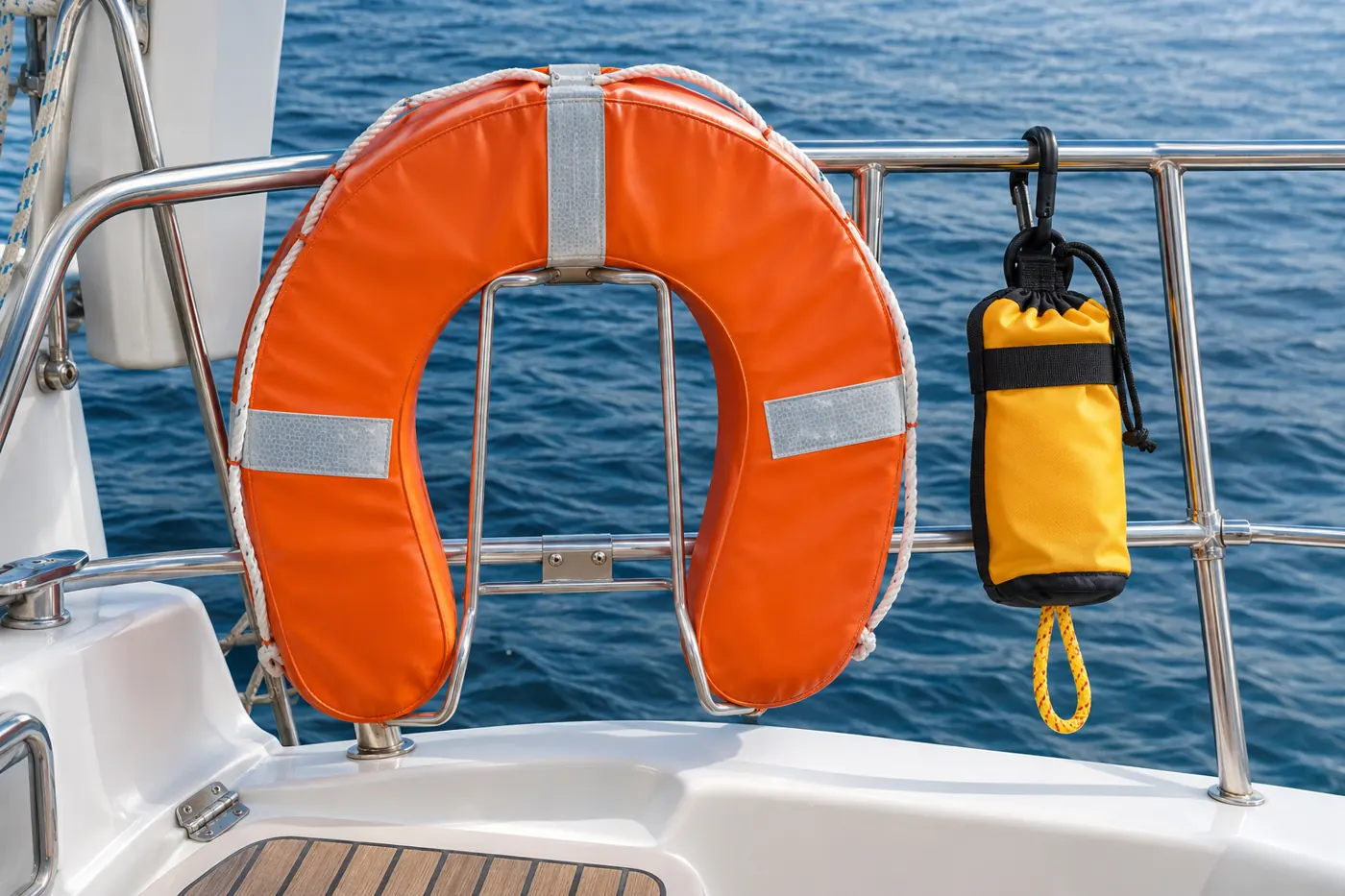
Practice with a floating training object in sheltered conditions. Assign the spotter, helm and radio roles. Identify the recovery side, lifting equipment and how a shorthanded crew could lift someone who cannot climb. A flotation device marks and supports the casualty; the boat still needs a way to bring them aboard.
MODULE 5 OF 6
Heavy Weather Decisions
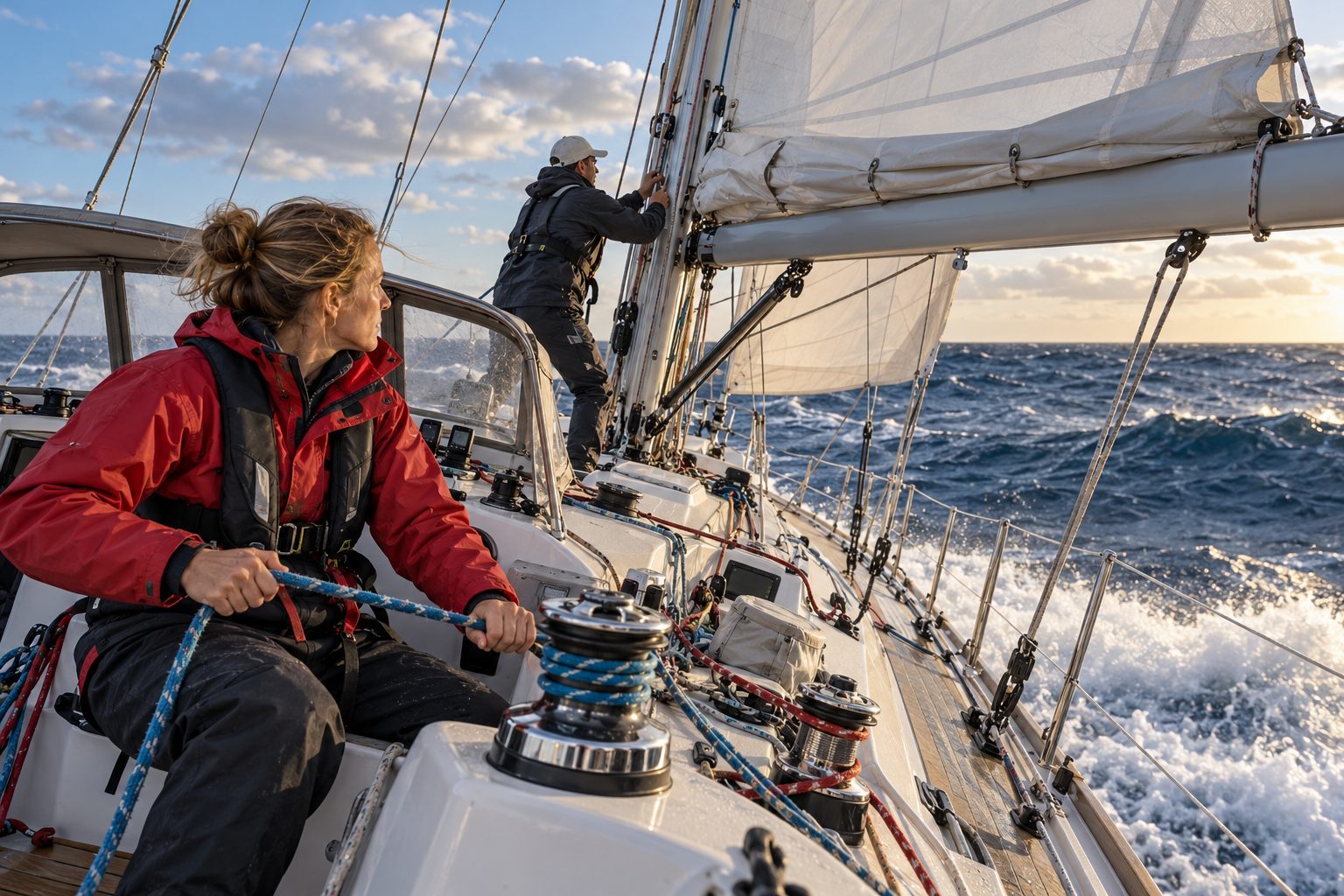
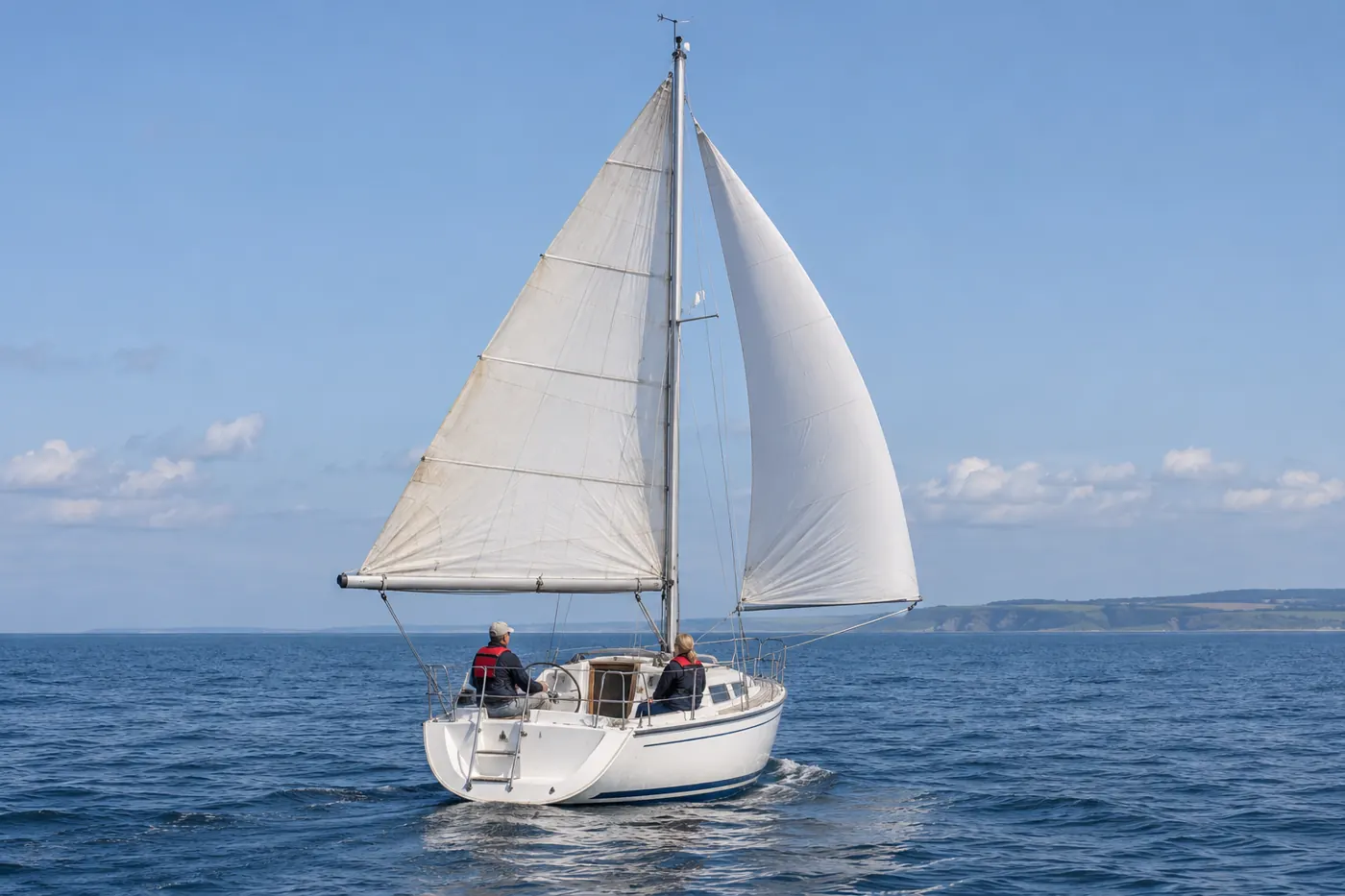
Storm tactics such as heaving-to, running off, and deploying a drogue or sea anchor depend on the vessel, sea state and equipment. None is universally safe. Prioritize avoidance, sea room and hands-on training.
Know where drift takes you
Plot your position and look downwind and down-current for land, shoals, traffic routes and breaking water. A lee shore is a shore toward which the wind blows. The closest harbor can have an unsafe entrance in an onshore wind or opposing tide. Review the approach and local advice while alternatives remain.
Compare active and passive tactics
Sailing under reduced canvas can preserve steering and the ability to clear hazards, but requires a sustainable watch. Heaving-to aims to settle the boat into a slow drift. Its motion and drift vary with hull, rig and seas. Running off can put waves astern but uses sea room and can bring surfing, broaching and difficult steering. Check actual ground track and crew capacity after any change.
Understand dedicated drag equipment
A stern drogue is intended to limit speed running down-sea. A bow-deployed sea anchor is intended to restrict drift and influence orientation. Both impose major loads and create handling and recovery hazards. Use a system designed for the hull, with suitable strong points and a rehearsed deployment and retrieval plan. Consult the designer and equipment maker before relying on either offshore.
MODULE 6 OF 6
Storm Emergencies and Recovery
If flooding, rig failure or injury occurs, protect crew, control the hazard when safe, use distress communications promptly and prepare for possible rescue. After weather eases, inspect hull, rigging and systems before resuming passage.
Respond to flooding or steering loss
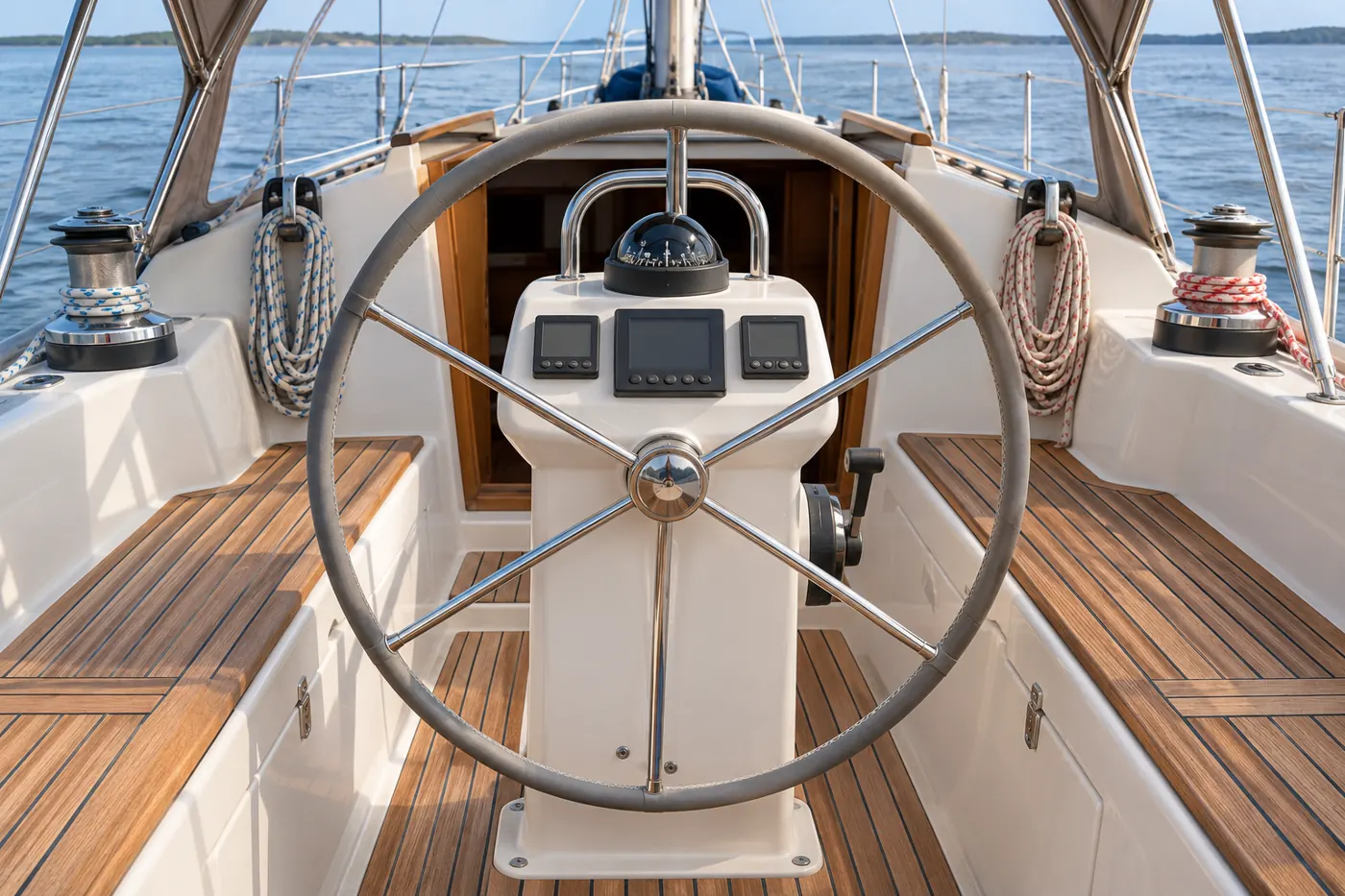
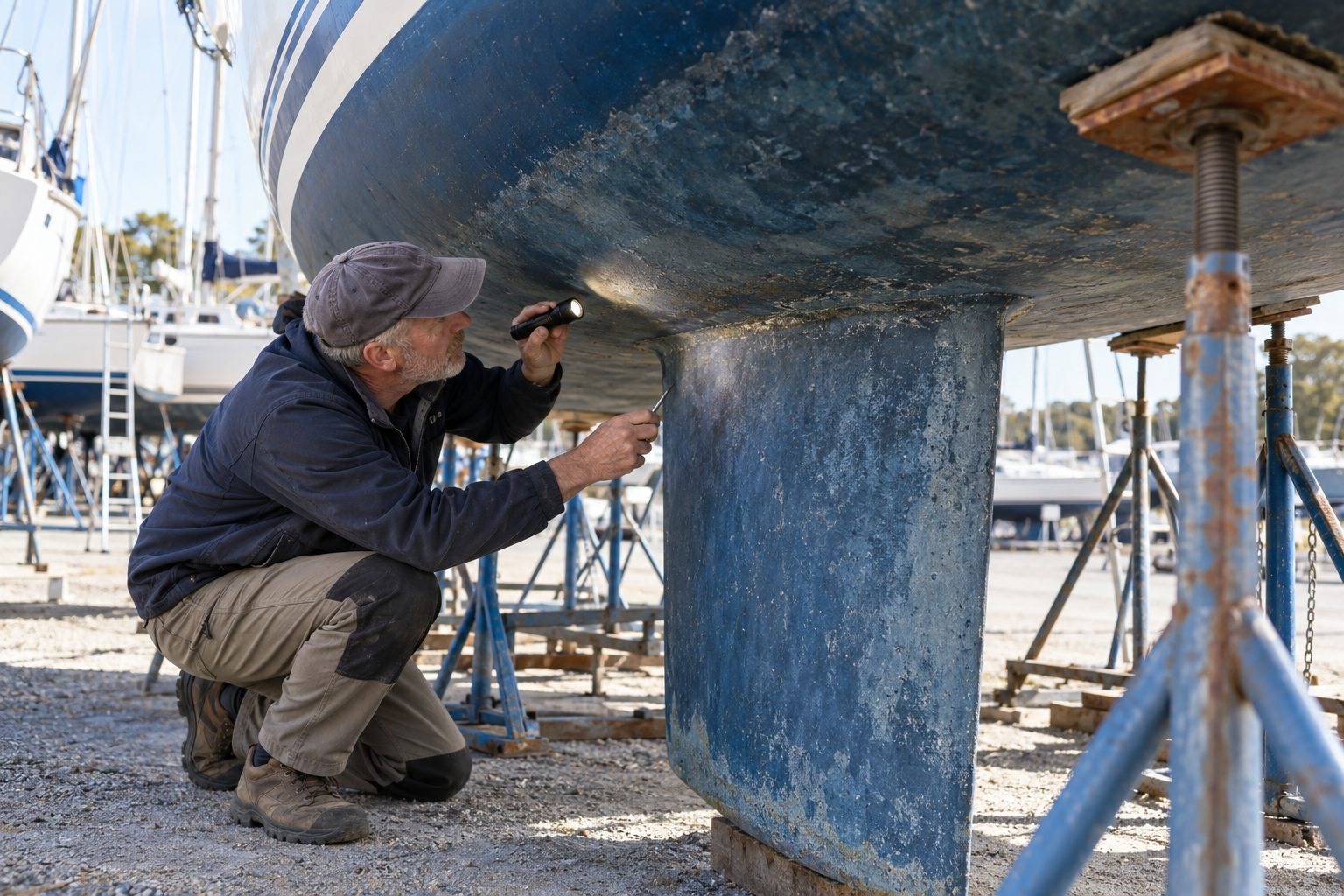
Put someone in charge of crew safety and communications. Compare the rate of ingress with the pumps’ ability to keep up and isolate a known leak only when safe. With steering failure, plot drift toward immediate hazards while assessing the practiced backup. If grave and imminent danger exists, send a distress alert promptly.
Make the distress message useful
Use the distress function of a properly configured DSC radio as trained and follow with a voice MAYDAY on marine VHF channel 16. Give vessel identity, position and time, nature of distress, help needed and number aboard. Listen for the reply. Know the limits of VHF range and the operation of your registered distress beacon before departure.
Recover deliberately after the front
Continue the lookout while checking people for injury or cold exposure. Inspect the bilge level, steering response, rig, sail attachments, deck fittings and communications when safe. Record damage and positions. A lull may be temporary. Review the next forecast and daylight remaining before deciding whether the crew and boat can continue.
Course Knowledge Check
Answer all six questions. A score of 5 out of 6 (at least 80%) passes this practice quiz. Signed-in students can save their best result.
Forecasts and seamanship references
Completion of this online course does not grant a sailing qualification or demonstrate on-water competence.