Checking sign-in…
Sailing Academy · Passage Planning
Interactive Passage Planning Course
Build a practice voyage, estimate passage time and motoring fuel, assess weather and prepare safe alternatives.
Build a plan that survives a delay
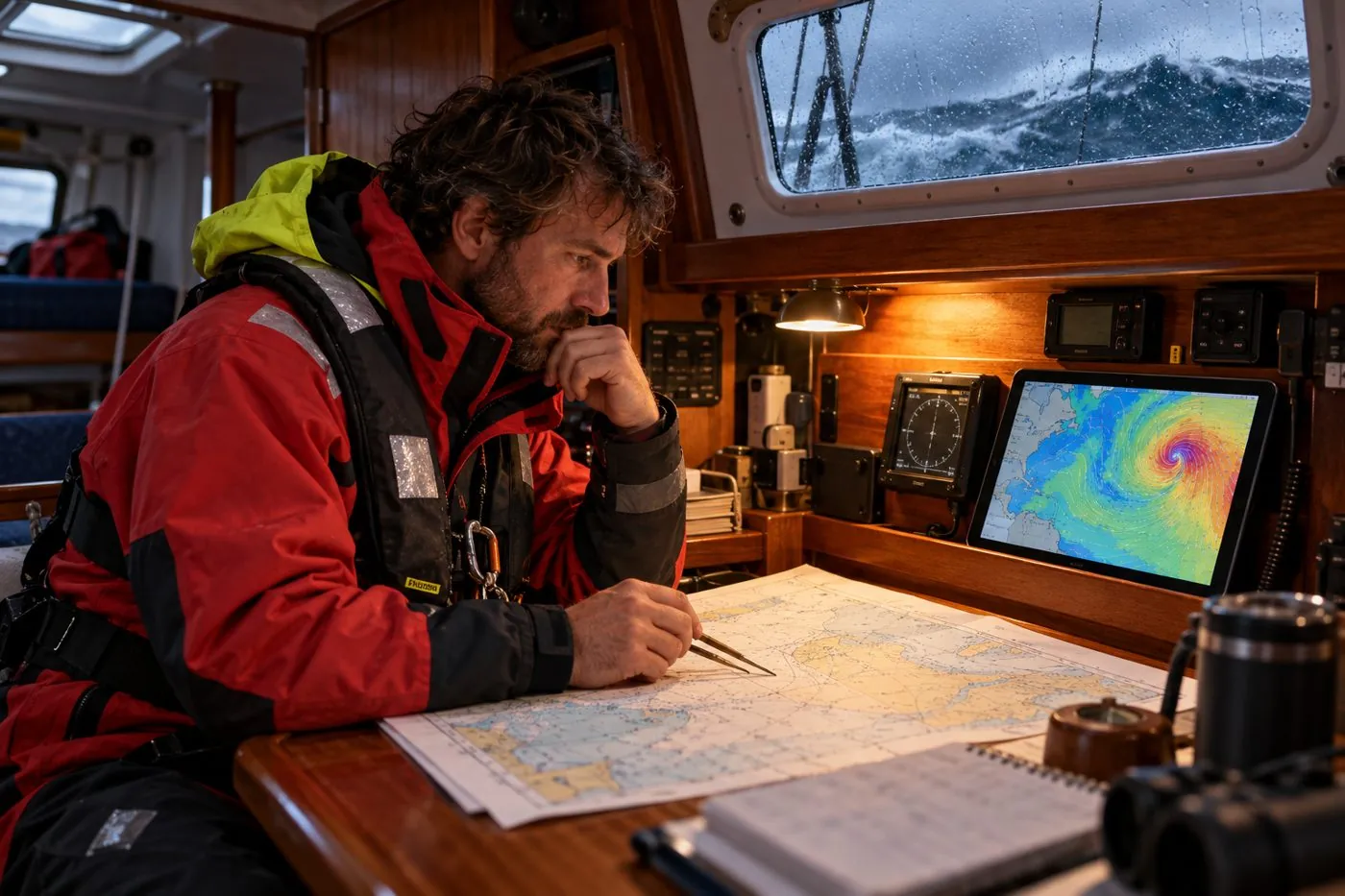
Work backward from arrival
Identify constraints at the destination such as daylight, tidal access and a difficult entrance. Choose an alternate while it is still reachable and write down the decision point.
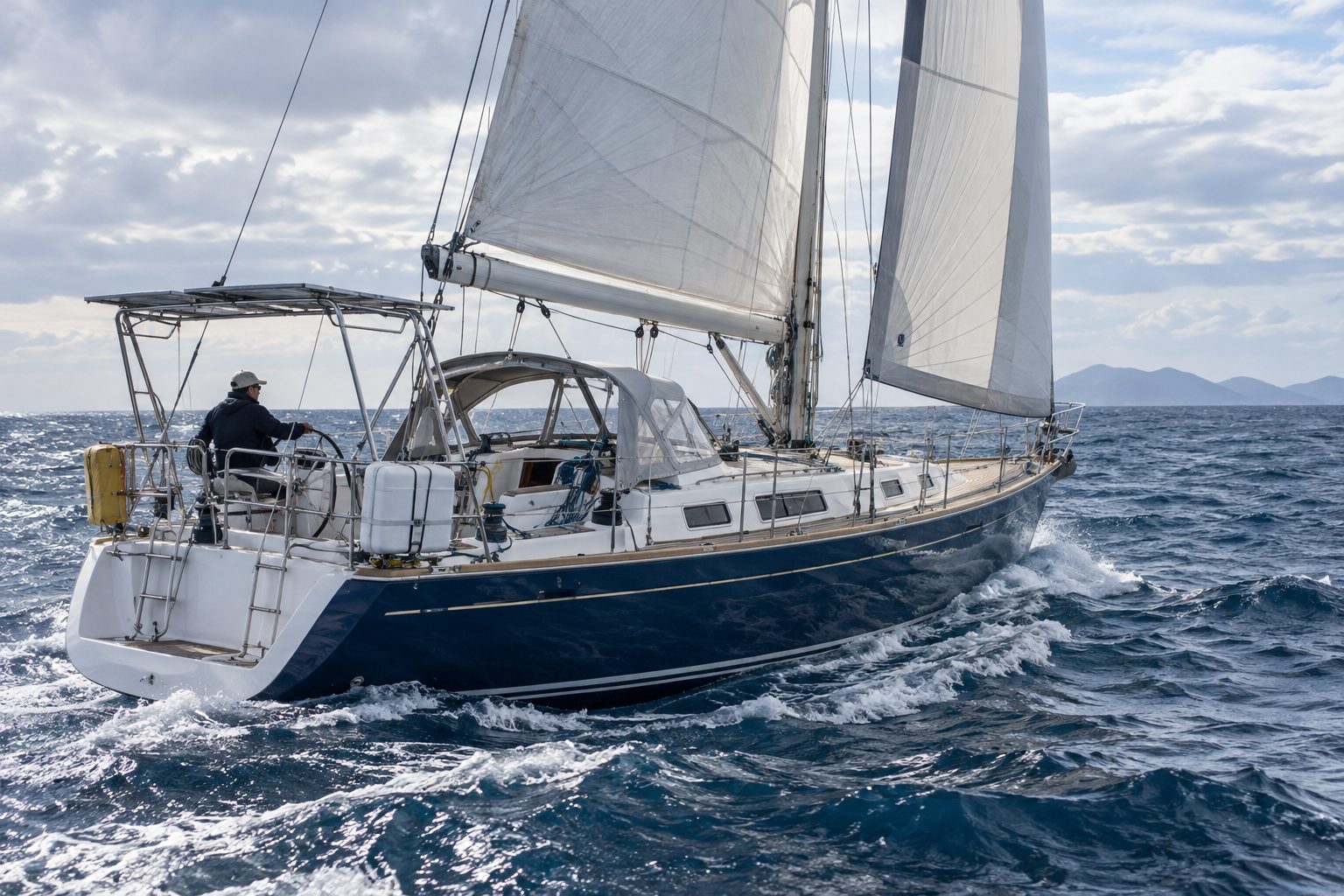
Recalculate underway
Estimate travel time from distance and realistic speed over ground. Keep motoring fuel calculations separate from the overall passage time. Review both after a slow leg.
1. Choose a fictional passage
2. Set boat and passage assumptions
These are planning estimates. Speed, motoring time and fuel burn vary in actual conditions.
Estimated passage
5.6 hours
Estimated motoring
2.2 hours
Fuel incl. reserve
7.3 L
Fuel remaining after allowance
112.7 L
Estimated arrival: 5 h 36 min after departure. Daylight shortfall: 0.0 h. Calculations assume constant average speed and fuel burn.
3. Weather and crew risk assessment
Adjust fictional conditions. This is not a weather forecast or a departure authorization.
No preset caution thresholds triggered
Still verify forecasts, tides, vessel limitations, crew readiness and emergency options.
4. Safe harbor and pre-departure checklist
Practice diversion harbor: Shelter Cove (fictional).
Before relying on a real harbor, verify approach depths, tide, swell exposure, restrictions and entry conditions.
0 / 7 planning checks marked
5. Passage planning knowledge check
Educational fictional scenarios only. This calculator is not a substitute for official forecasts, nautical charts, local regulations, current weather, vessel-specific calculations or professional seamanship. Quiz answers and scores are saved for signed-in students; passage settings reset when leaving.