Checking sign-in…
Sailing Academy · Boat Systems
Interactive Sailboat Systems Course
Learn how batteries, solar, electrical loads, watermakers and refrigeration work together.
Build an energy budget from running time
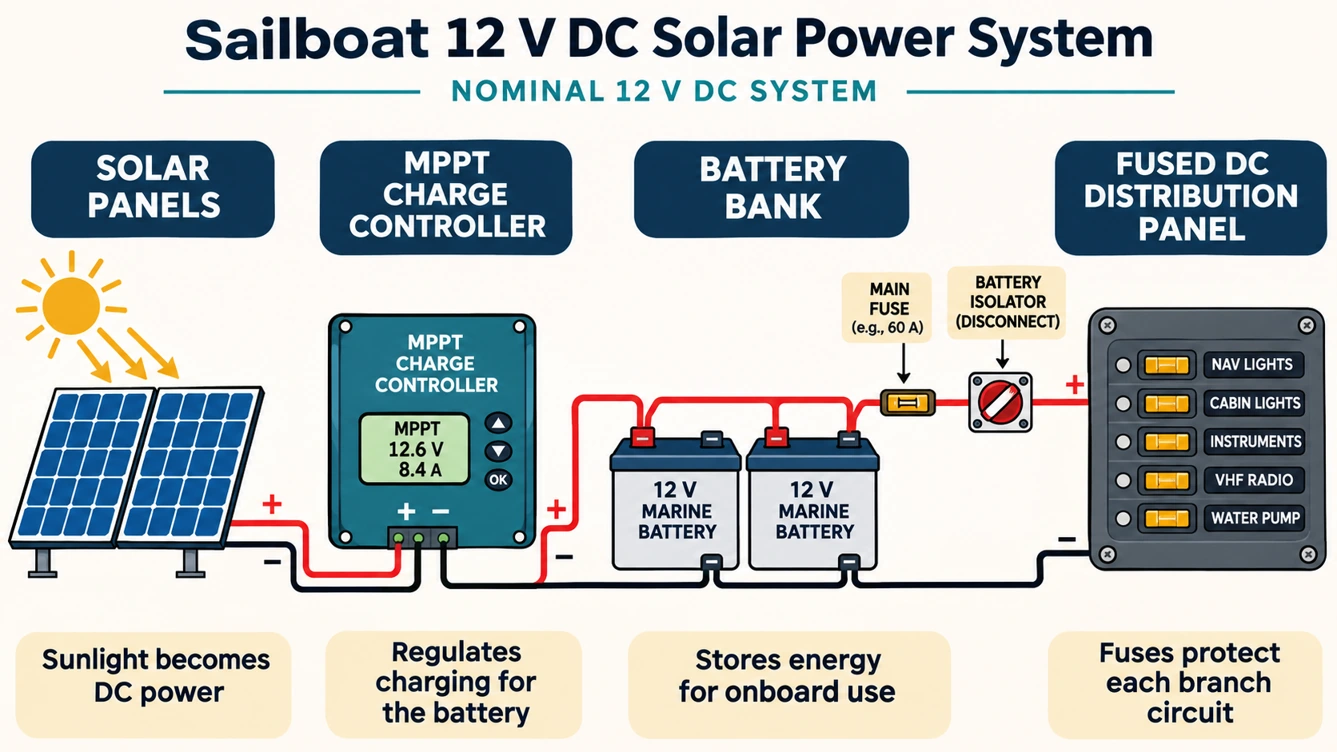
Follow the energy path
Identify the charge source, controller, battery and loads. Keep current in amps separate from daily consumption in amp-hours. Record the voltage used when comparing equipment ratings.
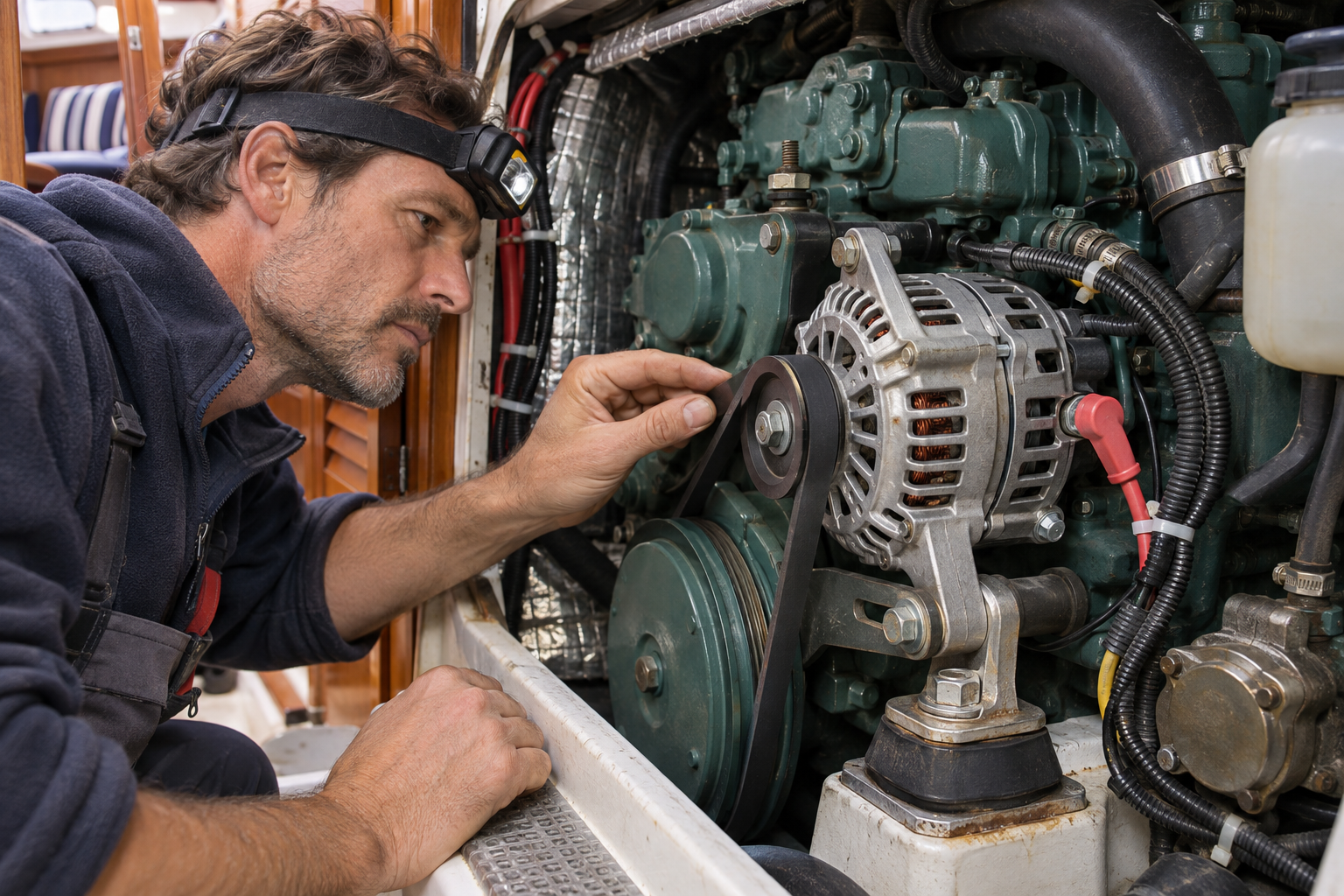
Account for intermittent loads
Separate steady consumers from equipment that cycles. Use measured running time where possible and compare generation with consumption over the same period.
Lesson 1 of 6
DC electrical fundamentals
House batteries store energy. Fuses, breakers, switches and marine-rated wiring protect circuits. Loads consume power measured in watts; energy over time is watt-hours.
Interactive onboard energy budget
Adjust a fictional boat's equipment. Solar production and appliance use are estimates, not verified performance or battery-management instructions.
Solar harvest
2700 Wh/day
Estimated daily use
4440 Wh/day
Usable nominal battery energy
3840 Wh
Daily surplus / deficit
-1740 Wh
This practice setup uses more energy than it harvests per day. Consider load reduction, safe charging alternatives or a revised plan.
Simplifications: assumes fixed solar efficiency and run hours; excludes inverter conversion losses, battery charge/discharge losses, other charging sources and battery-specific discharge limits. Check manufacturer specifications before making changes.
Knowledge check
A 60 W light used for 5 hours consumes:
Related maintenance lessons
Open Marine Maintenance Course →Educational only. Shore power, high-current DC, lithium batteries and pressurized watermaker systems can be hazardous. Use qualified marine professionals and equipment manuals. Signed-in students can save lesson checks and resume from their last lesson. Simulator sliders reset when you leave.