OUPV Near Coastal · Q100
Rules of the Road
Resolve encounters from the facts visible to each watchkeeper. Practice switching between Inland and International rules.
Decide which rule set applies
Locate the applicable boundary on the chart or in the demarcation-line regulations. Then establish whether the vessels are in sight, the nature of their work and their propulsion. Inland and International signals can sound alike while communicating different things. For Rule 34, compare the texts side by side and underline whether the relevant signal describes an action or proposes a passing arrangement.
Work a crossing in both seats
Draw two ordinary power-driven vessels in sight on crossing courses with risk of collision in open water. Label the contact side as seen from each bridge. Under Rule 15 the vessel with the other on her starboard side keeps out of the way and, if circumstances admit, avoids crossing ahead. Review Rule 17 for the stand-on vessel’s duties as the encounter develops.
Reason through a fog problem
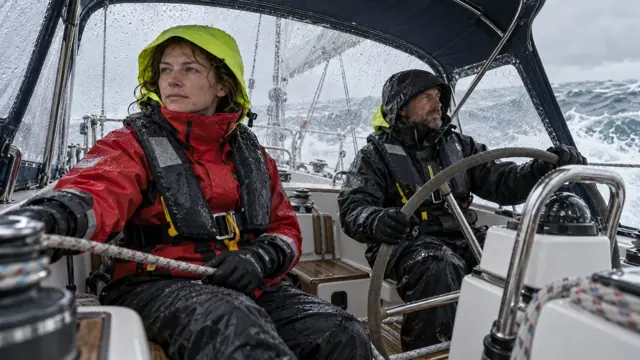
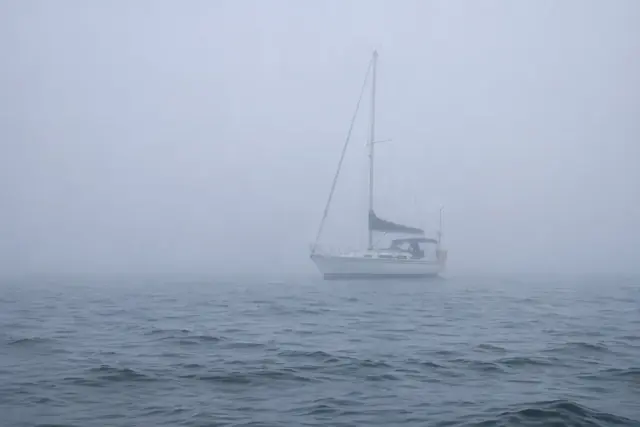
For vessels not in sight in or near restricted visibility, read Rule 19 alongside Rules 5 through 8. Identify what radar indicates, whether a close-quarters situation is developing, and the sector of the contact. Distinguish a vessel being overtaken from another forward-of-beam target before evaluating an alteration. Never infer the other vessel can see you from an AIS report.
Lookout, speed and collision risk
Assign a sector and a report
Brief the lookout on what the helm cannot see or hear clearly. A useful report identifies direction, estimated range, movement and time. Ask the lookout to keep reporting the same contact so the next observation is comparable.
Select a safe speed
Review visibility, traffic density, maneuverability, background lights, wind, sea, current and available depth. Consider stopping distance under the actual loading. A speed appropriate outside the entrance can leave too little time to assess a contact inside it.
Compare successive observations
Take compass bearings against a consistent reference and note whether range is closing. Little change in bearing with decreasing range signals danger. A changing bearing alone cannot rule out risk, especially at close quarters or near a large vessel.
Check the result of action
After taking action, continue observing until the vessels are past and clear. Identify whether separation is opening and whether another hazard has developed. Keep an independent lookout even when AIS supplies a closest-point estimate.
Work the examples
At 09:00 a vessel bears 070° true at 2 miles. At 09:06 it still bears 070° at 1 mile. What matters?
Show reasoning
The range halved while the compass bearing stayed steady. Treat the encounter as a collision risk and assess appropriate action promptly.
Two displays show identical AIS information. Are these independent observations?
Show reasoning
Both may repeat the same transmission or network data. Compare what you see and hear and, when fitted and appropriate, use radar observations as well.
Relative bearing from your bow
Move the contact around the boat. The bow stays at the top of the diagram.
Classifying an encounter
Establish which rules apply
First establish visibility, whether the vessels are in sight, how each is propelled and any special circumstances. Look for narrow channels and traffic separation schemes. A picture showing two arrows alone cannot resolve every responsibility.
Recognize overtaking
Judge the approach relative to the vessel being overtaken. Rule 13 describes approaching from more than 22.5° abaft its beam. If in doubt whether you are overtaking, assume you are and act accordingly. The duty continues until finally past and clear.
Separate crossing from head-on
For ordinary power-driven vessels in sight with risk of collision, distinguish reciprocal or nearly reciprocal courses from crossing courses. Study Rules 14 and 15 with their full conditions. State the geometry from each helm before naming the duties.
Recognize a change of visibility
When vessels are no longer in sight in or near restricted visibility, examine Rule 19. A radar or AIS symbol alone does not establish visual contact. Reassess the situation when a target emerges from or disappears into fog.
Work the examples
A yacht under engine overtakes another vessel and then draws abeam. Has the duty to keep clear ended?
Show reasoning
No. A later bearing change does not cancel the overtaking duty. Continue until finally past and clear.
A simulator presents two vessels crossing on a radar screen in thick fog. Which fact is missing before applying an in-sight crossing rule?
Show reasoning
Whether they can actually see one another. Determine the visibility situation and applicable rules before assigning give-way and stand-on roles.
Reading lights and signals
Draw the observer first
Sketch the observed vessel from above, mark its bow and place the observer. Work out whether the observer lies ahead, on a quarter or astern. Then compare the lights that could be visible from that position with the applicable rule.
Learn the horizontal sectors
Each sidelight covers 112.5° from ahead around its own side. The sternlight spans 135° centered astern. A masthead light spans 225° centered ahead. Practice drawing the boundaries relative to the vessel, then rotate the page.
Separate status from aspect
A colored light might be a sidelight, an all-round status light or a shore light. Record color, number, vertical arrangement, relative movement and background before identifying a vessel. Day shapes communicate status by day and need their own review.
Classify the sound signal
Before decoding a signal, identify whether the question concerns maneuvering in sight, restricted visibility or attracting attention. Consult the applicable Inland or International text. Note both duration and interval in any written description.
The dot is the observer. The colors show horizontal sectors for the sidelights and sternlight. Other required lights depend on vessel status and configuration.
Work the examples
An observer moves from directly astern toward the starboard side of a hypothetical vessel. Which boundary should they mark first?
Show reasoning
Mark the starboard edge of the sternlight sector, 67.5° from directly astern. Use the sector diagram below to compare that edge with the starboard sidelight boundary.
A question describes a single white light without range, movement or background. Can you uniquely identify the vessel?
Show reasoning
No. Describe the missing observations. A single white light can have several explanations, including a shore light.
Check your understanding
Work without notes first. For plotting and calculation questions, write the steps before selecting an answer.
Continue exam preparation
Open Q100 on the National Maritime Center’s ONC07 outline. Attempt the official sample with its required reference materials, then use the topic list to identify gaps. For chart plot, practice on the chart specified in the sample and measure your own answers.
Official topics and sample examinations