BEGINNER SAILING · LESSON 36 OF 40
Using the VHF Radio
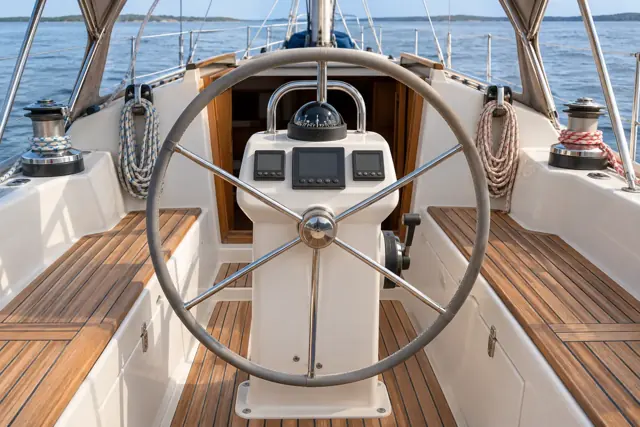
Communicate clearly and use marine VHF appropriately in routine and emergency situations.
1. Know the radio
Check power, antenna, volume and squelch before departure. Learn your local calling and working channels; Channel 16 is the international distress, safety and calling channel where applicable. Channel rules and licensing vary by country.
2. Make a routine call
Listen before transmitting, identify the station you are calling and your vessel, then move to an appropriate working channel when directed. Keep messages short and clear; use the phonetic alphabet when spelling critical information.
3. Distress and urgency
MAYDAY is for grave and imminent danger requiring immediate assistance. PAN PAN signals urgency without immediate grave danger; SÉCURITÉ introduces safety information. Give position, nature of emergency, assistance needed and people aboard, following local procedures.
4. Digital selective calling
A DSC-equipped VHF may send a digital distress alert if correctly configured with an MMSI and position source. Practice only with permitted test functions—never transmit a false distress alert.
Prepare a radio message on paper
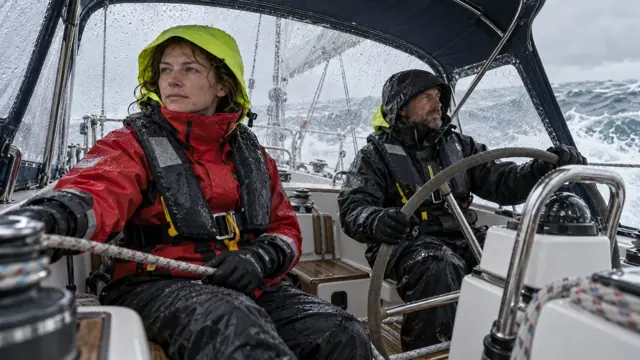
Have a partner ask for vessel identity, position and time. Say each clearly from a written training card, then listen while the partner reads the position back. Practice without transmitting drills over a distress channel.
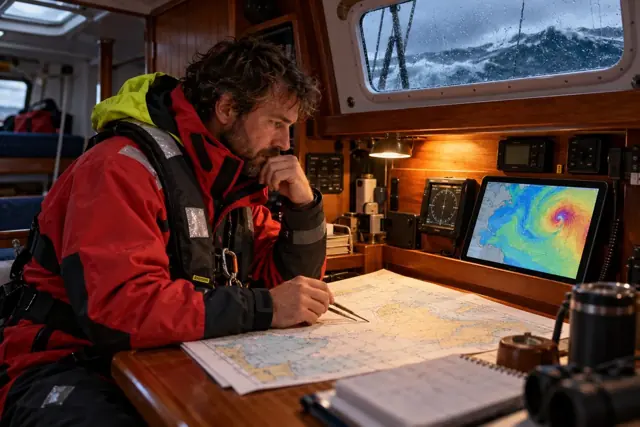
What if the coordinates were recorded twenty minutes ago?
Give their time and obtain an updated position when possible.
Practice Quiz
Answer all five questions. Passing score: 80% (4 of 5).